Here’s the deal: when you’re just starting an ecommerce business, your real job is to find a market where the competition is lazy, figure out a problem people are desperate to solve, and then get really good at selling the solution.
Forget about building a beautiful brand for now. Your one and only goal should be getting that first sale. That single transaction proves you’ve built something people actually want to buy. Everything else comes after.
Find Weak Competitors, Not Empty Niches
The classic advice to “find an untapped niche” is a total trap. A market with zero competitors is a bad sign. It’s like finding an empty field—it looks wide open, but it’s probably empty because nothing can grow there.
The real gold isn’t in empty fields. It’s in fertile ground where competitors are making tons of money despite being very weak. Maybe their product is bad, or their marketing is terrible. Their weakness is your way in.
This is more important than ever. The global ecommerce market is projected to hit $6.86 trillion in sales by 2025, with over 2.77 billion shoppers online. With that much money flying around, you don’t need to invent something new; you just need to be better. If you want to dive deeper into the market stats, sellerscommerce.com has some great insights.
Spotting the Weak Giants
Think of your research like walking into a poker game where everyone is showing their cards. You’re looking for the players who are winning by sheer luck, not skill. Here’s how you spot these “weak giants”:
- Bad Marketing: Their ads are generic, their social media is a ghost town, and their emails feel like they were written by a robot in 2005. They’re making sales, but their message isn’t connecting with anyone.
- Poor Product Quality: Go read their customer reviews. I mean really read them. Do you see the same complaints over and over about cheap materials, things breaking, or just not working as advertised? This is a huge sign that customers are settling, not celebrating.
- Customer Dissatisfaction: Look for comments like, “It’s the only option out there,” or “It gets the job done, but I wish it did X.” These are breadcrumbs leading you directly to a market that’s hungry for something better.
Your mission isn’t to create a market from scratch. It’s to walk into a proven, profitable market with a superior product or a message that actually resonates. That’s where you find the million-dollar opportunities hiding in plain sight.
“A common mistake is thinking you need a completely original idea. Most successful businesses are just a better, faster, or kinder version of something that already exists. Find the pain point an existing company is ignoring, and build your entire business around solving it.”
Analyze Your Competition Like a Detective
Once you’ve found a promising niche, it’s time to go undercover. Buy your competitor’s product. Sign up for their email list. Follow them on every social media platform. Experience their entire customer journey, from the first ad you see to the moment the package arrives.
Where did you get frustrated? Was the checkout process a nightmare? Did the product feel cheap and flimsy in your hands? Was getting a response from customer service like pulling teeth?
Every single one of those frustrations is an opportunity. It’s a competitive advantage you can build your business on. Your brand doesn’t start with a fancy logo; it starts with a simple promise: “We can do this better.” That’s how you build a business that actually lasts.
Solve Painful Problems Before Building Products
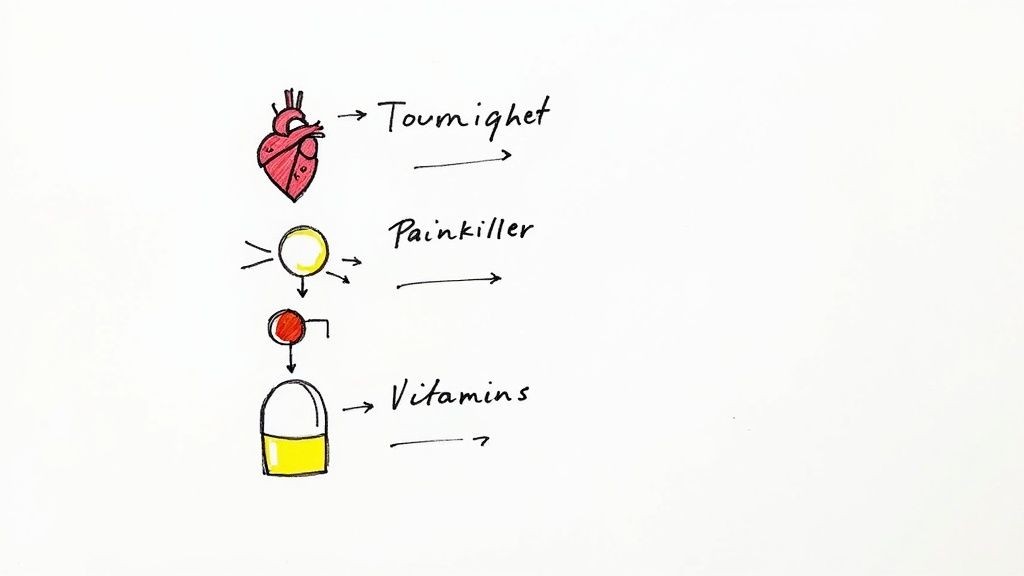
Before you waste a single dollar on a logo, a website, or a pile of inventory, I need you to ask yourself one brutally honest question: Are you selling a tourniquet, a painkiller, or a vitamin?
This simple framework, from the book Nail It Then Scale It, is the single most important filter for any new business idea. It forces you to stop admiring your product and start living in your customer’s reality. Real, durable businesses aren’t built on cool ideas; they’re built on solving genuinely painful problems.
Tourniquets, Painkillers, and Vitamins
Think of yourself as an ER doctor. Your job is to diagnose the severity of the problem your customer is facing.
- Tourniquet Problems: These are the “bleeding out” issues. Your customer is in a crisis and needs a solution right now. Price is almost an afterthought because the pain of not solving the problem is unbearable. People feel like they are dying. This is the absolute gold standard for a new ecommerce brand.
- Painkiller Problems: These are the nagging, persistent headaches. Your customer is in real pain, and while it’s not a life-or-death emergency, they will happily pay to make the annoyance go away for good.
- Vitamin Problems: These are the “nice-to-haves.” They offer a potential improvement or a little boost, but life is perfectly fine without them. Vitamins are the toughest sell because there’s zero urgency.
I see so many new founders fall in love with Vitamin ideas. They’re fun and sound cool. But when your customer’s budget gets tight, what’s the first thing they cut? The vitamins. They will never cut the tourniquet.
A common mistake I see way too often is people focus on building a brand when they should be focused on selling a solution to a painful problem. Your brand is a byproduct of how well you solve that problem.
If you want to build a business that actually lasts, you have to become completely obsessed with finding and fixing painful problems.
How to Find Tourniquet-Level Needs
Finding these urgent problems isn’t about sitting in a room brainstorming cool products. It’s about getting out there and listening to what people are already complaining about. Go where your potential customers hang out and just listen for the pain.
Seriously, go read the 1-star reviews for products in your niche. What are people furious about? What keeps breaking? What feature did they assume was included but wasn’t? Every angry review is a potential million-dollar idea staring you in the face.
Look for phrases like “I’ve tried everything,” “nothing works for me,” or the holy grail: “I’d pay anything for a solution.” Those are the tell-tale signs of a customer with a Tourniquet-level problem.
Problem Severity Framework for Ecommerce Products
To help you get honest with yourself, I’ve put together a simple table. Use this to classify your own idea and see where it truly lands on the pain scale.
| Problem Type | Customer Urgency | Willingness to Pay | Example Product |
|---|---|---|---|
| Tourniquet | Immediate and desperate | High—price is not the main concern | A specialized car seat for premature infants that major brands don’t offer. |
| Painkiller | High and consistent | Moderate to High—will pay for relief | An ergonomic office chair that eliminates the back pain from sitting all day. |
| Vitamin | Low and optional | Low—highly price-sensitive | A decorative phone case with a trendy pattern. |
At the end of the day, your goal isn’t just to sell a product. It’s to become the answer to someone’s desperate prayer.
When you can do that, you don’t need fancy marketing or a slick website to get your first sale. The customer’s pain will do all the selling for you.
Master Selling, Not Just Website Design
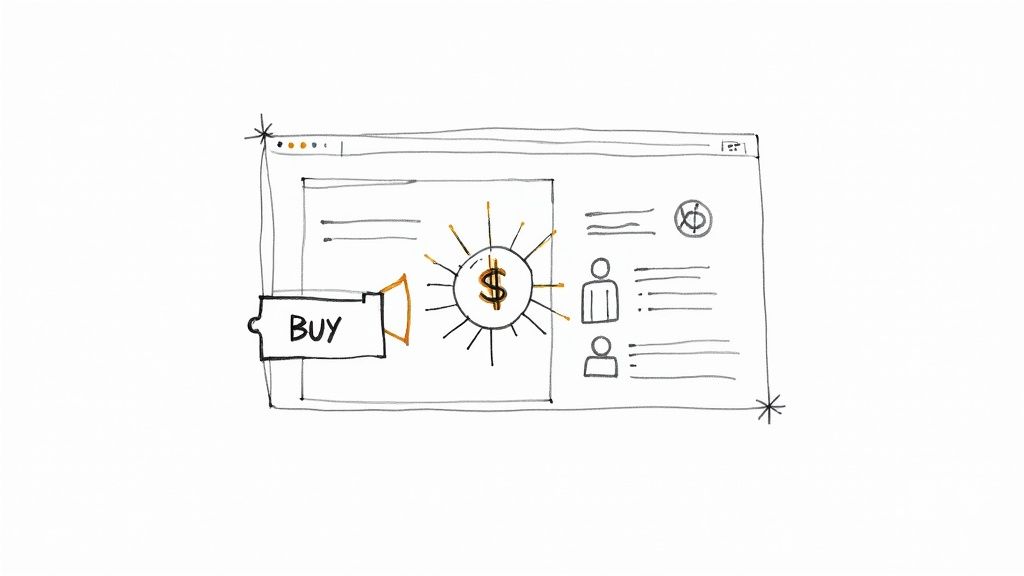
I once knew someone who burned through their entire life savings—$80,000—building the most beautiful, perfect ecommerce website you can imagine. Every pixel was flawless.
But there was one huge, fatal problem.
A designer built the site, not a salesperson. For all its beauty, it couldn’t convince a single person to actually buy something. It was a beautiful, expensive failure.
This is a huge problem I see way too often. People focus way too much on Brand when they should be focusing on SELLING. From your first dollar to your first million, the key skill you must learn is how to sell.
Your First Million Is Made by Sales, Not Style
A free website that can persuade people to buy is worth way more than an $80k website that can’t persuade anyone. I’m serious. A basic Shopify theme that actually convinces a stranger to pull out their credit card is infinitely more valuable than a slick, custom-coded site that can’t.
Think of your website like a car. A beautiful paint job is nice, but it’s the engine that gets you somewhere. In ecommerce, the engine is persuasion—your ability to use words, images, and offers to make someone feel that your product is the answer to their problem.
This means you need to become a student of salesmanship. Learn direct response marketing. Learn how to write product descriptions that speak directly to a customer’s real-life frustrations. Your words are the salespeople working for you 24/7. They have to be good.
A hard truth: No one cares about your brand in the beginning. They only care about what your product can do for them. Focus relentlessly on making that clear, compelling, and urgent.
Focus on Function Over Form
Look, a functional, sales-focused website doesn’t have to be ugly. But it absolutely must be ruthlessly effective. This is especially true for mobile shoppers, who are the lifeblood of modern ecommerce.
The numbers don’t lie. Mobile commerce sales are projected to hit $2.51 trillion in 2025, with smartphones driving a staggering 85% of global online shopping. With billions of digital buyers, your site must work flawlessly on a small screen. A fast, simple mobile experience is far more critical than any fancy desktop design.
So, before you spend a dime on custom design, prioritize these functional elements above all else:
- Fast Loading Speed: If your site takes more than a few seconds to load, you’ve already lost them. Game over.
- Clear Call-to-Action Buttons: Make the “Add to Cart” and “Buy Now” buttons big, bold, and impossible to miss.
- Simple Checkout Process: Get rid of every unnecessary field. Integrate one-click payment options like Apple Pay; it can give your conversion rates a serious boost.
- High-Quality Product Photos: Show your product from every angle. Even better, show it being used by a real person in a real situation.
These simple, functional details will make you more money than any branding exercise ever will. For more practical advice on building a lean but effective online presence, check out our collection of startup resources.
Writing Words That Actually Sell
The single most powerful tool you have is your copywriting. It costs you nothing but time and can be the difference between a failing store and a seven-figure business.
Your goal isn’t to describe your product’s features. It’s to sell the outcome.
Imagine you’re selling a high-quality kitchen knife.
- A designer writes: “This 8-inch chef’s knife is forged from high-carbon German steel with a full tang and an ergonomic polymer handle.”
- A salesperson writes: “Stop struggling with dull knives that just crush your food. Effortlessly slice through a ripe tomato without squishing it. Feel the perfect balance in your hand as you chop vegetables faster and safer than ever before. Spend less time prepping and more time enjoying your meal.”
See the difference? The first is a list of facts. The second sells a better life. Focus on writing like a salesperson, and you’ll be on the right path.
Find Manufacturers Without Getting Scammed
Finding a reliable manufacturer is probably one of the scariest parts of launching a brand. And for good reason. Every single person I know has been ripped off by their first manufacturer. BEWARE.
It’s almost a painful rite of passage, but it doesn’t have to be yours.
Think of finding a manufacturing partner like dating. You’re looking for a serious, long-term relationship. If they seem too slick, too eager, or just plain desperate to get you on board, that’s a massive red flag. Run.
The Dating Game Red Flags
Here’s the secret: the worst manufacturers almost always have the best marketing. If they are TOO EAGER to onboard you, that is a RED FLAG. If they have really good marketing—or any form of marketing whatsoever—that is a RED FLAG.
A truly great manufacturer is busy. They are slammed with work from their existing clients and have zero time or need for slick marketing. They aren’t trying to win your business; you have to win theirs.
Here are the biggest red flags I’ve learned to watch for:
- They’re way too eager to get started. If they’re rushing you, throwing out huge discounts to sign immediately, or making everything sound incredibly easy, they’re probably desperate for cash. That often means they’ll cut corners on quality the second your payment clears.
- They have any real marketing. A great factory gets business through word-of-mouth and reputation, period. A flashy website, paid ads, or aggressive sales emails are huge signs they might be a trading company in disguise or have quality issues causing high client churn.
- They don’t ask you any hard questions. A serious partner will vet you just as much as you vet them. They’ll want to know about your sales projections, your business plan, and your quality standards. If they just say “yes” to everything, they don’t care about a partnership; they just want a purchase order.
A GREEN FLAG for a manufacturer is when they don’t want to work with you. A good manufacturer should be very hard to convince. You have to chase them down and convince them. Just like dating, the best partners are often the hardest to get.
Where to Find Real Partners
Since the best manufacturers aren’t advertising, you have to find them where they actually hang out. This means doing some old-school detective work.
A great place to start your search is on B2B marketplaces. The scale of B2B ecommerce is expected to hit a massive $32.11 trillion by 2025, and marketplaces like Alibaba command about 65% of that action. It’s a prime hunting ground, but you have to be strategic to find the gems among the millions of listings. Since roughly 70% of B2B deals in Asia now happen online, learning to navigate these platforms is a smart move. You can dig into more of these powerful B2B ecommerce trends from invespcro.com.
Beyond scrolling through online marketplaces, here are the most effective ways to find a real partner:
- Trade Shows: This is the gold standard. Go to industry trade shows like the Canton Fair in China (or find its online equivalent). You can meet owners face-to-face, hold their products, and see instantly who is legit.
- Trade Show Websites: Can’t fly to a show? No problem. Look up the exhibitor lists from past trade shows online. This is a pre-vetted directory of serious players in your industry.
- Strategic Alibaba Searches: Use Alibaba, but use it wisely. Ignore the flashy profiles and sponsored listings at the top. Dig deep. Look for suppliers who have been on the platform for years and focus on those with detailed product specs, not slick marketing fluff.
How to Make Your First Move
Once you’ve got a shortlist, your first email is critical. Do not send a generic, copy-paste message. You need to show them you’re a serious, professional buyer who has done their homework.
Keep your initial outreach short and to the point. Introduce your brand, clearly explain the specific product you want to make (with as much detail as you can), and state your expected initial order quantity. Be realistic but confident. This isn’t just about finding a supplier; it’s about building a solid foundation from day one, which is a core part of any good bootstrapping guide for entrepreneurs.
And finally, always, always order samples before you even think about a production run. Pay for them. Test them ruthlessly. Try to break them. This small upfront investment can save you from an $80,000 mistake later on.
Finding the right partner takes patience and a healthy dose of skepticism. Treat the process with the seriousness it deserves, and you’ll avoid the heartbreak—and wallet ache—that trips up so many new founders.
Your Practical Ecommerce Launch Plan
You’ve got the idea and you’ve got a plan. Awesome. Now comes the part where you actually make it real—connecting the paperwork and the pixels so you can start taking people’s money.
The goal right now isn’t to build the perfect, flawless business. It’s all about momentum. We just want to get you moving, bank your first dollar, and start learning from real customers as fast as humanly possible. Don’t get stuck overthinking it.
Laying the Foundation
Before you can even think about that first sale, you need to build a proper container for your business. I know, this part sounds boring, but it’s what protects your personal assets and saves you from a world of hurt down the road. It’s not optional.
First, make your business a separate legal entity. For most founders just starting out, forming a Limited Liability Company (LLC) is the way to go. It’s pretty simple to set up and, most importantly, it creates that critical wall between your business finances and your personal life.
Next, open a separate business bank account. I can’t stress this enough: do not mix your personal spending with business revenue. Tangling those funds together is a nightmare waiting to happen come tax season, and it can even put your personal assets on the line if the business ever lands in legal trouble.
Think of it like this: your LLC is the house, and your business bank account is the plumbing. You need both to be totally separate from your personal life to keep things clean, safe, and working right.
Choosing Your Ecommerce Platform
With the legal and money stuff sorted, you need a place to actually sell your stuff online. When you’re just starting, your choice of platform should come down to one single thing: speed to launch.
Don’t overcomplicate this decision. Just start with a proven, effective tool like Shopify. It has everything you need to build a professional-looking store that actually turns visitors into customers. Seriously, you can get a basic site up and running in a single weekend. A simple site that sells is infinitely better than a beautiful, complex site that doesn’t.
Your Scrappy First 100 Customers Plan
Forget about fancy ads and complicated marketing funnels for now. Your one and only mission is to get your first 100 customers. That initial traction is built on hustle, not a huge budget.
Here’s a simple, scrappy plan to get you there:
- Jump into Online Communities: Find the Reddit subreddits, Facebook groups, or online forums where your ideal customers are already hanging out. The key is not to just spam your link. Become a real, helpful member of the community. Answer questions, offer advice, and only bring up your product when it’s genuinely a good fit for the conversation.
- Lean on Your Personal Network: Make a list of everyone you know—friends, family, old coworkers—who might dig your product or know someone who would. Send them a personal message (not a mass email!) explaining what you’ve built and why you’re excited about it. Ask them to check it out and share it if they think it’s cool.
- Try Some Direct Outreach: Find 10-20 small influencers or creators in your niche. Send them your product for free with a handwritten note and zero strings attached. If they genuinely like it, there’s a good chance they’ll share it with their audience.
This early stage is all about doing things that don’t scale. If you’re looking for more inspiration, we’ve got a whole guide on how to start a business with no money that’s packed with creative, low-cost strategies.
The infographic below breaks down a simple process for vetting the manufacturers you’ll need to bring your product to life.
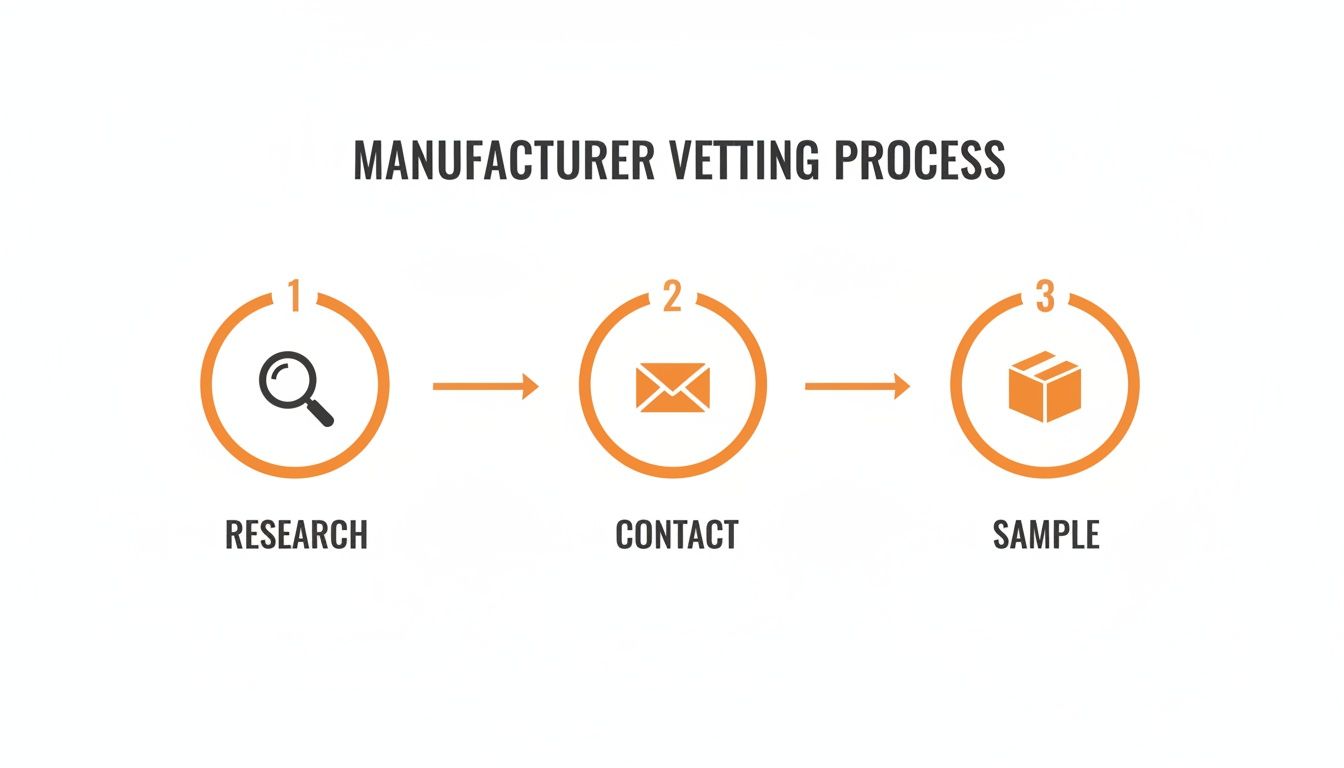
This three-step approach—digging deep with research, making professional contact, and being absolutely ruthless when you test samples—is your best defense against bad suppliers. Getting this part right is fundamental to building a business that can actually deliver on the promises you make to those first crucial customers.
You’ve Got Questions? I’ve Got Answers.
Alright, so your head is spinning with ideas and you’re ready to jump in, but a few questions are still holding you back. I get it. Let’s cut through the noise and tackle the big ones. No fluff, just straight talk from someone who’s been there.
Should I Find a Niche with No Competitors?
Absolutely not. A niche with no competitors is a bad sign.
An empty market usually means there’s no money there. It’s like discovering a ghost town; it’s empty for a reason. You want to find a niche that has competitors making tons of money but are very weak. Maybe their product is bad, or their marketing is bad.
Their success proves the market exists. Their weakness is your invitation to come in and do it better.
The goal isn’t to invent demand out of thin air. It’s to find existing, hungry demand and serve it exceptionally well.
How Much Money Do I Need to Start?
Honestly, way less than you probably think.
The days of needing $80,000 for some custom-coded website are long gone. You can get a great-looking Shopify store live for a few hundred bucks. Your first real investment shouldn’t be a fancy website; it should be getting your hands on that first round of product samples.
The real number depends on your product and your hustle. I know founders who started with under $1,000. They hit up their personal network and used social media to make their first sales before ever placing a big inventory order.
Focus on getting that first dollar of revenue. Don’t waste time and money building a perfect, expensive machine from day one.
Do I Need a Brand Before I Launch?
Nope. In the beginning, people focus WAY too much on Brand when they should be focusing on SELLING. It feels productive, but it doesn’t make you a single dollar.
Your “brand” at this stage is simple: can you solve your customer’s problem? That’s it.
Think about it this way—a brand is a reputation. You can’t have a reputation until you’ve actually done something. From $0 to $1 million, your one and only job is to learn how to sell. Your logo, your brand colors, your “voice”… none of it matters if you can’t convince someone to buy what you’re selling.
What’s the Biggest Mistake New Founders Make?
I see two that are tied for first place, and they’re both painful.
- Falling in love with a “Vitamin” idea. They build something that’s just a nice-to-have. You need to solve a “Tourniquet” problem—something deeply painful and urgent. The best problems are Tourniquet problems, next best are Painkillers, and finally Vitamins. When you solve a real pain, customers will practically rip the product out of your hands. They won’t just want it; they’ll need it.
- Getting ripped off by their first manufacturer. This happens to almost everyone. You get charmed by a slick website or a fast-talking sales rep and end up with a garage full of junk. Remember the dating analogy: a good manufacturer is busy and hard to get. A good manufacturer should be very hard to convince to work with you, not the other way around.
Dodge these two bullets, and you’re already miles ahead of most people starting out.
Ready to stop guessing and start building alongside people who actually get it? At Chicago Brandstarters, we believe the kind givers should be millionaires. We help hard-working founders in Chicago and the Midwest who are on the same journey. If you value real talk over performative networking, this is your community.