
You’re probably in one of three spots right now.
You have a product that’s starting to work, but inventory keeps eating your cash before revenue lands. Or your ads are finally converting and you need more budget fast, before the window closes. Or you’re still early, trying to figure out whether taking money is smart or just a fancy way to trap yourself.
I’ve been around enough founders to tell you this plainly. Ecommerce business loans are neither good nor bad. They’re tools. Use them well and they help you move faster. Use them badly and they turn your business into a treadmill.
The hard part isn’t finding money. There’s plenty of money out there. In 2025, the global fintech lending market reached $590 billion, with digital lending making up 63% of U.S. personal loan originations and more than half of small-business loans in developed regions, according to fintech lending market data for 2025. The hard part is choosing the right funding, at the right time, for the right reason.
That’s where most founders mess up. They borrow because they feel pressure, not because they have a plan.
What an Ecommerce Business Loan Actually Is
An ecommerce business loan is money you use to buy speed.
That’s the cleanest way I can put it. You’re not borrowing to feel safe. You’re borrowing so you can do something now that would otherwise take too long. Buy inventory before a stockout. Fund a campaign that already has proof. Bridge the gap between paying suppliers and collecting sales.

Debt is fuel, not a trophy
I want you to think about funding like rocket fuel. You can build the rocket yourself. Product, brand, store, creative, offer. But if you want liftoff, you need fuel. The wrong fuel blows up the engine. The right fuel gets you altitude.
That matters in ecommerce because your business moves differently from a restaurant, a contractor, or a local service company. Your assets are often digital. Your revenue swings by season, campaign, platform, or creator mention. Your biggest opportunities can disappear in a week.
A generic bank loan often looks at your business like it should behave in a slow, neat, predictable pattern. Ecommerce rarely does.
Why ecommerce financing feels different
Lenders finally understand more of our model than they used to. Many now look at store data, marketplace reports, bank activity, and revenue patterns instead of only asking whether you own equipment or real estate. That shift is a big reason more founders use tech-driven lenders instead of waiting around for old-school approval processes.
Still, don’t romanticize this. A lender isn’t betting on your dream. They’re betting on your cash flow.
Practical rule: If borrowed money doesn’t help you create more gross profit than it costs, it’s not growth capital. It’s stress capital.
Here’s what ecommerce funding should do for you:
- Buy inventory at the right moment so you don’t miss demand or lose margin on rushed reorders.
- Scale proven customer acquisition when your numbers support it.
- Smooth ugly cash gaps between ad spend, supplier payments, and sales deposits.
- Create negotiating power with vendors when cash in hand gives you an advantage.
What it should not do is rescue a broken model.
If your margins are weak, return rates are ugly, or your product doesn’t convert, a loan won’t fix the business. It just gives the problem a bigger budget.
Treat funding like an operating plan
Before you apply, write one simple page on how the money gets used. Inventory. Ads. Freight. Packaging. Hiring. Then write how the money comes back. If you can’t explain that clearly, you’re not ready.
A basic startup business plan template for early founders helps more than people think. Not because lenders love pretty documents. Because writing forces you to confront whether your idea makes financial sense.
A good ecommerce business loan is a lever. Pull it when your unit economics are real and timing matters. Leave it alone when you’re still guessing.
Comparing Your Main Ecommerce Funding Options
Not all money behaves the same. Some funding buys breathing room. Some buys speed. Some erodes your cash every day until you regret signing.
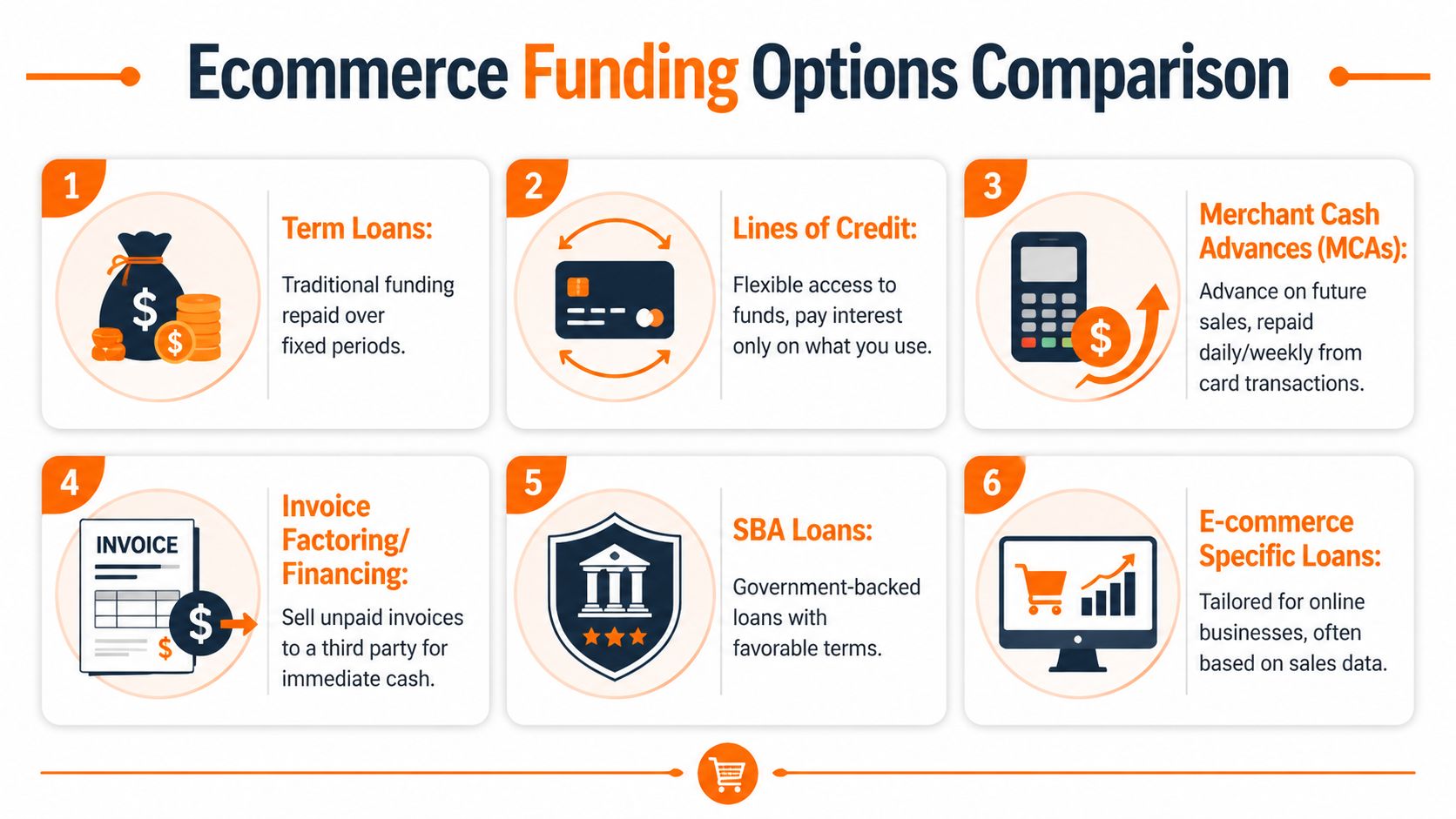
Ecommerce loan comparison
| Loan Type | Best For | Funding Speed | Typical Cost (APR/Factor) | Key Requirement |
|---|---|---|---|---|
| SBA 7(a) loan | Established brands making bigger long-term moves | Slow | Lower rate structure than most fast-money options | Strong credit, longer operating history, enough cash flow coverage |
| Traditional term loan | Planned investments with steady repayment ability | Moderate | Fixed APR style pricing | Solid financials and cleaner books |
| Business line of credit | Short-term working capital gaps | Moderate | Interest on what you draw | Lender confidence in your ongoing cash flow |
| Inventory financing | Stock purchases tied to inventory cycles | Moderate | Varies by lender and structure | Inventory purchase need and support for repayment |
| Merchant cash advance | Emergency cash when you’ve run out of better options | Fast | Usually expensive | Consistent sales flow |
| Revenue-based financing | High-margin ecommerce brands with reliable sales | Fast | 1.2x to 1.5x borrowed principal, often translating to 20% to 50% effective APR depending on payback speed | Revenue consistency and margins that can handle sales-based deductions |
SBA loans when patience saves you money
If your business is established and you qualify, SBA 7(a) money is usually the adult choice. It’s slower, more document-heavy, and less forgiving of sloppy finances. But slower money often has better economics.
The tradeoff is obvious. You can’t use a slow approval process for a fast-moving opportunity. If your supplier needs payment now or your inventory window closes this week, SBA timing may not fit reality.
I like SBA loans for brands with some maturity. Stable sales. Decent records. A real operating rhythm. If that’s you, this is usually the first lane I’d check.
Term loans when the use is clear
A term loan is simple. You get a lump sum and repay it on a fixed schedule. I like term loans when the use case is boring in a good way. Warehouse upgrades. A planned expansion. Equipment. A big but measured inventory buy.
What I don’t like is using term debt for experiments. Borrowing fixed-payment money to test uncertain channels is how founders back themselves into a corner.
If the upside is speculative, fixed payments can get ugly fast.
Lines of credit when timing is the problem
A line of credit is a better fit for uneven cash flow than a lump-sum loan. You draw what you need, pay it back, and use it again. That flexibility matters when your business has regular swings.
I think of a line of credit like a spare tire. You don’t drive on it forever. You use it to stay in control when timing goes sideways.
Good use cases:
- Bridge supplier deposits while marketplace payouts lag
- Cover freight or packaging during a short crunch
- Handle seasonal inventory timing without taking more than you need
Bad use case: using a credit line as permanent life support.
Inventory financing when stock is the bottleneck
If your main issue is buying product, inventory financing can fit. It keeps the use of funds narrow, which can be good discipline. You’re matching the money to the asset that should generate the return.
That said, narrow funding is still funding. If the inventory doesn’t move, the problem doesn’t stay narrow. It spreads into cash flow, storage, markdowns, and stress.
Only use inventory funding when you have a strong read on sell-through and timing.
Merchant cash advances when you’re desperate
I’ll be blunt. Merchant cash advances are often the most dangerous money in the room.
They’re fast. They’re easy. They can feel like a lifeline. They also have a nasty habit of taking repayments so frequently that your business starts gasping for air.
Fast money is expensive money. If a lender makes approval feel almost too easy, your job is to get suspicious, not grateful.
I don’t say never. I say last resort. If there is any cleaner option, take the cleaner option.
Revenue-based financing when your margins can carry it
Revenue-based financing is one of the few products that fits ecommerce behavior when used correctly. Repayment is a fixed multiple of what you borrow, usually 1.2x to 1.5x of principal, deducted daily or weekly from sales, according to Fundwell’s ecommerce business loan breakdown. That same source notes a 1.3x factor on $50,000 means $65,000 total repayment, and the effective APR can land between 20% and 50% depending on speed of payback. It also notes this structure is best for brands with gross margins above 40%.
That last part matters most.
If your margins are fat and your customer payback is strong, RBF can work. If your margins are thin, RBF can eat your business from the inside. Sales-based deductions sound friendly until a weak month hits and every deduction hurts.
I like RBF for brands that already know their economics. You know your contribution margin. You know what a customer is worth. You know what happens when you pour more spend into a working channel.
If you don’t know those things, don’t touch it yet.
What Lenders Look For Before Saying Yes
Lenders don’t care how hard you work. They care whether you look repayable.
That sounds cold because it is. Once you understand that, the whole game gets easier. You stop trying to sound passionate and start trying to look low risk.

The first screen is basic and ruthless
A lender usually starts with a few simple filters. Alternative lenders often want 6 to 12 months in business, $10,000 to $15,000 in monthly revenue, and a 550+ FICO score. SBA 7(a) loans usually want 2+ years in business, a 680+ FICO score, and a DSCR of 1.25x or higher, based on Crestmont Capital’s ecommerce loan eligibility guide.
That one sentence tells you a lot.
If you’re newer, smaller, or still cleaning up your credit, many bank-style products are a waste of time right now. You’ll get better traction with lenders built for early-stage ecommerce. If you’ve been operating longer and your numbers are tighter, cheaper capital starts opening up.
What these numbers really mean
Time in business tells lenders whether you’ve survived long enough to be taken seriously. A brand with a few months of sales might be promising. It’s still fragile.
Revenue tells them whether there’s enough commercial activity to support repayment. Think of monthly revenue like proof that your engine turns over.
FICO score is a shortcut. It doesn’t define you, but it tells lenders whether you’ve handled obligations well enough that they should keep reading.
Then there’s DSCR, which sounds more intimidating than it is.
DSCR is your business’s breathing room. If your debt payments are one weight plate, your operating income needs to be heavy enough to lift it without shaking.
A DSCR of 1.25x means the lender wants to see more income than debt obligations, with some cushion. They don’t want a business that can repay only if everything goes perfectly.
Here’s a useful explainer before you keep comparing lenders:
Underwriting is a story backed by evidence
The best applications answer three questions fast:
- Can this business repay me
- Does the owner understand the numbers
- Will this loan solve a real problem instead of covering chaos
That’s why clean records matter so much. Lenders want bank statements that match your story. They want platform reports that make sense. They want to see that your revenue isn’t random noise.
If your books are messy, your odds drop. Not always because the business is bad. Often because the lender can’t tell what’s real.
What makes lenders nervous
You should know the red flags too.
- Personal and business money mixed together makes you look disorganized.
- Volatile revenue with no explanation makes repayment feel shaky.
- No clear use of funds makes the loan feel like a bailout.
- Weak credit plus weak cash flow usually kills options fast.
I’d rather see a smaller business with clean data than a larger business with chaos in the books. Underwriting is part math, part trust. Mess destroys trust.
Your Pre-Application Checklist to Get Approved
Most rejections happen before the application is submitted.
Founders think approval starts when they fill out the form. It starts earlier, when they clean up the business so the lender sees control instead of confusion. That matters even more now because 37% of employer firms applied for financing in the last year, applications to large banks fell from 44% to 39%, and 72% turned to online or fintech lenders for speed, according to Cardiff’s 2025 small business lending report.
If more people are chasing fast money, you need to show up prepared.
Clean up the basics first
Start with separation. If you still run business activity through your personal account, fix that now. Open a dedicated business bank account and route everything through it.
Then fix your bookkeeping. QuickBooks and Xero both work. I don’t care which one you choose. I care that your numbers stop living in your head, your Shopify dashboard, and a half-finished spreadsheet.
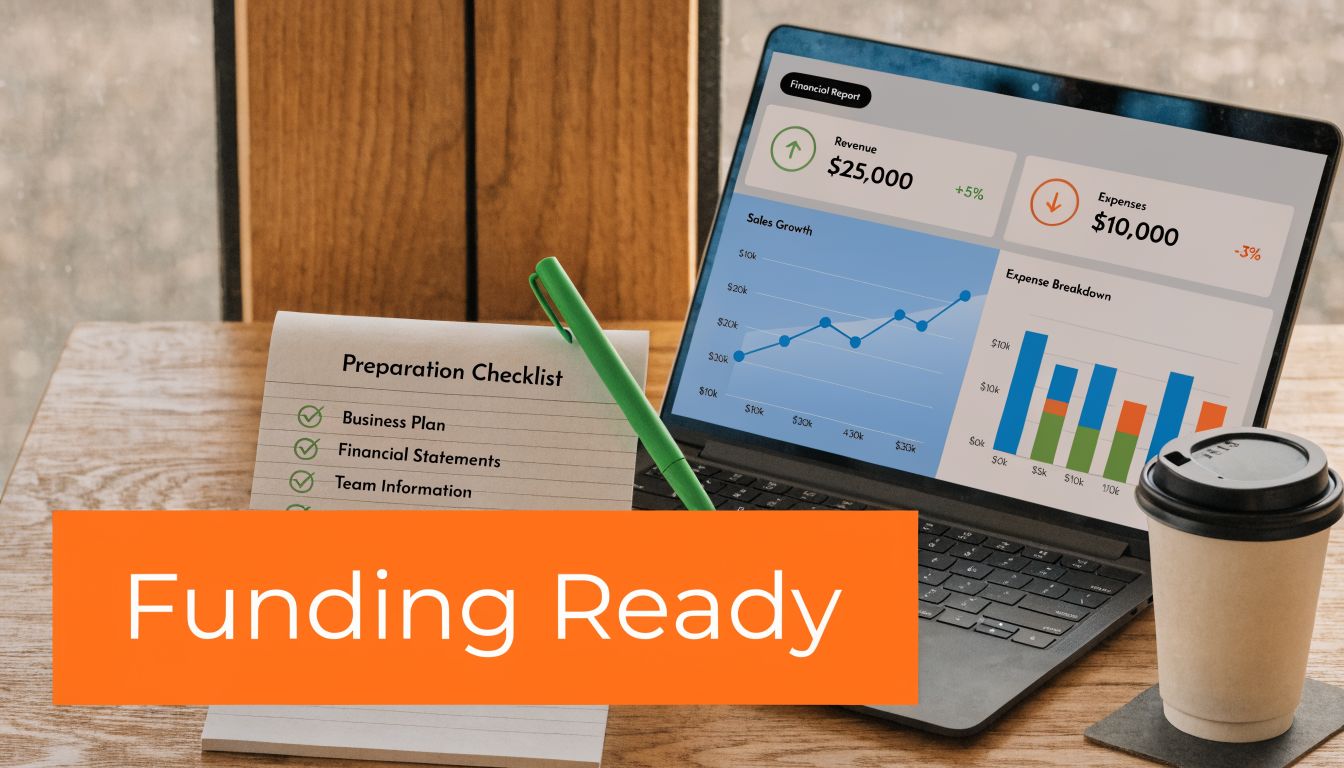
Use this short prep list:
- Separate accounts completely so lenders can see clean business cash flow.
- Reconcile your books monthly instead of trying to rebuild them in a panic.
- Export platform reports from Shopify, Amazon Seller Central, or wherever you sell.
- Pull your credit reports early and dispute errors before a lender finds them.
- Organize statements and tax records in one folder, clearly named and current.
Write the repayment story
A lender wants documents. But behind the documents, they want a believable story.
Write a one-page memo that answers these questions:
- What exactly are you using the funds for?
- How does that use create cash?
- What is your backup plan if sales come in lighter than expected?
That one page does two jobs. It sharpens your own thinking, and it stops you from sounding vague on calls.
If you can’t explain your use of funds in plain English, you’re still borrowing on hope.
Make your financial picture easy to trust
I’ve seen founders bury themselves by sending too much junk. Don’t dump random screenshots and giant folders on a lender. Package your business like someone who respects the reviewer’s time.
Use a simple checklist for your file stack:
- Bank statements that match your reported sales
- Profit and loss statement pulled from your accounting software
- Cash flow view that shows where money goes, not just what came in
- Sales reports by channel so a lender can understand concentration risk
- Short business summary that explains the company, products, and use of proceeds
If you’re still building your credibility, spend time on building business credit in a more intentional way. Better profiles get more options. More options mean less desperation. Less desperation leads to better decisions.
Don’t apply everywhere at once
Founders get sloppy. They panic, shotgun applications, then try to sort through the fallout later. Bad move.
Pick a small list of lenders that fit your stage. Submit cleanly. Compare terms. Ask hard questions. If a lender gets evasive when you ask about repayment mechanics or guarantees, move on.
Approval is easier when you look calm, prepared, and selective.
The True Cost and Hidden Risks of Borrowing
Most founders focus on the wrong number.
They stare at the headline rate and assume they understand the deal. They don’t. The true cost of borrowing lives in the repayment structure, the timing, the fees, and what happens to your cash flow when reality gets messy.
Factor rates can fool you
Many people become trapped here.
A factor rate sounds harmless because it doesn’t speak the language most founders are used to. “Borrow this, repay this multiple.” Clean. Simple. Dangerous if you stop there.
If you borrow money on a factor structure, the first question is not “Can I afford the total payback?” The first question is “What does repayment feel like every week while I’m still running the business?”
That’s why fast-payback products can sting. The money might help you today, but if repayments start hitting before your inventory turns or your campaign matures, your business gets squeezed from both sides.
Cash flow strain is the real killer
A business rarely dies because the founder misunderstood one term on page seven. It dies because repayment pressure stacks on top of normal operating chaos.
You pay for inventory. Sales lag a little. Returns rise. Ads get less efficient. Then loan deductions keep coming anyway.
That’s the part nobody should sugarcoat. Borrowed money can turn timing problems into survival problems.
Use this filter before you sign anything:
- Map the repayment rhythm against your actual sales cycle
- Stress test a weaker month and see if the payment still feels survivable
- Check whether deductions are fixed or sales-based
- Ask about every fee in writing, including any prepayment rule or origination charge
- Assume your next month won’t be your best month
Borrowing works best when it gives you margin for error. If the loan removes your margin for error, it’s probably the wrong loan.
Personal guarantees are not small print
A lot of founders skim past the guarantee language because they’re focused on getting approved. That’s backwards. The guarantee can matter more than the rate.
If you sign a personal guarantee, you’re no longer dealing only with business risk. You’re tying your own life more directly to the deal. That doesn’t mean never sign one. It means understand exactly what you’re putting on the line before your excitement does the reading for you.
If a lender says the guarantee is “standard,” fine. Standard does not mean harmless.
A simple real-world pattern
I’ve watched founders use debt well and badly. The pattern is obvious.
The smart borrower takes money for a narrow, measured reason. They know the timeline. They know the margin. They know how repayment fits the business. They leave room for bad weeks.
The reckless borrower takes more than needed because the approval feels flattering. They spread the money across too many problems. Then the business grows in revenue while getting weaker in cash.
That second version looks good for a minute. Then it starts choking.
My no-nonsense rule
Borrow for a proven motion, not a theory.
If inventory reliably sells, debt can help. If customer acquisition reliably pays back, debt can help. If you’re still “seeing what happens,” use your own cash, cut expenses, pre-sell, or slow down.
Plenty of founders ruin good businesses by using ecommerce business loans to force growth before the business is ready to carry it.
Alternatives and Support for Chicago Founders
Sometimes the best move is to avoid debt entirely.
If you can pre-sell product, negotiate better supplier terms, tighten your ad spend, or use customer cash to fund inventory, do that first. Debt is useful. It is not automatically the smartest option.
Midwest founders need different advice
A lot of funding content reads like it was written for founders in coastal bubbles. That’s one reason it often misses the reality for operators in Chicago and the broader Midwest.
That gap matters because Midwestern founders face higher denial rates, with 21% for bank loans and 45% for SBA loans in 2024, according to research on funding for ecommerce businesses in the Midwest. That same source says generic content also skips how peer communities can help founders reduce risk by 15% to 25% through shared knowledge.
I buy that logic. Peer insight is one of the few advantages that compounds.
Ask operators, not just lenders
Lenders tell you how their product works. Founders tell you how it feels after six months.
That difference is massive. An operator will tell you whether repayments became annoying, whether reporting was clean, whether renewals got weird, and whether customer support vanished once the money landed.
That kind of truth saves people from expensive mistakes.
Here are the questions I’d ask other founders before touching any lender:
- Did the repayment structure match your real sales cycle
- Did the lender change behavior after funding
- Were there surprise fees, confusing deductions, or aggressive collections
- Would you use them again if you had other options
Community beats random networking
I’m not talking about cheesy networking events where everyone trades LinkedIn pitches and nobody says anything real. I mean small, trusted groups where founders share actual numbers, real outcomes, and ugly lessons.
That matters more in the Midwest because banking relationships can be thinner, warm intros can be rarer, and plenty of hardworking founders are building without the polished insider playbook.
You can find useful local pathways through small business incubators and founder support communities. The point isn’t to collect logos. The point is to get around people who’ve already stepped on the landmines.
The fastest way to get smarter about funding is to talk with someone who already regrets the deal you’re considering.
Non-debt options worth considering
You don’t always need a loan. Depending on your stage, these can be better:
- Crowdfunding if your product has strong story and pre-sell appeal
- Grants if your business fits local or mission-based programs
- Supplier negotiation if your vendors will extend terms once trust builds
- Customer-funded growth through deposits, pre-orders, or bundles
I like debt best when the model already works. Before that, creative financing and peer feedback often do more good than a rushed loan application.
The Smart Way to Fund Your Growth
Use funding with precision.
That’s the whole game. Take money for a specific move. Know how it gets repaid. Match the repayment structure to the way your business earns. Keep your books clean. Read every term. Talk to founders who’ve used the lender before you sign.
Don’t borrow to feel legitimate. Don’t borrow because someone approved you. Don’t borrow to patch a business that still doesn’t have a solid engine.
Do borrow when the use is clear and the math works.
The founders who handle ecommerce business loans well usually do a few simple things right. They stay honest about margins. They keep cash flow in focus. They choose slower, cheaper money when time allows. They choose faster money only when the return is obvious and the downside is controlled.
Be ambitious. Stay disciplined. Protect your downside. That’s how you grow without handing your business to the lender.
If you’re a kind, hard-working Chicago or Midwest founder building from idea stage to real traction, Chicago Brandstarters is worth your attention. It’s a free, vetted community where builders share honest war stories, compare what is working, and help each other avoid expensive mistakes. If you want better funding decisions, better founder friends, and less lonely trial-and-error, it’s a strong room to be in.
Leave a Reply