It's 11 p.m. Your supplier just missed a shipment, customers expect their orders, and you have no one to ask. You don't need another motivational post. You need someone who can help you decide whether to split the shipment, contact customers, or cancel the promotion before you spend more money.
Some e commerce groups give you people to call. Others put a course checkout between you and the conversation. Neither format automatically makes a group good or bad, but buying lessons when you need operator feedback gets expensive fast.
I'd compare the pitches of these ten groups by cost, access, revenue stage, and the problem you need to solve. Chicago Brandstarters, for example, helps members build from an idea toward seven figures. An established seller may need a searchable operator forum instead.
Choose the room where you can describe your actual problem without pretending your business is further along.
These are founder communities, not groups where you post products for sale. They also don't replace customer-support systems. For the operational side of handling shipment questions and customer conversations, ServeApps on ecommerce contact centers provides a separate starting point.
Your immediate choice is simpler: Do you need idea validation, peer support, operator answers, or scaling playbooks? Start with that need, then compare the membership.
1. Chicago Brandstarters
Best for idea-stage through growing Midwest founders who want candid peer support. At Chicago Brandstarters, we prioritize kindness, boldness, and hard work. You don't need a polished investor pitch to talk about a product you haven't launched.
Our membership costs $0 and includes the active group chat, small dinners, and other events. Every two weeks, we bring 6–8 people together for private dinners, so you can explain the messy part of your business without competing for attention across a crowded room.
What makes the format useful
We use identity and LinkedIn verification to screen applicants and keep self-promoters and service-sellers out. Our confidentiality norms encourage honest conversations about weak sales, uncertain product choices, advertising, fulfillment, and the loneliness of building alongside a day job.
Kevin Tao founded the community after helping two friends grow their brands to seven figures. He also cofounded NeuEve and Litter Caterpillars, so our approach centers on practical operating decisions rather than networking theater.
- The upside: You can build relationships through recurring conversations instead of restarting your introduction at every event.
- The evidence: Members describe solving persistent business problems, expanding their networks, and gaining factory-tour access.
- The limitation: Our Chicago and Midwest focus makes the dinners less practical if you live elsewhere. We can provide support and connections, but we can't guarantee growth.
I'd choose this format when you need people who'll discuss whether you should place an inventory order, not congratulate you for considering it. We don't list awards or formal certifications; the fit comes from the people, the boundaries, and the conversation.
2. Startup CPG
A snack founder and a digital-template seller don't need the same advice. Startup CPG fits emerging physical-product brands, especially food, beverage, beauty, wellness, and pet businesses.
Its free Slack community connects founders around product development, retail, distribution, and bringing consumer goods to market. You can also use its events, webinars, podcast, and industry resources without treating every question as a consulting engagement.
Choose category knowledge over general chatter
Say you're preparing a packaged-food launch. Ask about packaging compatibility, distributor expectations, or how another founder approached retail readiness. Those questions belong closer to other consumer-product builders than to a general entrepreneurship channel.
- Best stage: Idea validation, product development, and early revenue.
- Strongest advantage: Category-specific conversations plus online and in-person connections.
- Main trade-off: A large Slack takes navigation, and Startup CPG doesn't describe it as a small confidential peer circle.
I'd arrive with a narrow question and search past discussions before posting. For ongoing guidance beyond a public thread, distinguish e-commerce mentoring from casual peer feedback.
Keep creative tools in their lane, too. You can consider the ShortGenius AI ad generator for ad production, but ask founders to critique the customer promise and supporting evidence before you make more versions of an unproven message.
3. Foundr+
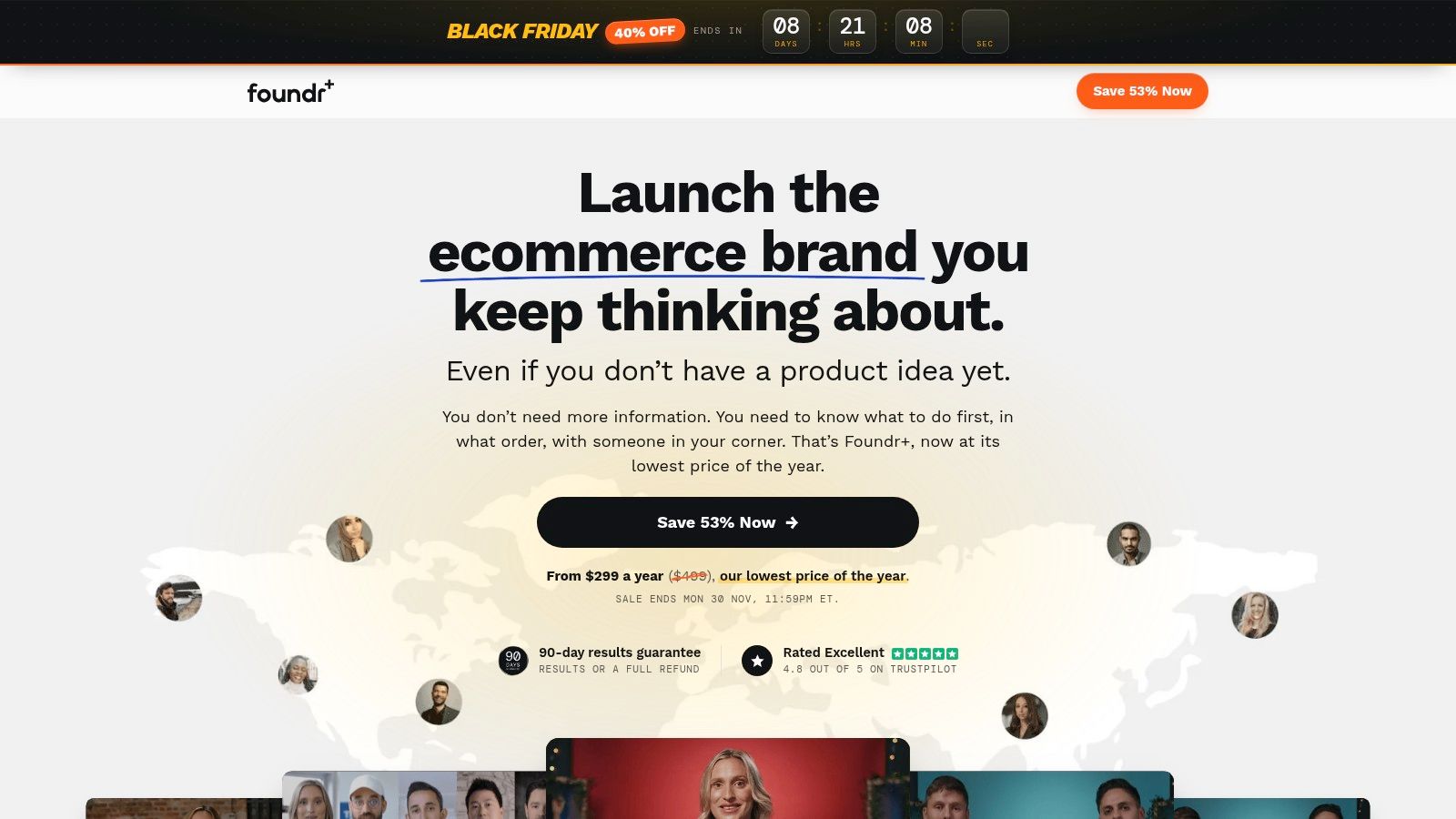
Foundr+ makes more sense when you need a curriculum than when you need a dinner table. Its paid membership combines a private founder community with training, templates, and live workshops.
The material covers product validation, development, advertising, email, Amazon, and wholesale. That breadth can help you connect tasks that otherwise feel separate, like choosing a product, building a launch plan, and preparing follow-up emails.
The Foundr+ membership page advertises weekly live workshops, a 24/7 AI coach, and a 90-day results guarantee. Read the guarantee conditions and renewal terms before paying, particularly when promotional and standard prices differ.
Practical rule: Buy a learning membership for a specific task you intend to finish, not for the possibility that you might eventually need everything inside it.
Where the trade-off lands
I'd consider Foundr+ for an early-stage founder who wants structured launch guidance or a growing operator learning an unfamiliar channel. I wouldn't choose it first for confidential peer support.
A large course library can become another unfinished project. Pick a deliverable, like a validation plan or email sequence, and work through the material that helps you complete it.
The community can provide feedback along the way. Still, don't assume course access gives you a small, curated group of operators with the same business model or revenue stage.
4. Ecom North
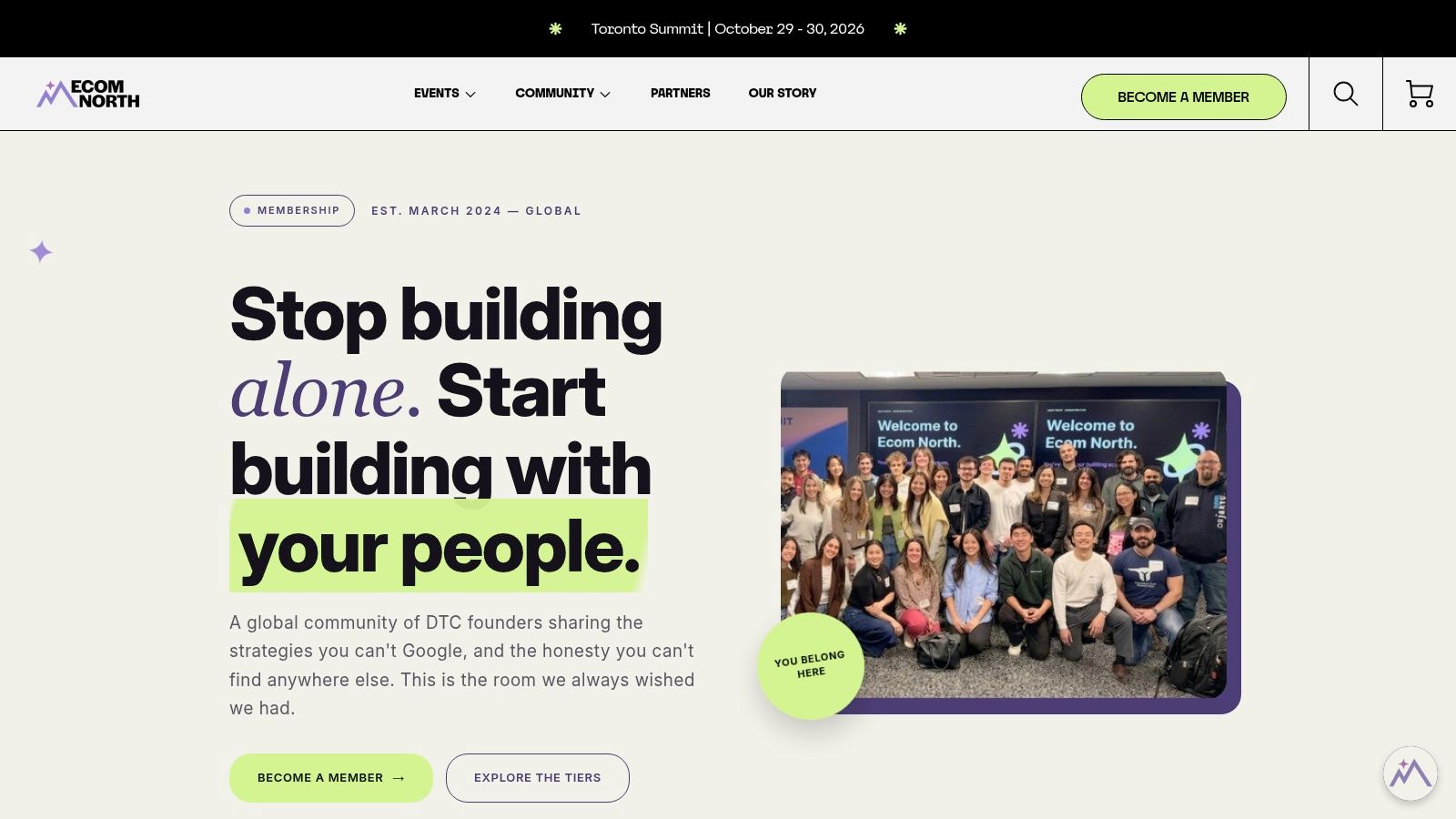
Revenue stage matters more here than geography. Ecom North separates founders building toward scale from operators who've already reached it, with online programming alongside summits and member events.
The Ecom North membership page positions Collective for brands scaling toward $1 million and its invite-only Council for businesses above $1 million in annual revenue. Its community includes DTC, Amazon, and TikTok Shop sellers.
Collective versus Council
Collective includes Slack, office hours, roundtables, and a resource library. Council adds a more intensive forum-based mastermind and VIP access, so the distinction goes beyond opening extra channels.
- Choose Collective: You operate a brand and want scheduled discussion while you build.
- Consider Council: You meet its revenue requirement and want deeper conversations with established operators.
- Budget for participation: Membership costs money, and in-person summits may add travel costs for Chicago-area founders.
I like the clearer stage separation. A founder choosing an initial product and an owner redesigning a management team need different conversations, even when both sell through Shopify.
The limitation is commitment. Scheduled programming only helps if you attend and bring decisions worth discussing. Before joining, compare the actual calendar with your work hours and identify which sessions address your current bottleneck.
Online access makes remote participation possible. It doesn't mean you'll get the same relationship depth from reading Slack as you would from joining roundtables.
5. Commerce Catalyst
Your next question might concern a warehouse, not a growth strategy. Commerce Catalyst is a free Slack community for e-commerce founders and operators, with a particular base in Utah.
Members can discuss launches, hiring, third-party logistics, and other operating problems. The community reviews applications and shares local meetups and e-commerce event information.
I'd consider it for a founder moving from launch into regular operations. The website doesn't publish revenue-stage eligibility, so don't treat it as a formally defined beginner or advanced mastermind.
Bring enough context for a useful answer
A useful logistics question includes your product type, shipping constraints, order pattern, and what your current provider gets wrong. Asking for the best fulfillment company without that context mostly produces names you still need to investigate.
- Why join: Free access and an operator-oriented focus.
- Why hesitate: Slack discussion doesn't provide the structure of a facilitated peer group.
- Location trade-off: You can participate remotely, but Utah meetups won't solve a Chicago founder's need for nearby relationships.
For in-person learning, compare the purpose of an electronic commerce conference with ongoing community participation. An event can introduce you to people; repeated discussions let you see how they reason.
Commerce Catalyst makes sense as an operating-question channel. I wouldn't assume it supplies confidential accountability or a standing group that follows your decisions over time.
6. Amplify
Some brands don't fit neatly into an online-store category. You might sell directly, pursue retail accounts, and test a consumer-product concept at the same time.
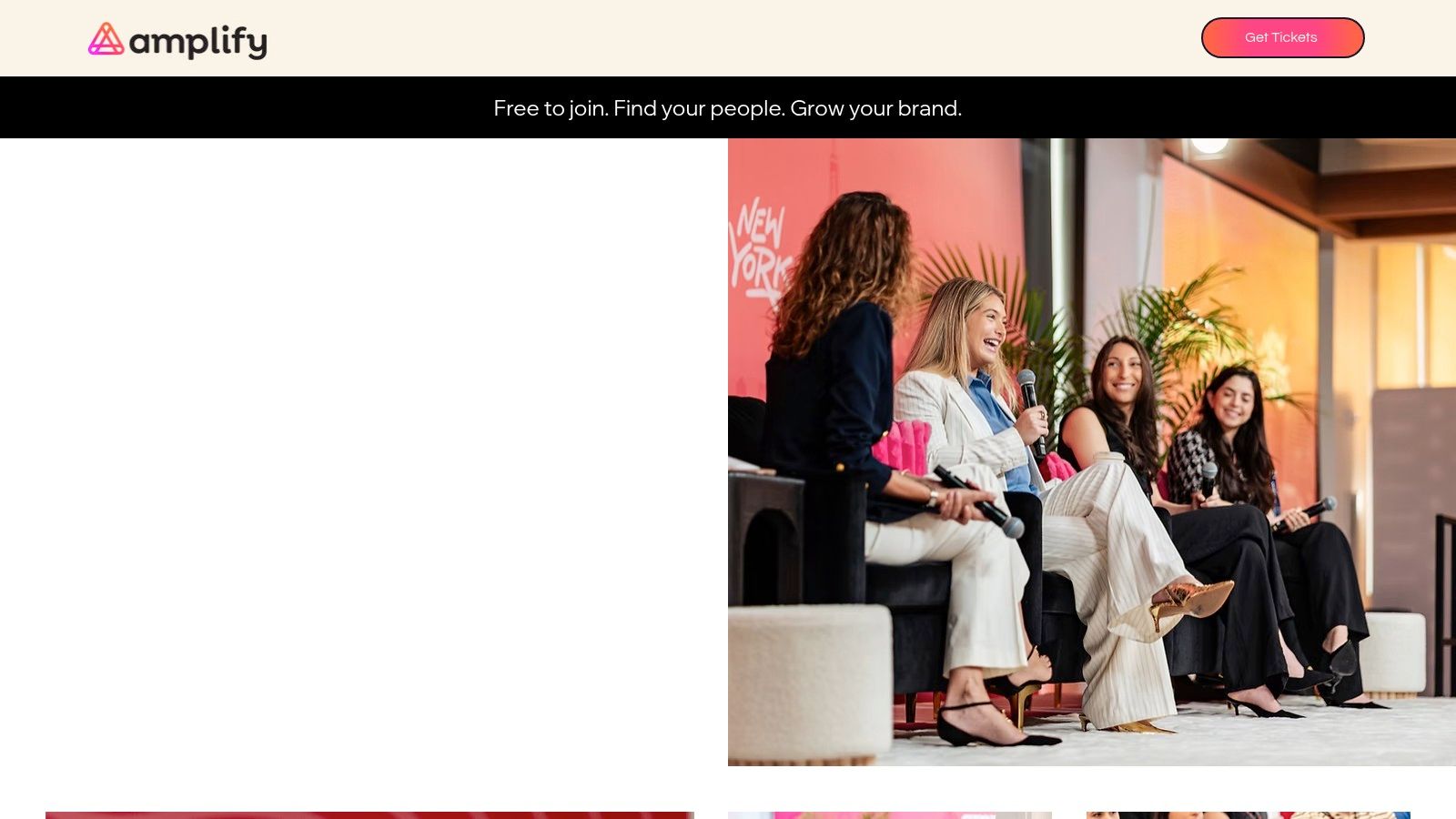
Amplify fits that broader consumer-brand world. It brings together DTC, CPG, e-commerce, and consumer-brand founders and operators through a private community, events, resources, and member benefits.
Joining is free if you receive approval. The site doesn't publish a full membership price schedule, so separate basic community access from any additional activities you might consider.
Breadth helps until you need channel depth
I'd shortlist Amplify for an early-stage product builder who wants peers across retail and e-commerce. You can discuss the business beyond a single acquisition channel, which helps when you're still deciding where customers should buy.
- Useful fit: Consumer-brand founders who want online connections and opportunities to meet in person.
- Access constraint: Approval determines entry; signing up doesn't guarantee admission.
- Possible mismatch: A broad brand community may provide less depth on a narrow Amazon, logistics, or paid-search problem.
Treat discounts and perks as extras. A software discount won't compensate for conversations that don't help you make decisions.
Before investing much time, post a concrete question tied to your product and route to market. Judge the replies by their relevance, the reasoning behind them, and whether the respondent distinguishes personal experience from general advice.
7. DTC Nation
Service-provider participation can help or distract you. DTC Nation includes emerging brands, established operators, industry experts, and providers, so your preference matters.
The DTC Nation community has Slack access, resources, events, and opportunities for feedback. That makes it a possible fit for early-revenue founders who want both peer conversations and introductions to outside support.
Separate advice from a commercial proposal
Say you ask why customers abandon checkout. A brand operator might describe a shipping-message experiment; a provider might propose an audit. Either response could help, but you should understand which conversation you're having before sharing access or discussing a contract.
Ask what the person would recommend if you never bought anything from them.
The broader membership can help you find specialists. It can also feel less operator-focused than a screened founder-only room.
- What works: Remote access and connections across the DTC ecosystem.
- What needs checking: The site doesn't state clear membership pricing or detailed entry criteria.
- What remains unclear: Public information gives limited detail about event frequency and member activity.
I'd use it to explore relationships before relying on it for sensitive financial discussions. Good networking and e-commerce habits start with a specific question and clear boundaries, especially when fellow members may also want your business.
8. eComFuel

A searchable answer from another owner can beat another introductory webinar. eComFuel targets established e-commerce owners, with a private forum, discussion archive, member directory, events, and member-written reviews.
Its focus on owners of seven- and eight-figure businesses makes it a later-stage choice. Applicants need to meet its ownership and revenue requirements, and membership costs money.
Pay for relevant operating context
I'd consider eComFuel when your questions concern management, software choices, agencies, and scaling decisions. At that stage, you need peers who understand the consequences of changing systems while customers still expect orders.
The searchable archive matters because you can investigate past discussions before starting a new thread. Member-written reviews and software or provider discounts add practical support, while the annual conference and other events create opportunities to meet fellow owners.
- Strong fit: Established owners who want operator-to-operator discussion.
- Useful boundary: Screening aims to reduce pitches and low-relevance posts.
- Poor fit: Beginners who still need to validate a product or make initial sales.
Don't stretch your budget to join an advanced room before your problems match the conversation. You can learn complex tactics and still lack a product customers want.
Even at the right stage, compare the advice with your margins, team, and channel mix. Another owner's successful software migration doesn't automatically justify yours.
9. Million Dollar Sellers (MDS)
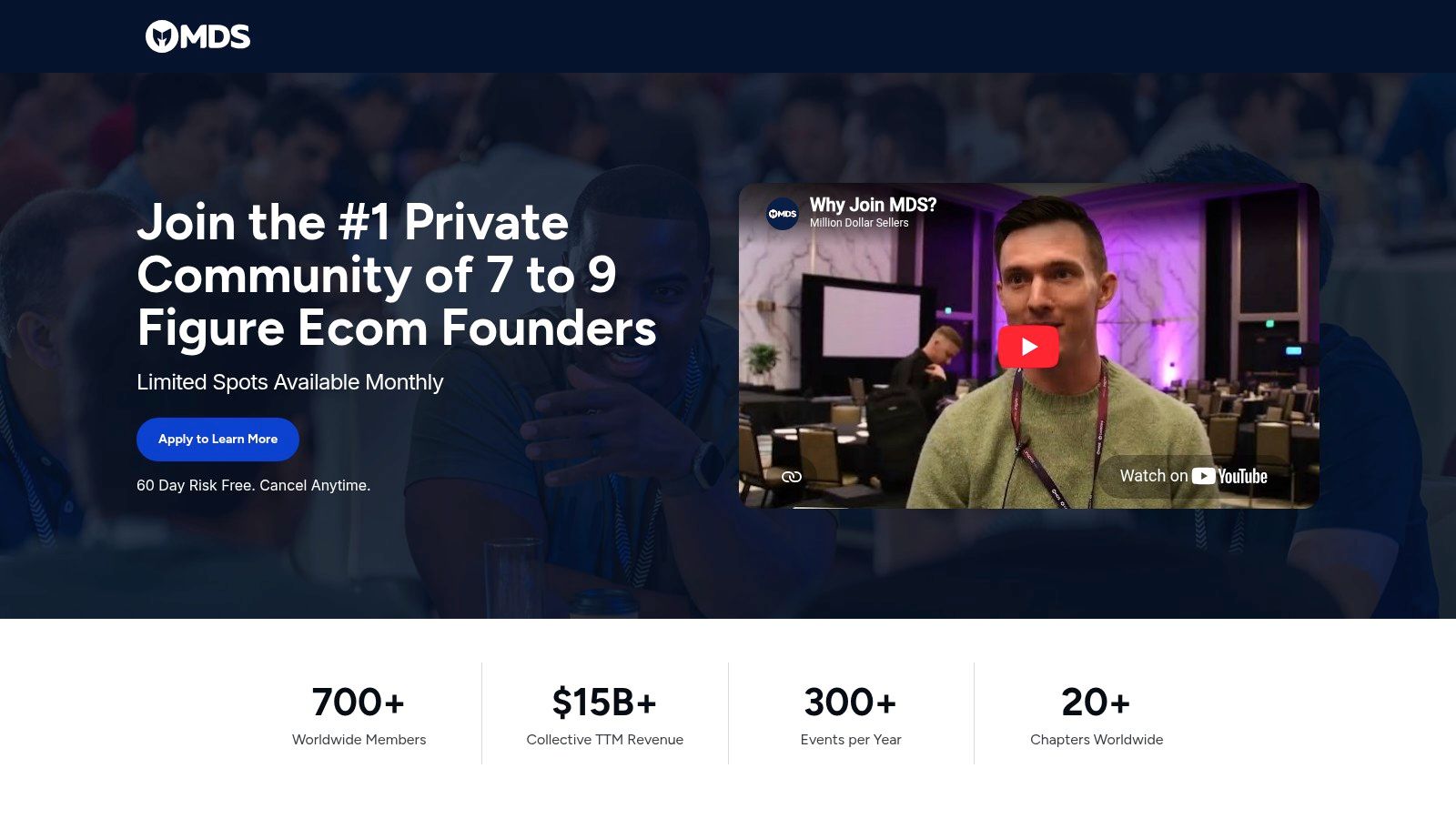
Million Dollar Sellers is a scaling community, not an idea-validation room. It brings together established founders across Amazon, DTC, and TikTok through online discussions, calls, local groups, and events.
The MDS membership application requires at least $1 million in trailing e-commerce revenue. Its membership spans businesses from seven to nine figures, and the annual cost makes it a substantial commitment.
Judge continuity, not member count
MDS reports retaining more than 90% of members year over year, according to this Million Dollar Sellers company account on Yahoo Finance. Treat that as a company-reported indicator of continuity, not a guarantee that you'll get the same result from joining.
For an established operator, recurring access can matter more than meeting another batch of strangers. Peers who understand your business can challenge a channel-expansion plan with more context than someone hearing your introduction for the first time.
- Why consider it: Established-founder screening and coverage across selling channels.
- What to budget: Annual dues, participation time, and any event travel.
- When to skip it: You need basic product feedback, encouragement, or help earning initial revenue.
I'd compare MDS with eComFuel based on how you prefer to participate. Look at calls, discussion archives, local access, and the kinds of businesses you want around you rather than choosing by the larger-sounding revenue range.
10. GROW
GROW suits founders who want a lighter learning channel without vendor participation in Slack. Its mix includes a newsletter, a brand-only Slack group, gatherings, and other events focused on online retail and DTC.
The GROW community page describes free newsletter and Slack access, vendor-free positioning, and monthly gatherings. Brand marketers participate alongside operators, so don't expect every discussion to come from an owner.
A useful additional channel
I'd consider GROW for an early-revenue founder who wants customer-acquisition ideas and peer contact without buying a training membership. Its online access also helps if you can't attend events locally.
Vendor-free positioning may reduce unsolicited pitches. It doesn't automatically create confidentiality, and GROW doesn't describe the group as a small private mastermind.
- Best use: Follow relevant discussions, ask focused questions, and meet other brand-side practitioners.
- Stage limitation: The site doesn't publish a formal revenue or experience requirement.
- Format limitation: A newsletter and broad Slack won't necessarily provide sustained accountability.
Keep a distinction between learning about tactics and deciding to use them. If someone recommends a new acquisition channel, ask what product, audience, creative approach, and economics supported the recommendation.
GROW can complement your operating routine without becoming another full-time inbox. Mute irrelevant channels, save useful discussions, and return with results when you test an idea.
How the 10 e-commerce groups compare on cost, access, and stage fit
| Group | Cost | Access | Best For |
|---|---|---|---|
| Chicago Brandstarters | Free | Vetted; private chat and small-group dinners in Chicago and the Midwest | Founders seeking candid peer support and local connections |
| Startup CPG | Free | Slack community, events, webinars, and resources | Emerging consumer-product brands |
| Foundr+ | Paid membership; check current pricing | Private community, courses, templates, and workshops | Founders seeking structured e-commerce training |
| Ecom North | Paid; tiered membership | Online programming, events, and revenue-based tiers | DTC, Amazon, and TikTok Shop brands at different stages |
| Commerce Catalyst | Free | Reviewed Slack community; Utah-focused meetups | E-commerce founders and operators seeking practical peer advice |
| Amplify | Free if approved | Application-based private community, events, and resources | Consumer-brand founders and operators |
| DTC Nation | Pricing not clearly published | Slack, resources, events, and industry connections | Emerging DTC brands seeking community and service-provider connections |
| eComFuel | Paid membership | Selective; revenue and ownership requirements | Established e-commerce owners, especially seven- and eight-figure businesses |
| Million Dollar Sellers (MDS) | Significant annual fee | Application-based; at least $1 million in trailing e-commerce revenue | Established, multi-channel e-commerce founders |
| GROW | Free newsletter and Slack | Brand-only Slack and community events | Online retail and DTC brands seeking vendor-free peer discussion |
Pick One Group and Test It for 60 Days
Pick one group, not all ten. Match it to your revenue stage today, join, and judge it by the answers you get back.
If you're still shaping an idea, prioritize patient feedback and honest support. Startup CPG fits consumer-product questions, while Foundr+ suits a founder who wants structured lessons. For Chicago and Midwest founders who want a small, confidential setting, Chicago Brandstarters is the place to start.
Once you operate a store, your questions change. Commerce Catalyst and GROW can provide channels for practical discussion; Amplify and DTC Nation connect you with a broader consumer-brand ecosystem. Ecom North, eComFuel, and MDS deserve consideration when your operating needs match their structure and entry requirements.
Test the conversation, not the sales page
Bring a decision you need to make. Explain the situation, your constraints, what you've tried, and the alternatives you're considering without sharing customer information or confidential contracts.
Then evaluate the response:
- Relevance: Did members address your actual business model and stage?
- Reasoning: Did they explain when their advice works and when it doesn't?
- Independence: Could you get help without buying a service?
- Follow-through: Could you return with results and continue the discussion?
Give something back, too. Share a useful supplier question, a product-page experiment, or a clear explanation of a mistake you can help someone else avoid. You don't need impressive revenue to contribute a careful observation.
Be equally direct about your financial boundaries. A founder group can help you examine an inventory decision, but it can't replace an accountant, a lawyer, or qualified mental-health support. Don't mistake confidence in a chat thread for expertise.
Move up when the problem changes
At $75,000 in revenue, we encourage members to explore Goldman Sachs 10,000 Small Businesses. At seven figures, we encourage applications to EcomFuel and Million Dollar Sellers.
For Chicago and Midwest founders, our $0 membership includes the group chat and small dinners every two weeks. Start there if you want recurring peer support, then move up when your revenue and operating questions call for a different room.
Keep specialist work separate from community selection. You might investigate ecommerce influencer marketing while planning a campaign, then use your group to challenge the budget, assumptions, and measurement plan.
At the end of your trial, ask a simple question: Did this group help me make better decisions? Keep the membership that earns a clear yes. Leave the channels you only scroll.
We built Chicago Brandstarters for kind, hard-working Chicago and Midwest founders who want honest peer support through a vetted group chat and small private dinners. Visit Chicago Brandstarters to apply, and bring the product idea or operating question you're tired of figuring out alone.
Leave a Reply