
The most popular networking advice starts with an elevator pitch. That advice often makes people sound polished, interchangeable, and ready to sell before anyone has shown interest. Good networking feels less like collecting contacts and more like opening a useful conversation. The strongest questions invite an honest story, reveal where someone needs support, or give them room to teach.
Use these meaningful conversation starters with care. Share your own answer, listen before offering advice, and ask permission before making an introduction. A private dinner can handle more direct questions than a busy meetup. A group chat needs a concise prompt, while an investor or mentor introduction calls for context and restraint.
The ten questions below create different kinds of connection. Choose the one that fits the moment instead of forcing a deep question into a shallow setting.
1. What problem are you trying to solve that keeps you up at night?
This question moves past the polished founder story and toward the work that occupies someone's real attention. A founder may describe a product, market, or launch at first, but the useful answer often appears after that surface description. Maybe customer retention feels uncertain. Maybe hiring consumes every spare hour. Maybe the founder can't decide which opportunity deserves focus.
Try this delivery:
“I'm wrestling with a problem around finding the right early customers. What problem are you trying to solve that keeps you up at night?”
That script works because you answer first. Your example gives the other person permission to speak openly instead of performing confidence. Ask it at a private dinner, during a one-to-one introduction, or after someone mentions a difficult decision. At a loud meetup, use a lighter version: “What's taking most of your attention right now?”
Listen for the feeling behind the answer
Facts matter, but emotion often points toward the underlying issue. Notice whether the person sounds frustrated, relieved, confused, or energized. Then ask, “Have you tried anything that changed the situation?” or “Who else has this problem?”
Don't rush to solve the problem. A founder who mentions customer interviews may need a sounding board, not a consultant. If the conversation turns toward understanding buyers, you can later share guidance on customer discovery interviews, but only after you understand what they're trying to learn.
For example, if someone says they can't tell why prospects stop responding, ask what those prospects said before going quiet. That question keeps the exchange exploratory and avoids turning their frustration into an opening for your pitch.

2. What's the one thing you wish you'd known before you started?
Founders carry lessons that don't fit neatly into an elevator pitch. This question gives them room to share one of those lessons without making them defend their current performance. It can surface a mistake, a useful habit, a hard decision, or a belief they had to abandon.
Use a calm, simple delivery:
“Before I started, I wish I'd understood how much time customer conversations would take. What's the one thing you wish you'd known before you started?”
Then wait. Silence helps here. If you jump in too quickly, you'll turn a thoughtful question into a formality. At a founder dinner or mentor conversation, ask, “How did you work through that?” You can also ask, “Who helped you figure it out?”
Turn advice into a story
A generic lesson gives you little to work with. Ask for the moment that produced it. If someone says, “I should've hired sooner,” ask what happened before they reached that conclusion. If they say, “I focused too much on the product,” ask which customer conversation changed their view.
A short note on your phone can help you remember what they shared, but don't make the person feel like a source you're extracting from. Respond with your own lesson too. Northwestern's networking question sheet recommends using interesting questions and warns that too many questions in a row can feel like an interrogation. Treat the exchange like a tennis rally. Ask, listen, and return something from your own experience.
At a meetup, shorten the prompt to, “What surprised you most after you began?” In a group chat, write, “What's one early lesson you'd pass on to someone starting today?” Those versions keep the question useful without demanding a long personal answer.

3. How did you end up working on this instead of something else?
People often ask founders what they're building. That question can produce a rehearsed description. Asking how they arrived at the work reveals the decision behind the business, including the experience, frustration, or opportunity that pulled them in.
Try this:
“I've always been curious about the moment someone chooses one problem over all the others. How did you end up working on this instead of something else?”
This fits a first conversation when you already know the person's general field. It also works well in an investor or mentor introduction, where the background helps you understand the person before discussing the company. At a casual meetup, ask, “What pulled you into this work?”
Follow the turning point
Listen for the point where their voice changes. Maybe they saw a family member struggle with a problem. Maybe they worked in an industry and noticed an inefficient process. Maybe a side project kept attracting attention until ignoring it felt harder than pursuing it.
Ask, “What would have happened if you hadn't started this?” That question can reveal the cost of staying on the safer path. Share your own decision point first if the person seems guarded: “I started exploring this because I kept seeing small retailers lose time on the same task.”
Don't challenge the origin story as though you're testing whether the business deserves to exist. Your job is to understand the person's choice. If they describe a painful customer experience, ask what they changed because of it. If they describe a career transition, ask which part of the old work they still use today.
The conversation stays away from a pitch because you're discussing motivation, not asking for a meeting, referral, or purchase.
4. Who's one person you wish you had in your corner right now?
“What do you need?” can sound broad and transactional. “Who do you need?” gives the conversation a human shape. The answer may point to a product designer, manufacturer, operator, mentor, investor, or customer who understands a narrow problem.
Open with your own context:
“I'm looking for someone who understands wholesale distribution. Who's one person you wish you had in your corner right now?”
Ask what that person would help with specifically. Someone may name a famous founder, but the need could involve reviewing a supply agreement, testing a product, or making sense of a hiring decision. That detail tells you whether you can help or whether you should stay out of it.
Offer introductions with permission
If you know someone relevant, say, “I might know a person who could help with that. Would you like an introduction?” Don't promise an introduction before checking with both sides. A weak referral creates work for everyone and can damage trust.
If your own experience fits, offer it without taking over: “I've dealt with a similar vendor issue. I can share what I learned if that would help.” The other person may prefer a quick answer, a warm connection, or just a chance to name the gap.
A private founder dinner is a good setting for this question because people can explain the need without performing for a room. In a group chat, use a concise version: “Does anyone know an operator who has handled this?” Then add enough context for members to judge whether they can help.
If the conversation leads toward mentorship, you can share this practical guide on finding a business mentor. Keep the exchange about the person's current need, not about proving that your network can solve everything.
5. What's working that surprised you?
Networking conversations often orbit around problems, targets, and plans. This question changes the temperature. It asks the founder to notice progress that may not fit the official story yet.
Use it after someone has described a challenge:
“You mentioned that acquisition has been difficult. What's working that surprised you?”
The answer could be small. A founder may say that referrals bring better customers than paid campaigns, that a simple email gets replies, or that one product variation sells far better than expected. Treat the observation as useful evidence, not as a consolation prize.
Make the small win easier to see
Ask, “How could you do more of that?” If referrals work, explore who makes them and what those customers have in common. If a basic email gets responses, ask what language appears in it. If a founder says a supplier finally delivered on time, ask what changed in the process.
Write down the phrase they use to describe the win. People often understand their advantage more clearly when someone else repeats it back. You might say, “It sounds like your strongest growth channel is trust from existing customers, not reach from new audiences.”
Avoid making the exchange sound like a performance review. Don't respond to a small win with, “How much revenue did that create?” unless the person has already invited a commercial discussion. The point is to help them examine what works.
You can adapt this prompt for a meetup: “What's gone better than expected lately?” In a group chat, ask members to share one unexpected positive signal. For a founder who wants more structure, practical business networking strategies can help turn observations into repeatable conversations and relationships.

6. What would you do differently if you knew you couldn't fail?
This question works when someone has already mentioned risk, hesitation, or a decision they keep postponing. It doesn't ask them to make a grand declaration. It asks them to remove fear temporarily and describe the direction underneath it.
Try this:
“If failure weren't part of the decision, what would you do differently?”
Then share your answer. “I'd contact ten retailers this week instead of polishing the website” makes the question practical. It also keeps you from sounding like a coach who demands courage from other people while hiding behind safe choices yourself.
Bring ambition back to the calendar
The first answer may sound unrealistic. Don't debate it. Ask, “What's one small thing you could do this week that moves toward that?” A founder who says they'd enter a new market might choose to interview one buyer there. Someone who wants to hire may define the role and ask one trusted operator for feedback.
That follow-up turns ambition into an experiment. It also keeps the conversation away from a pitch because you're discussing action, not asking the person to buy into your idea.
Use a lighter version at a meetup: “If you had more room to experiment, what would you try?” In a private dinner, you can ask directly about the fear underneath the answer. In an investor introduction, avoid using the question as a challenge. Ask about the decision they're considering and let them decide how much to disclose.
A useful response sounds like, “That makes sense. What would make the first step feel safer?” You're creating space for honest ambition without pretending risk disappears.
7. Who have you learned the most from, and what did they teach you?
This question creates a connection through influence. It asks the person to name someone who shaped their thinking and explain the lesson in their own words. You learn what they value, whether they credit teachers freely, and how they turn experience into practice.
Deliver it with genuine interest:
“Who have you learned the most from, and what did they teach you?”
The two parts matter. A name without a lesson tells you little. A lesson without the person behind it can sound abstract. Ask, “How did they teach you that?” or “Are you still in touch?”
Let the answer reveal standards
A founder might name a former manager who taught them to speak plainly with customers. Another might mention a parent who modeled persistence, or a technical mentor who taught them to test assumptions before building. Don't rank the answers. Listen for the standard the person tries to follow.
Share your own influence too. “A former manager taught me to ask what evidence would change my mind” gives the other person something to respond to. If you know the mentor they mention, you can offer an introduction, but don't turn the connection into a networking trick.
This question fits a mentor conversation, a dinner with several founders, or a quiet walk between sessions. It can feel too personal in the first seconds of a crowded event, so begin with a situational prompt and use it after the person has shared some background.
The Northwestern question sheet also recommends sharing your own experiences instead of firing questions one after another. A short story makes this exchange feel mutual. You're not evaluating the person's network. You're comparing the lessons that shaped both of you.
8. What would you bet money on about your market or customers right now?
Founders often describe their market with safe language. This question asks them to state a belief they'd defend. You're not asking for a forecast or demanding confidential information. You're asking what they currently trust enough to test.
Try this after you understand the business:
“Based on what you've seen so far, what would you bet money on about your customers right now?”
Follow with, “How would you test that?” or “What would prove you wrong?” Those questions separate a useful conviction from a vague preference. If the founder says customers care most about speed, ask which customer behavior supports that belief.
Disagree without turning it into a debate
You may see the market differently. Say, “I'm seeing another pattern in my work, but I'm not sure it applies here. What makes you confident in your view?” That wording invites evidence without forcing the person to defend their identity.
Avoid jumping from conviction to your product. If the founder says buyers want fewer features, don't immediately explain how your software solves feature overload. Ask what buyers do when they compare alternatives. The conversation stays useful when you help test the belief rather than exploit it.
This prompt suits a founder dinner, mentor meeting, or investor introduction where the person has enough context to answer. At a meetup, use a softer version: “What customer behavior has surprised you lately?” In a group chat, ask members to share one assumption they're testing and what evidence they need next.
The best answer may include uncertainty. “I think this is true, but I need to speak with more customers” shows a person who can hold conviction and curiosity at the same time.
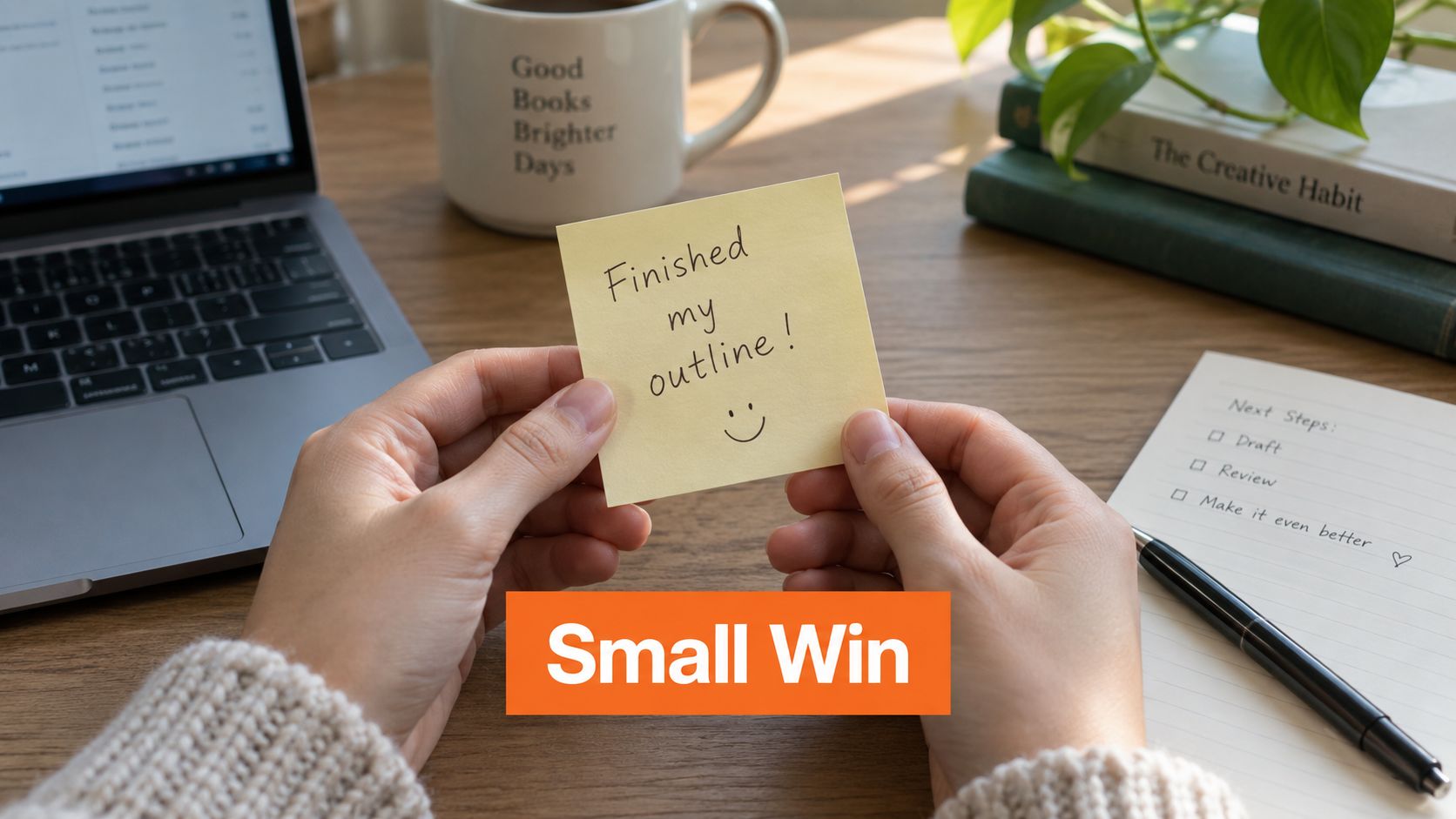
9. What's the smallest win you've had recently that you haven't told anyone about?
This question needs rapport. It invites a person to share progress without the pressure of making the win sound impressive. A first customer, a useful reply, a finished prototype, or a difficult conversation can matter even when nobody else hears about it.
Start by sharing your own:
“My small win was finally sending the proposal I'd avoided. What's the smallest win you've had recently that you haven't told anyone about?”
That opening makes the question feel safe. It also prevents the other person from assuming you want a polished milestone. Celebrate the answer without shrinking it. “That's a real step” usually works better than comparing it with a larger result.
Help the win create momentum
Ask, “What do you want to do with that momentum?” If someone completed customer interviews, they might choose to review the patterns. If they received a first order, they might document the fulfillment process. If they repaired a strained partnership, they might set a clearer communication habit.
Don't immediately ask how the win can become a growth channel. The person may need recognition before analysis. You can explore the lesson once they've had a moment to enjoy the progress.
This question works especially well at a small dinner or in a private message. In a group chat, you could write, “What's one quiet win from this week?” A meetup version might be, “What went right recently?” Keep the wording lighter when you don't yet know the person.
The conversation avoids a pitch because you're not using the win to position your service. You're giving someone room to talk about the work that rarely appears in a public update.
10. If you had to teach someone else everything you know about your customer, what's the first thing you'd tell them?
This question asks a founder to compress customer knowledge into one useful insight. A founder with direct experience may answer with a vivid behavior, phrase, or buying constraint. A founder who still relies on assumptions may struggle, and that struggle can open a productive conversation.
Use a curious tone:
“If you had to teach someone else everything you know about your customer, what's the first thing you'd tell them?”
Don't ask it as a test. If the person pauses, make the prompt easier: “Tell me about your best customer.” Then ask, “How did you learn that?” and “What else have you noticed?”
Separate lived knowledge from guesses
Listen for specific experiences. “They want convenience” says little. “They'll tolerate a higher price if delivery fits their production schedule” gives you something to examine. Ask where the insight came from, whether it appeared in conversations, purchases, complaints, or repeated behavior.
A real example might sound like this: “Our best customers don't want another dashboard. They want someone to explain what the numbers mean before their Monday meeting.” You can follow with, “What did they say or do that led you there?”
Don't respond by describing your own customer segment. That turns the exchange into a comparison exercise. If you have a relevant experience, share it after the founder finishes and ask whether the pattern feels familiar.
This question fits customer-focused founder conversations, product discussions, and mentor meetings. It can feel too demanding at a first hello, so begin with, “Who are you learning from right now?” Then use the deeper prompt once the person has context.
Top 10 Networking Conversation Starters Comparison
| Question | Implementation Complexity 🔄 | Resource Requirements ⚡ | Expected Outcomes 📊 | Ideal Use Cases 💡 | Key Advantages ⭐ |
|---|---|---|---|---|---|
| What problem are you trying to solve that keeps you up at night? | Medium 🔄, direct, needs psychological safety | Low ⚡, time + attentive listening | 📊 Reveals core pains & immediate help opportunities | One‑on‑one, small groups, early conversations | ⭐ Builds trust; uncovers real needs |
| What's the one thing you wish you'd known before you started? | Low 🔄, reflective prompt | Low ⚡, minimal prep | 📊 Surface hard‑earned lessons and tactical tips | Mentorship moments, group dinners | ⭐ Elicits practical wisdom; builds respect |
| How did you end up working on this instead of something else? | Low 🔄, story‑focused, low friction | Low ⚡, conversational time | 📊 Reveals motivations, values, and decision drivers | One‑on‑one, casual groups, dinners | ⭐ Connects over shared “why”; fosters empathy |
| Who's one person you wish you had in your corner right now? | Medium 🔄, specific need probing | Medium ⚡, may require network/action | 📊 Identifies concrete gaps and match opportunities | Dinner events, group chats, mentorship | ⭐ Enables introductions; positions you as connector |
| What's working that surprised you? | Low 🔄, positive, easy to answer | Low ⚡, encourages sharing | 📊 Highlights traction, unfair advantages, momentum | Check‑ins, celebrations, group discussions | ⭐ Lifts energy; reveals what to double down on |
| What would you do differently if you knew you couldn't fail? | High 🔄, abstract, requires trust | Low ⚡, no material resources | 📊 Exposes true ambition and limiting beliefs | Vulnerable one‑on‑one or small trusted groups | ⭐ Surfaces bold priorities and possible pivots |
| Who have you learned the most from, and what did they teach you? | Low 🔄, two‑part reflective question | Low ⚡, conversational | 📊 Reveals influences, values, and learning sources | Mentorship conversations, small groups | ⭐ Identifies mentors and learning priorities |
| What would you bet money on about your market or customers right now? | High 🔄, demands conviction and evidence | Medium ⚡, benefits from prior research | 📊 Surfaces assumptions, confidence, and testable bets | Strategy sessions, debate‑style group discussions | ⭐ Tests hypotheses; reveals commitment level |
| What's the smallest win you've had recently that you haven't told anyone about? | Low 🔄, intimate, low pressure | Low ⚡, trust required | 📊 Uncovers hidden progress and morale signals | Intimate one‑on‑one, dinners, small groups | ⭐ Encourages celebration; strengthens connection |
| If you had to teach someone else everything you know about your customer, what's the first thing you'd tell them? | High 🔄, demands clarity and synthesis | Medium ⚡, may need examples or data | 📊 Reveals depth of customer understanding or gaps | Mentorship, strategic planning, investor chats | ⭐ Tests customer insight; clarifies positioning |
Turn One Good Question Into a Real Relationship
A strong networking conversation starter only opens the door. The relationship grows from what you do after the other person answers.
Choose one question that fits the setting. At a private dinner, you can ask about the problem keeping someone awake or the person they need in their corner. At a meetup, use a lighter version about what brought them there or what has surprised them recently. In a group chat, keep the prompt short and give people an easy way to answer without writing an essay.
Investor and mentor introductions need more care. Start with the reason for the introduction, then ask a permission-based question such as, “Would you be open to sharing what you'd test first if you were in my position?” Don't assume the other person wants to advise you, make an introduction, or review your business. Ask before you turn their attention into a task.
Answer your own question first when you can. That small act changes the exchange from an interview into a conversation. If you ask about a hard problem, share yours. If you ask about influence, name someone who taught you. If you ask about a small win, offer one of your own. You don't need a dramatic story. A specific, honest answer gives the other person something to hold.
Listen without rushing to fix anything. Founders often need to think aloud before they know what they want. Ask one follow-up that uses their words, then leave room for another answer. Small-group research found that people who spoke later in a discussion gained more positive perceptions and influence over time, which supports a simple networking habit: listen first, then make your contribution fit what you heard. Read the study on speaking order in group conversations.
Follow up within a few days with one thoughtful detail. Write, “I kept thinking about your point on supplier reliability. I found a person who works in that area, and I'd be happy to ask whether an introduction makes sense.” Or send a resource that answers the exact question they raised. Don't attach a sales deck unless they requested it.
Weak ties can carry useful information across separate social circles. Mark Granovetter's 1973 study of 282 U.S. men found that people who found jobs through personal contacts often relied on acquaintances they saw rarely or occasionally, rather than only close friends. Stanford's summary of the weak-ties finding explains why a conversation with someone outside your immediate circle can lead somewhere unexpected.
A later LinkedIn-based experiment analyzed millions of users and found that weak ties were, on average, better for job mobility than strong ties. The research also found that only about 51% of bridges were weak ties on average, so a weak connection isn't automatically a useful bridge. MIT's account of the LinkedIn experiment supports a practical approach: seek conversations across groups, then pay attention to whether the person connects you to a different set of knowledge or relationships.
Founders have a concrete reason to practice this. A 2016 Economist Intelligence Unit study reported that 78% of startups called networking vital to entrepreneurial success, and it linked more networking activity with outcomes that included profitability, revenue growth, innovation, funding, and talent acquisition. The Forbes summary of that startup networking research gives the statistic, but the useful lesson is simpler: ask questions that lead to help, learning, or a thoughtful next step.
Choose one question before your next dinner, meetup, group-chat conversation, or introduction. Answer it yourself, listen carefully, and send one relevant follow-up. That practice will sound more human than memorizing a dozen lines.
Chicago Brandstarters brings founders together through small private 6–8 person dinners every two weeks and an active group chat for honest questions, tactics, and support. If you want to practice networking conversation starters without sales pitches, visit Chicago Brandstarters and learn how to join the free, vetted community.
Leave a Reply