You're building a brand from scratch. You know you need to get good at marketing and sales, fast. Then you search for the best books on marketing and sales and get buried in giant lists, recycled summaries, and vague praise.
That's useless when you're trying to make payroll, ship product, and get customers to care.
I like shortlists. A good shortlist works like a toolbelt. You don't need every tool at Home Depot. You need the few that solve the next problem in front of you. That's how I built this list. These are the books I'd hand to a founder who needs better positioning, cleaner messaging, stronger offers, sharper sales conversations, and a real plan for growth.
I'm also looking at these through a 2025 lens. That matters. Discovery is changing fast. Google said in 2024 that AI Overviews had expanded to more than 100 countries and were reaching over 1 billion users monthly, which means people now find brands in ways that look less like old-school search and more like AI-mediated discovery, as noted in Marketer Milk's discussion of marketing books in the AI era. So I'm not giving you a nostalgia list. I'm giving you books that still help when clicks are harder to win and small teams need an advantage.
This is the list I'd give a founder in Chicago Brandstarters. It's a roadmap, not a library.
1. Obviously Awesome (2nd ed., 2026) by April Dunford
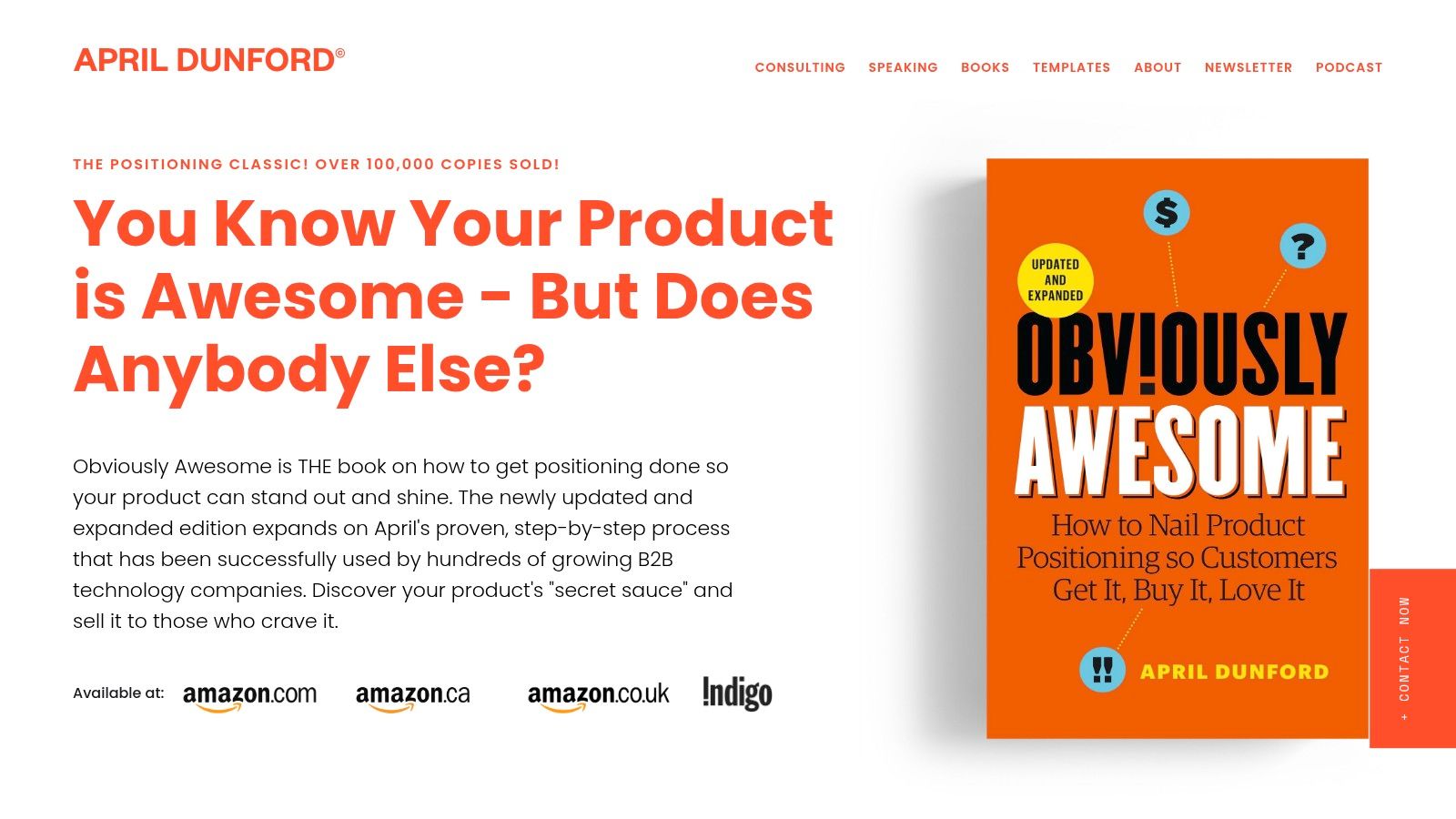
If people don't get what you do in a few seconds, you have a positioning problem. That's why I put Obviously Awesome near the top.
Dunford gives you a clean, sequential way to figure out who you're for, what category you belong in, and why your product wins. I like this book because it turns fuzzy brand talk into a workshop. You can run it with a cofounder, a marketer, and a salesperson in a room with a whiteboard. No agency deck required.
This is the book I'd use when your homepage feels “fine” but conversions feel soft, sales calls wander, and every ad headline sounds like a worse version of a competitor's.
Why I recommend it
A lot of founders jump straight into ads, content, and cold outreach before they lock the message. That's backwards. Positioning is the foundation. If that's weak, every channel becomes expensive confusion.
Dunford is practical about the hard part. You're not just picking a tagline. You're choosing the right frame of reference so customers know what mental shelf to put you on. Get that wrong and even a strong product feels slippery.
Practical rule: Fix positioning before you scale traffic. More traffic to a muddy message just burns money faster.
You can get the book and related resources from April Dunford's book page.
Founder's Playbook
- Reading Order and Stage: Read this at Idea stage if you already know the problem space, or at Early Revenue if customers seem interested but confused.
- Actionable Exercise: Write a one-page positioning draft with five parts: competitive alternatives, unique attributes, value, target customer, and category. If you want a structure, use this marketing positioning statement template.
- Community Conversation Starter: What do customers think we are today, and what do we want them to think we are instead?
My only knock is that the examples lean B2B and tech. If you run a consumer brand, you'll need to translate some of the language. Still worth it. Clear thinking travels well.
2. $100M Offers by Alex Hormozi
Some books help you sound smarter. This one helps you sell faster.
$100M Offers is about packaging what you already sell into something people want to buy now. I like it because Hormozi keeps asking the right founder question: why would someone say yes to this offer instead of waiting, comparing, or doing nothing?
If your product is decent but sales are dragging, don't assume you have a traffic problem. A lot of the time, your offer is just weak. The promise is vague. The bundle is thin. The risk sits with the buyer.
What makes it useful
Hormozi gives you a practical way to tighten the value proposition around the offer itself. That means bonuses, guarantees, urgency, packaging, and scope. This mirrors the concept of plating at a restaurant. The ingredients matter, but presentation changes the appetite.
This lands especially well for founders selling services, info products, subscriptions, premium bundles, or productized services around a physical product. It also helps ecommerce founders rethink PDPs, starter kits, and upsells.
A few things I'd take straight from the book:
- Value framing: Make the result concrete and easy to picture.
- Risk reversal: Shift fear away from the buyer where feasible.
- Bundling: Turn scattered pieces into one clear buying decision.
You can buy it through Acquisition.com's shop.
Founder's Playbook
- Reading Order and Stage: Read this at Early Revenue. It's best when you already have something to sell and need sharper conversion.
- Actionable Exercise: Take your main offer and rewrite it three ways this week: base version, premium bundle, and fast-start version. Then ask five prospects which one feels easiest to say yes to.
- Community Conversation Starter: Are we losing sales because of poor traffic, or because the offer asks buyers to do too much work in their head?
I'll give you one warning. The tone can feel a bit hype-heavy. Don't copy the swagger. Copy the mechanics. Pair the ideas with honest unit economics and you'll get more from it.
3. Influence New and Expanded (2021) by Robert B. Cialdini
For sales-oriented reading, Influence remains one of the books I'd call mandatory because it maps directly to persuasion mechanics that teams can use in discovery, objection handling, and closing, which is why marketer-curated practitioner lists still keep it near the top in Salesloft's roundup of must-read marketing books.
That staying power makes sense. Cialdini gives you a vocabulary for why people say yes, hesitate, or follow the crowd. If you're building landing pages, emails, ads, retail displays, or sales scripts, that vocabulary is useful every week.
What you'll actually use
The seven principles matter because they travel well across channels. Reciprocity. Commitment and consistency. Social proof. Liking. Authority. Scarcity. Unity.
I don't read this book for inspiration. I read it like a field manual. It helps you diagnose persuasion gaps. Why is the page polite but not convincing? Why does the sales deck explain but not move? Why does the follow-up email get opened and ignored?
If you want a practical companion on this topic, I'd also spend time to understand marketing cognitive biases. It helps turn persuasion theory into sharper creative reviews.
Most weak marketing doesn't fail because the product is bad. It fails because the buyer never gets enough reasons to believe, trust, and act.
Founder's Playbook
- Reading Order and Stage: Read this at Idea stage if you've never studied persuasion. Read it again at Scaling when you're reviewing campaigns and sales process.
- Actionable Exercise: Audit one landing page and one sales script. For each of the seven principles, mark whether it's present, weak, or overused. Then rewrite only the weakest two.
- Community Conversation Starter: Which persuasion principle do we naturally overuse, and which one do we neglect?
The downside is simple. It's not a fast tactical launch manual. It's deeper than that. But if you want one of the best books on marketing and sales that keeps paying rent for years, this is it.
4. Building a StoryBrand (and StoryBrand 2.0, 2025) by Donald Miller
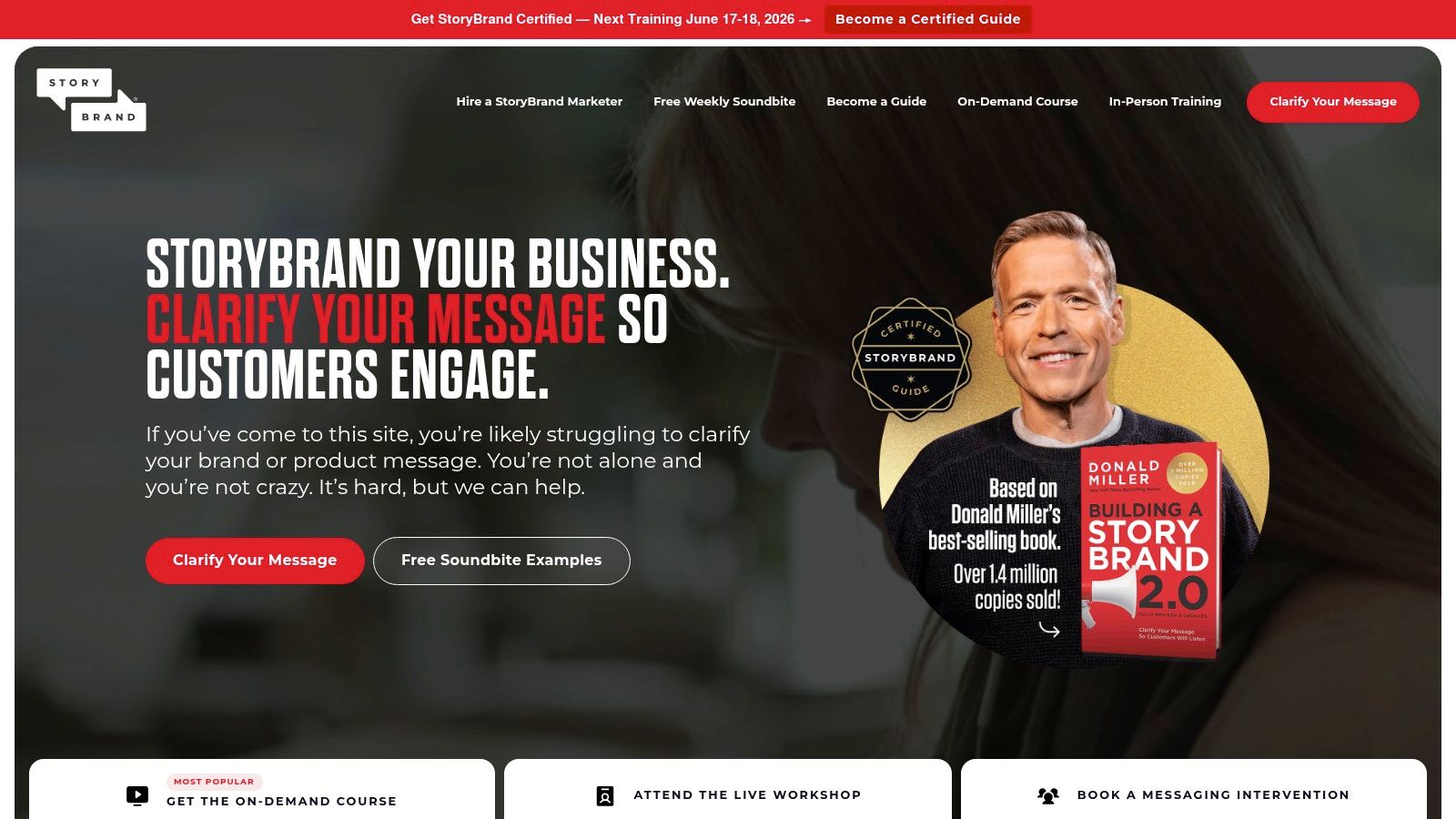
If your website talks about your brand more than your customer, read this next.
Building a StoryBrand is one of the fastest ways I know to clean up messy messaging. Miller's core move is simple and useful: the customer is the hero, and your brand is the guide. That sounds obvious until you look at most homepages and see a founder writing a memoir no buyer asked for.
Where this book earns its keep
I recommend this when a founder has too many words, too many ideas, and no clear call to action. StoryBrand gives you structure. You can use it on homepages, product pages, email sequences, pitch decks, and even retail sell sheets.
The framework is strong because it keeps you from wandering. Who is the customer? What problem do they have? What plan do you give them? What happens if they act, and what happens if they don't? Clean messaging usually beats clever messaging.
If you want to explore the system, tools, and training around it, go to StoryBrand.
I also like pairing the book with a practical lens on buyer behaviour. That keeps your message grounded in what people need to decide.
Founder's Playbook
- Reading Order and Stage: Read this at Early Revenue. It's best when people are visiting your site but not taking the next step.
- Actionable Exercise: Rewrite your homepage hero section this week using four lines only: who it's for, what problem you solve, what outcome they get, and one direct call to action.
- Community Conversation Starter: If a stranger read our homepage for ten seconds, what would they think we help them do?
Founder note: StoryBrand is like cleaning a cluttered garage. You already own the right stuff. You just can't find anything until you organize it.
The risk is sounding templated. A lot of teams use the framework and end up with copy that feels interchangeable. Use the structure, then add your own voice, proof, and sharp edges.
5. The Challenger Sale by Matthew Dixon and Brent Adamson
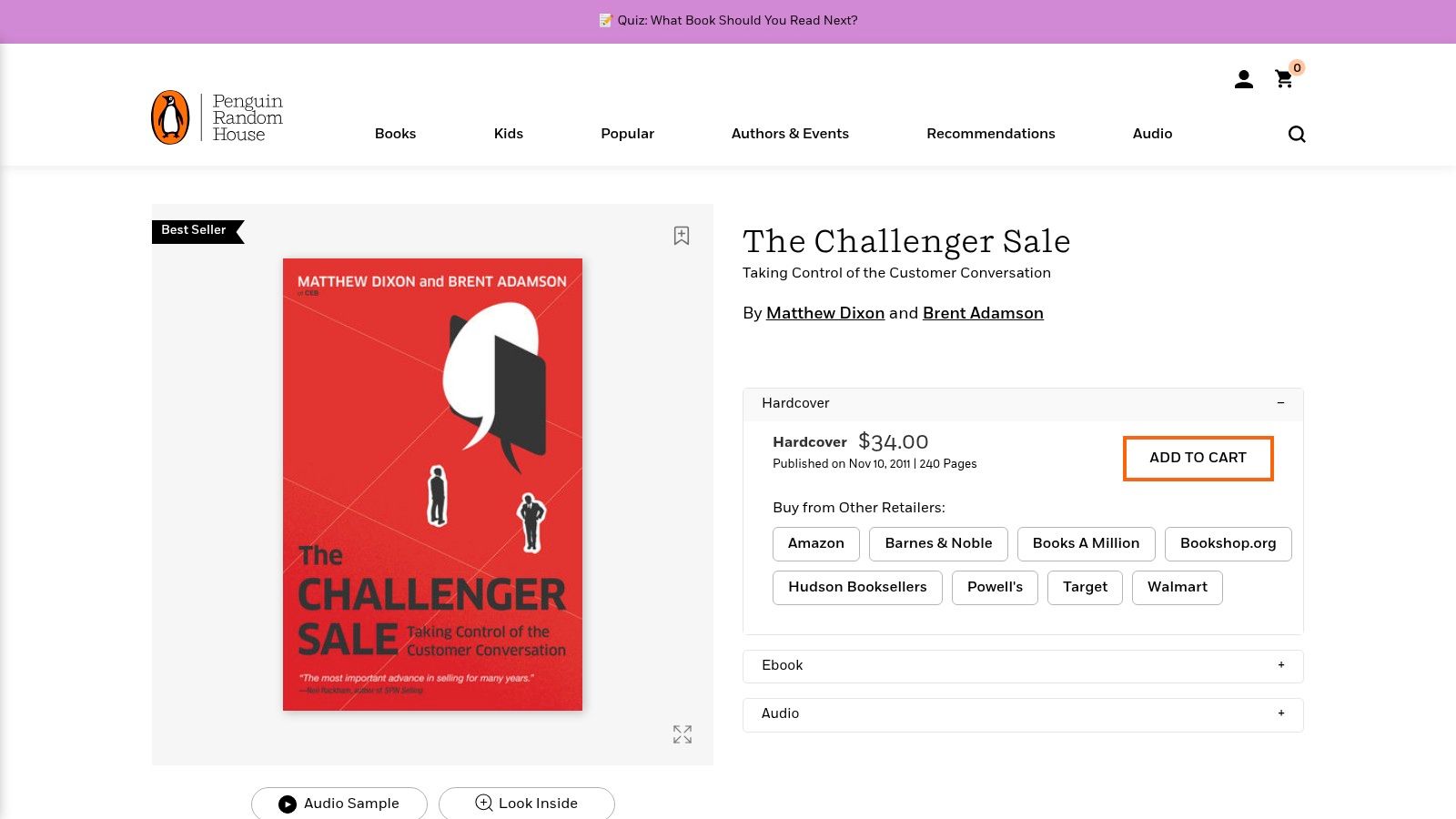
If you sell into retailers, distributors, enterprise accounts, or wholesale partners, this book is worth your time. If you only sell low-ticket DTC online, it matters less.
The Challenger Sale pushes against the old idea that sales is mostly about being liked and building relationships. In more complex deals, the better move is to teach, tailor, and take control of the conversation. I like that because founders often hide behind “relationship building” when they should be leading the buyer.
Why founders should read it
A founder-led sales call can drift into demo mode fast. You answer questions, react to objections, and hope the buyer connects the dots. Challenger selling flips that. You bring a point of view. You show the buyer a problem or cost they haven't framed clearly enough. Then you guide the conversation toward change.
That's useful when your buyer thinks they already understand the category. It's also useful when your marketing says one thing and your sales call says another. This book helps tie the two together.
If that's your world, start with The Challenger Sale from Penguin Random House.
Founder's Playbook
- Reading Order and Stage: Read this at Scaling, or at Early Revenue if B2B deals are your main growth path.
- Actionable Exercise: Rewrite your discovery call opener so it teaches one useful commercial insight before you ask for anything. Then map your full process against this B2B sales process guide.
- Community Conversation Starter: Are we educating buyers in a way that changes how they think, or are we just presenting features better?
This book takes practice. If you use the style badly, you'll sound combative. But used well, it helps you stop acting like a vendor and start acting like a trusted operator who sees around corners.
6. The Mom Test by Rob Fitzpatrick
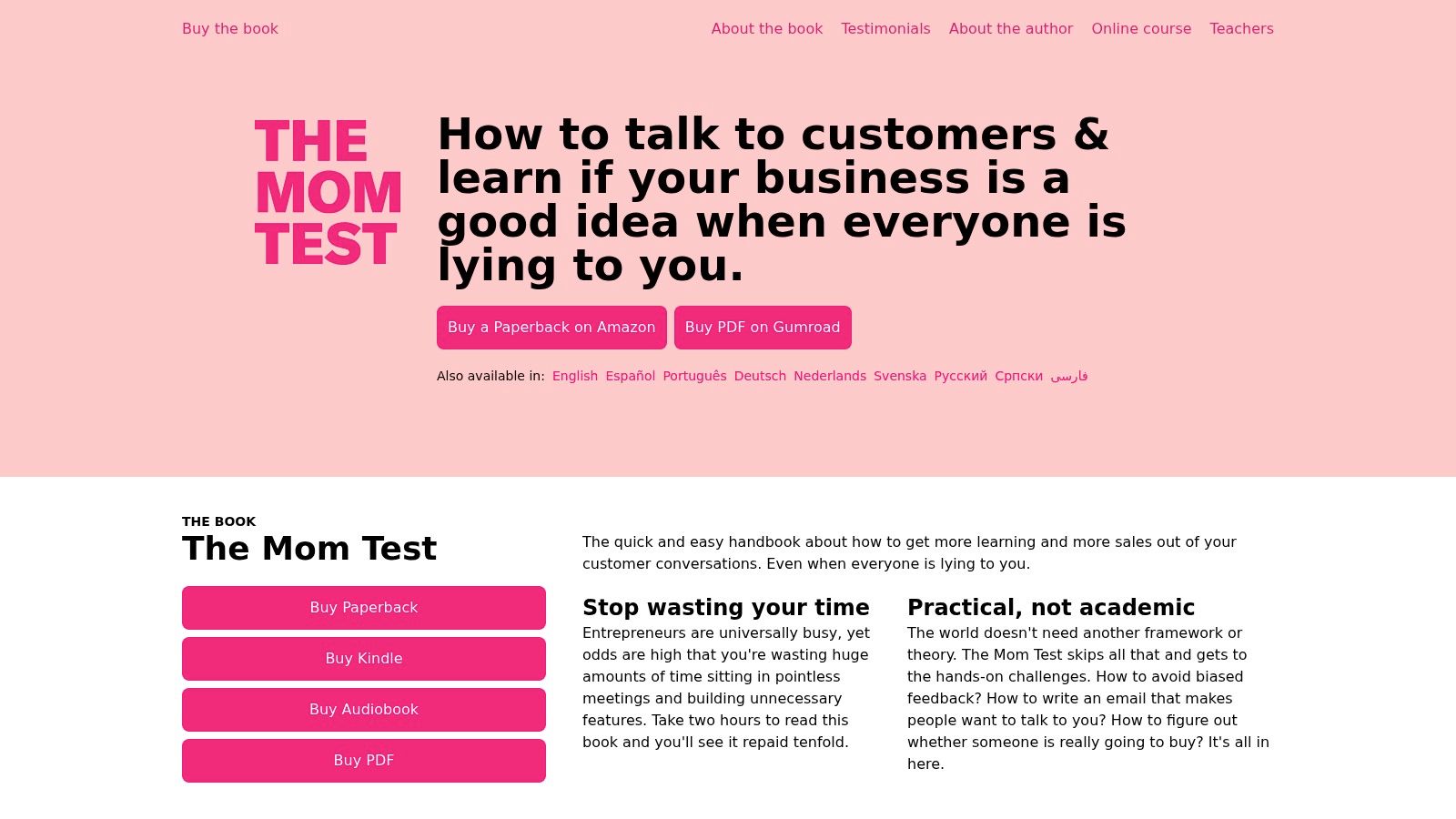
This is the shortest book on the list, and it may save you the most pain.
The Mom Test fixes a very founder problem. You ask people if they like your idea, they smile, they say they'd totally use it, and then nobody buys. That happens because most founders ask bad questions and collect fake validation.
The core lesson
Don't ask for opinions about a hypothetical future. Ask about real behavior in the recent past.
That's the whole game. If you ask, “Would you use this?” you'll get politeness. If you ask, “How are you solving this today?” you'll get signal. It's the difference between asking someone if they'd join your gym next month and asking how many times they worked out last week.
I recommend this before you spend on branding, development, or ads. You need truth first.
You can find the book at The Mom Test website.
Bad customer research feels good. Good customer research is a little uncomfortable because it forces you to hear what buyers actually do.
Founder's Playbook
- Reading Order and Stage: Read this first at Idea stage. No debate.
- Actionable Exercise: Schedule five customer conversations this week. Ban yourself from pitching. Ask only about current behavior, past purchases, workarounds, and costs of the problem. If you need help turning that into a process, use this guide on how to validate a business idea.
- Community Conversation Starter: What did we learn from customer conversations that hurt our ego but improved our decision-making?
This isn't a growth book. It won't tell you how to scale a channel. It gives you something more basic and more important. It helps you stop lying to yourself.
7. Traction How Any Startup Can Achieve Explosive Customer Growth by Gabriel Weinberg and Justin Mares
Most founders don't have a marketing problem. They have a prioritization problem.
They try five channels at once, learn nothing from any of them, and then say “marketing didn't work.” Traction is the antidote. It gives you a way to test channels without turning your company into a pile of half-finished experiments.
Why it still belongs on this list
The book is older, yes. Some channel details have changed. But the core idea still works: brainstorm broadly, test cheaply, double down narrowly. That discipline matters more now because founders have more channels, more tools, and more noise than ever.
This book is especially useful after you've done the positioning and messaging work. Once you know what you're saying, you need to decide where to say it. That's where the Bullseye Framework helps. It keeps you from falling in love with the channel that looks cool instead of the one that moves customers.
You can get it from Traction's official site.
Founder's Playbook
- Reading Order and Stage: Read this at Early Revenue and revisit it at Scaling every time growth gets messy.
- Actionable Exercise: List your top three realistic channels for the next quarter. Design one cheap test for each. Pick a single success signal before you launch, then review the results as a team in one week.
- Community Conversation Starter: Which channel are we pursuing because it fits our customer, and which one are we pursuing because it flatters our identity?
One more note. Foundational marketing books still matter. Philip Kotler's Marketing Management first appeared in 1967 and went through multiple editions over decades, which is one reason many later books on segmentation, branding, and customer value build on ideas tied to his work, as summarized by Salesforce's marketing book recommendations for beginners. But if you want a founder-friendly operating manual for choosing channels this week, Traction is far easier to use.
Top 7 Marketing & Sales Books, Quick Comparison
| Title | Implementation Complexity 🔄 | Resource Requirements ⚡ | Expected Outcomes 📊 | Ideal Use Cases 💡 | Key Advantages ⭐ |
|---|---|---|---|---|---|
| Obviously Awesome (2nd ed., 2026), April Dunford | Moderate, workshop-style, sequential | Low–Moderate, small team time and facilitation | Clear positioning artifacts that feed messaging and ads | Founders/small teams in crowded B2B/tech categories | Actionable, repeatable playbook for alignment |
| $100M Offers, Alex Hormozi | Low, formulaic, sprint-ready | Low, copy/offer work + ad/test budget | Higher conversion and margin when validated | DTC, e-commerce, service-based offers | Concrete formulas and quick A/B test tactics |
| Influence: New and Expanded (2021), Robert B. Cialdini | Low–Moderate, conceptual to apply thoughtfully | Low, reading and team training time | Stronger persuasion across touchpoints; ethical defenses | Teams building conversion-focused creative and UX | Evidence-based, broadly applicable persuasion principles |
| Building a StoryBrand (2.0, 2025), Donald Miller | Low, templated 7-part framework | Low, worksheets and optional training | Coherent homepage/product copy that reduces confusion | Founders needing fast, clear website and ad messaging | Fast path to customer-focused, actionable copy |
| The Challenger Sale, Matthew Dixon & Brent Adamson | High, requires training and practice | Moderate–High, sales enablement and coaching | Improved win rates in complex B2B deals | Selling into wholesale, retail, distributors, enterprise | Research-backed behaviors to reframe customer thinking |
| The Mom Test, Rob Fitzpatrick | Low, simple scripts and patterns | Very Low, time for interviews | More reliable customer insights; de‑risked decisions | Idea validation and pre-prototype learning | Practical phrasing to surface real buying behavior |
| Traction, Gabriel Weinberg & Justin Mares | Moderate, structured testing framework | Moderate, experiments and modest spend per channel | Identified high-ROI channels and disciplined allocation | Early-stage teams choosing where to invest next dollar | Bullseye framework for focused, measurable experiments |
Your Next Move
Don't read all seven at once. That's a great way to feel productive and make no progress.
Pick the book that matches the problem on your desk right now. If customers look confused, read Obviously Awesome. If people like the product but don't buy, read $100M Offers. If your copy rambles, read Building a StoryBrand. If your sales calls stall in bigger accounts, read The Challenger Sale. If you're still validating the problem, start with The Mom Test. If you're spreading your growth efforts too thin, read Traction. And if you want sharper persuasion across everything, keep Influence close.
I also think you should read with a modern filter. For a technically grounded marketing read, How Brands Grow is still useful because it pushes you toward penetration, mental availability, and distinctiveness instead of loyalty-heavy assumptions, as summarized in Funnel's must-read marketing book list. But books alone won't tell you how to operate as AI changes discovery, as search sends fewer clicks, and as small teams need advantage from better systems. You have to apply what you read.
That's why each book above has a simple exercise. Do the exercise this week. Don't wait until you “finish your reading list.” A business grows when you turn ideas into conversations, pages, offers, and tests.
If you run an ecommerce brand, the same rule applies. Read one book, change one thing, and measure the effect. This guide for ecommerce brands is a good reminder that better conversion usually comes from clearer offers, sharper pages, and fewer points of friction, not from endless random tweaks.
And don't do this alone if you can help it. Good founders borrow pattern recognition from other operators. A peer group can spot what you can't. They can tell you when your message is muddy, your interviews are biased, or your channel plan is too scattered. Chicago Brandstarters is one place where founders can bring those problems into honest discussion with other builders in small groups and ongoing chat.
Read one. Apply one. Discuss one. That's enough to change your business faster than reading ten books and doing nothing.
If you want a place to pressure-test what you learn from these books, join Chicago Brandstarters. It's a free, vetted community for Chicago and Midwest founders building brands from idea stage through growth, with small private dinners and a group chat built for honest operator conversations.
Leave a Reply