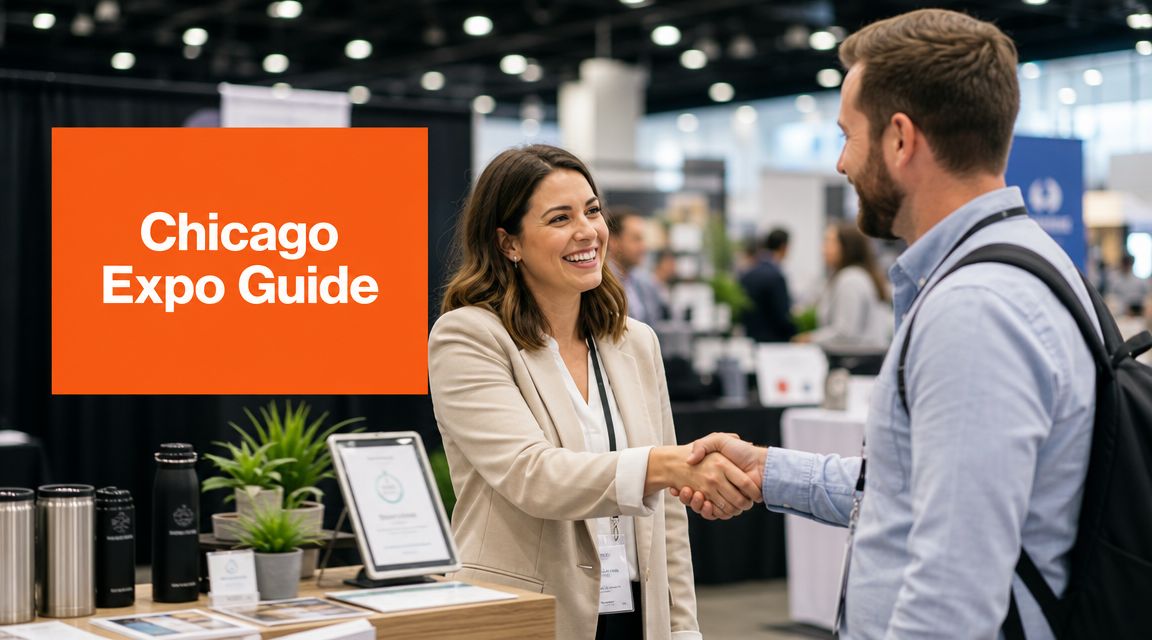
You're probably staring at the event page for the City of Chicago Small Business Expo and thinking the same thing most founders think. “Is this actually useful, or am I about to spend half a day collecting brochures I'll never read?”
Fair question.
Most expo advice is garbage because it treats every event like a giant networking buffet. Walk around. Smile. Hand out cards. Follow up later. That's how you waste a day. I've done it. You probably have too.
A good expo day should feel more like a targeted errand run than a popularity contest. You go in with a short list. You solve real problems. You meet the few people who can help. Then you leave with next steps, not just tote bag junk.
That's the playbook for the City of Chicago Small Business Expo. If you use it right, it's less “networking event” and more “compressed operating session” for your business.
Why Most Founders Get Business Expos Wrong
Most founders walk into an expo with the wrong job description. They think their job is to “network.” It's not. Your job is to get answers, remove blockers, and find useful people.
I've seen this go sideways fast. A founder shows up with no plan, drifts from booth to booth, grabs free pens, listens to half a workshop, has six forgettable conversations, and goes home calling the event “fine.” That's not the expo's fault. That's bad fieldwork.
The better approach is simple. Treat the day like a business triage session.
If your LLC paperwork is messy, go fix that. If permits are slowing you down, go ask about permits. If you don't understand your taxes, sit down with the tax people. If you need a banker, supplier, advisor, or photographer, go straight there. You are not there to impress the room. You are there to clear friction.
Practical rule: If a conversation won't help you make a decision, solve a problem, or open a real next step, keep moving.
That's why this event can be useful for Chicago founders who hate fake networking. The point isn't charm. The point is compression. Instead of spending weeks chasing answers across city offices, advisors, and random referrals, you can get a lot of that done in one place if you show up prepared.
Here's the mistake I want you to avoid most. Don't go because you feel like you “should” be out there. Go because you have a specific business problem that needs a fix.
What a good expo day actually looks like
A strong expo day usually has three parts:
- One admin win. You solve a licensing, tax, or compliance question that's been sitting on your list too long.
- One relationship win. You meet one person worth talking to again.
- One market win. You learn something concrete about how other founders, vendors, or buyers talk about your category.
That's enough. You do not need twenty weak conversations. You need a few useful ones.
Go to solve, not to perform.
If you keep that mindset, the City of Chicago Small Business Expo stops feeling overwhelming and starts feeling efficient.
Finding and Registering for the Right Expo
First, clear up the naming mess. When people say “City of Chicago Small Business Expo,” they often mean two different things. If you mix them up, you'll show up with the wrong expectations.
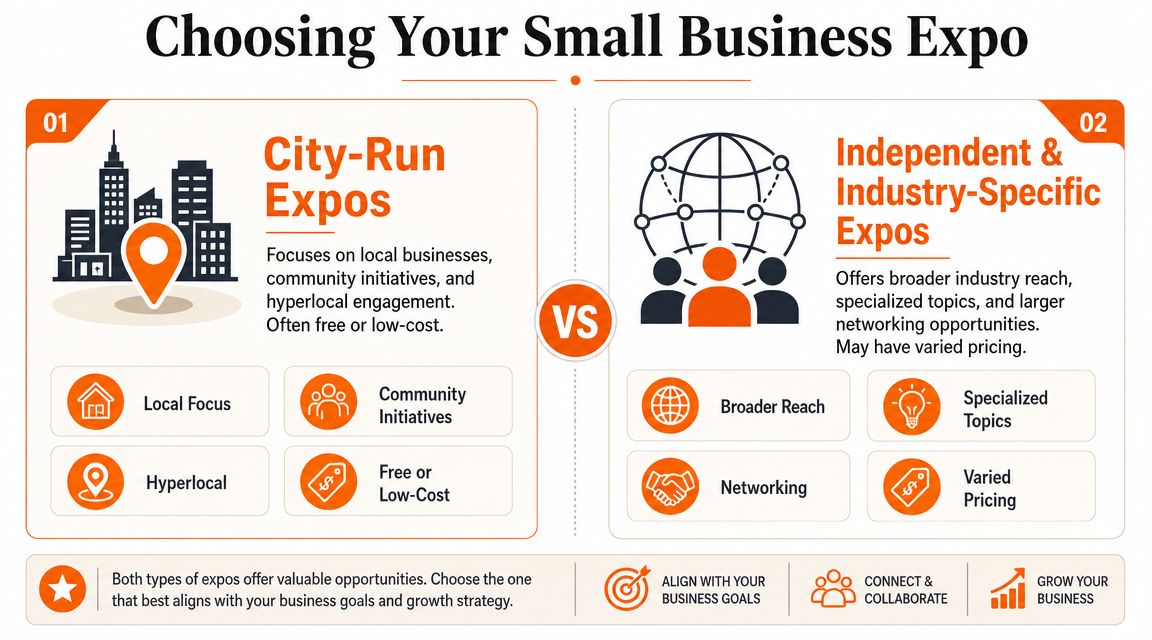
One is the city-run Chicago Small Biz Expo Series. The other is the bigger Small Business Expo that comes through Chicago.
The city-run expo is for getting help
If you're early, confused, underfunded, or stuck on admin, start with the city-run version.
The Chicago Department of Business Affairs and Consumer Protection says the Chicago Small Biz Expo Series is a city-run program with free resources for new and existing entrepreneurs. In a 2026 presentation, BACP said it works with 65 local business service organizations that provide no-cost business development assistance, including help with permitting, licensing, specialized support, and contracting preparation in neighborhoods across the city, according to the BACP presentation on the Chicago Small Biz Expo Series.
That tells you what kind of event this is. It's local. It's practical. It's built for founders who need direct help more than hype.
If that sounds like you, spend your energy tracking neighborhood-focused city events and city-connected support programs. If you want more context on local founder resources, Chicago Brandstarters also keeps a running set of posts on City of Chicago small business topics.
The larger expo is for reach and market exposure
If your basics are in place and you want a denser crowd, broader vendor exposure, and a more classic trade-show environment, the larger Small Business Expo may fit better.
The Small Business Expo – Chicago 2026 is scheduled for June 4, 2026 at the Isadore and Sadie Dorin Forum, and Landbase says the broader Small Business Expo drew over 5,630 attendees in 2024. That same listing describes it as a trade show and conference with keynote presentations, panel discussions, workshops, and a large exhibition floor, according to the Landbase listing for Small Business Expo Chicago 2026.
That scale changes the playbook. A bigger event is better for scanning vendors, seeing what other operators are buying, and pressure-testing your pitch against a wider room. It's worse if you need hand-holding on city process questions.
Use this decision filter
Ask yourself one question. What problem am I trying to solve right now?
| If your real need is… | Go to… |
|---|---|
| Permits, licensing, taxes, city process, local support | City-run expo series |
| Broader vendor discovery, bigger crowds, market visibility | Large Small Business Expo |
| You're not sure what your biggest blocker is | City-run expo first |
Don't register because the date works. Register because the format matches the problem.
Preparing Your Game Plan Before You Go
Walking into an expo cold is like showing up to a jobsite with no tools and hoping somebody lends you a drill. You'll wander. You'll stall. You'll leave half-finished.
Preparation does most of the work.
If you hate networking, good. That usually means you're better off building a plan than improvising small talk. I'd rather see you walk in with three sharp questions than a polished “elevator pitch” that sounds like you swallowed LinkedIn.
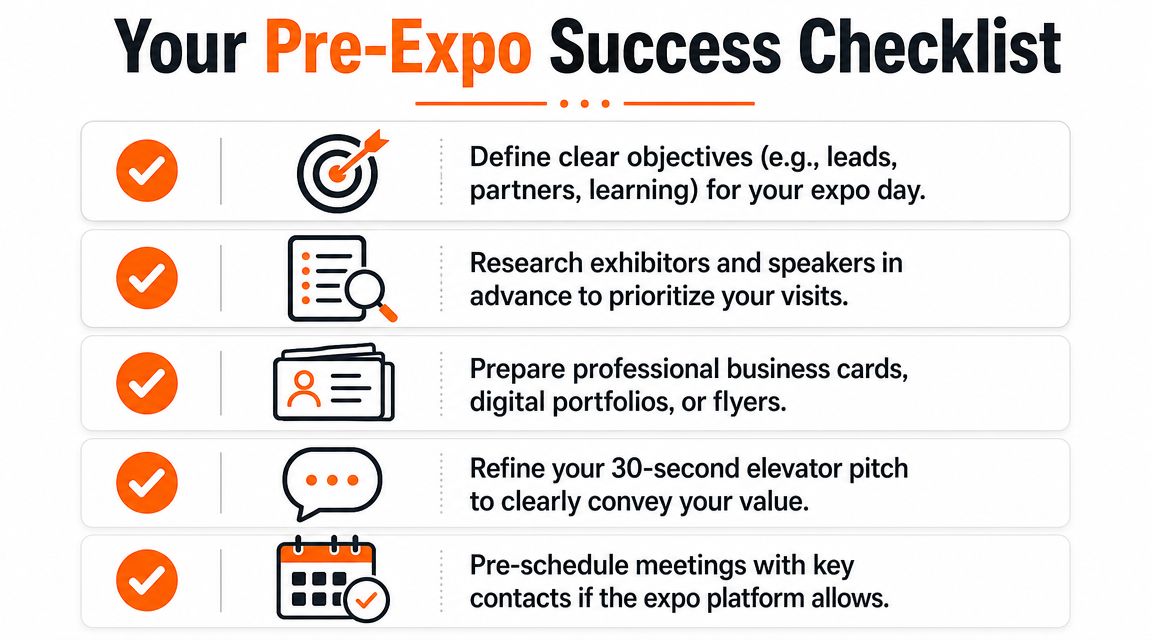
Pick a win condition
Set one to three outcomes for the day. Not ten. Three max.
Good examples:
- Admin cleanup. “I need clarity on my license and tax setup.”
- Buyer research. “I want to hear how people describe the problem my product solves.”
- Partner search. “I need one conversation with a packaging, design, or fulfillment contact.”
Bad example: “I want to network.”
That's not a goal. That's a vague hope.
If you can't say what a win looks like before you walk in, you won't know what to do once you're inside.
Build a short target list
Once you know your win condition, scout the room before game day. Check the event page, exhibitor list, workshop schedule, and speaker lineup if they're available.
I like a list with three buckets:
- Must talk to
- Nice to talk to
- Only if I have time
That structure keeps you from burning your best energy on random booths near the entrance.
Bring a simple note in your phone for each target:
- who they are
- why you care
- the one question you need answered
If the event platform lets you save contacts or schedule meetings, do it. Don't act casual about prep. Casual is expensive.
Fix your intro and your materials
Your intro should sound like a human being. Try this:
“I run a small brand in Chicago. I'm working through X right now, and I came because I wanted to ask about Y.”
That's enough. Clean. Honest. Useful.
For materials, keep it light. A business card is fine. A digital contact card is better because people lose paper. If you need one, use this guide on how to create a free QR code with contact card details.
If you're bringing any leave-behind item, don't make it clutter. Keep it readable, branded, and relevant. This expert guide to promotional products is a solid gut check for what people keep versus what goes straight into the trash.
Pack like someone who plans to work
Bring:
- A notes app or small notebook. Your memory will fail you by conversation six.
- Your calendar ready to book. If a good contact says “let's talk next week,” lock it in.
- A tight one-page overview if you sell something visual or operationally complex.
- A charger. Dead phone, dead follow-up.
Don't overpack. You're not setting up a booth. You're hunting for useful conversations.
Maximizing Your Day at the Expo
Show up early enough that you're not rushed. Rushed founders make dumb choices. They talk too long to the wrong people, skip the useful sessions, and forget what they came for.
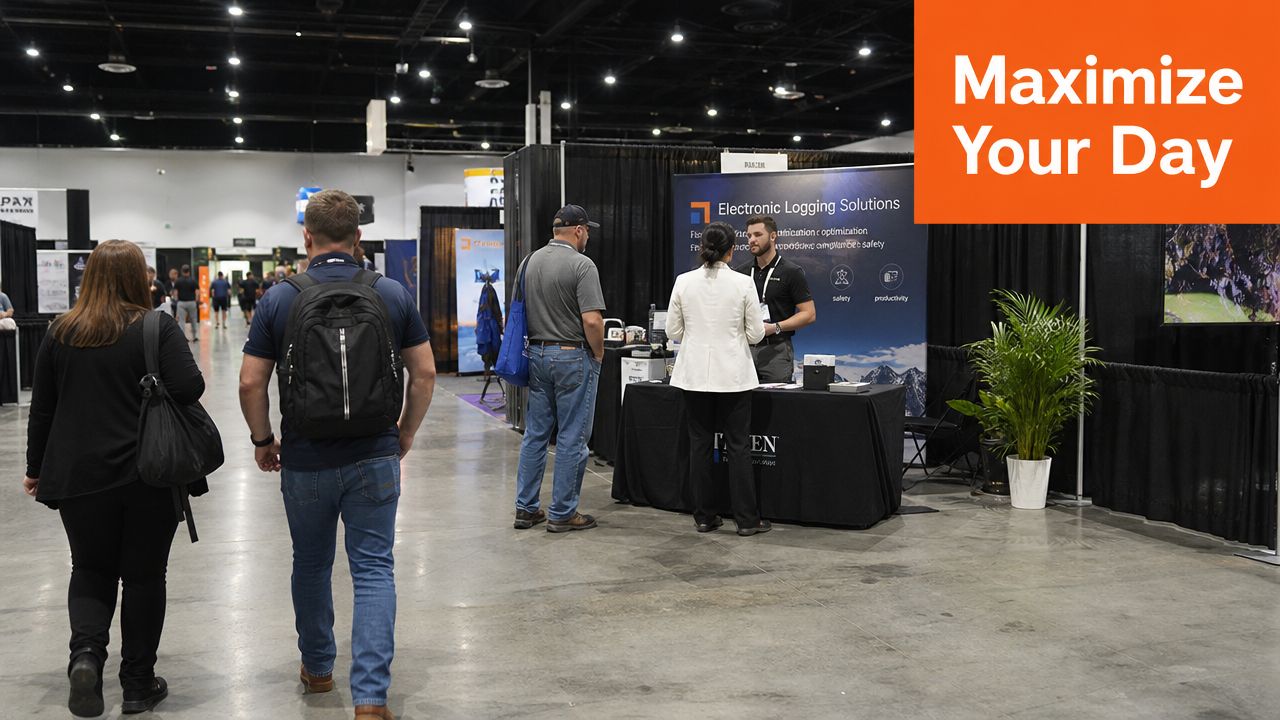
Walk the room once before you settle anywhere. You need a mental map. Where are the city tables? Where are the workshops? Where are the booths that match your target list?
Use the room for problem-solving first
The biggest advantage of the Chicago expo format is density. The Lincoln Park Chamber describes the Chicago Small Business Expo as having City of Chicago business licensing consultants, tax clinics, financial advisors, workshops, and professional headshots in one place, according to the Lincoln Park Chamber event page for the Chicago Small Business Expo.
That's your first move. Handle the bottlenecks before you chase “connections.”
I'd work the room in this order:
- Start with compliance pain. Licenses, taxes, entity questions, permits.
- Move to money. Financial advisors, banking questions, pricing questions.
- Then do relationship hunting. Vendors, peers, referral partners, potential mentors.
Founders often do this backward because talking shop feels easier than asking about the messy stuff. Don't do that. Clean up your operational blockers while the right people are in front of you.
Ask better questions
The quality of your expo day comes down to question quality.
Weak question: “Can you tell me about what you do?”
Better question: “I sell this kind of product in Chicago. What's the most common mistake you see founders make when they handle this part themselves?”
Now you're getting somewhere.
Try questions like these:
- For city or compliance staff. “What should I handle first so I don't create a bigger issue later?”
- For financial advisors. “What records should I keep tighter starting this month?”
- For vendors. “Who are you a bad fit for?”
- For experienced founders. “What did you waste time on early that I can skip?”
Good expo conversations aren't broad. They are specific enough that the other person can give you an answer you can use tomorrow.
Don't get trapped in dead conversations
Some booths are staffed by people who can't help you. Some attendees want to talk at you. Some founders treat every handshake like a hostage situation.
Exit fast and politely.
Use lines like:
- “This was helpful. I'm going to keep moving so I can hit my list.”
- “I appreciate it. I need to catch the next session.”
- “I've got one more stop before I leave. Let's reconnect by email.”
That's not rude. That's time management.
A short explainer can help if you want a quick preview of expo pacing and floor behavior:
Work the workshops without getting stuck there
Workshops are useful, but only if they fit your current problem. Don't sit through a session because the speaker is charismatic. Sit because the topic helps you make a business decision.
I like a simple rule:
- If the workshop answers a question on your list, attend.
- If it's just “interesting,” skip it and go back to the floor.
Take notes with action language, not inspiration language. Write down:
- call this person
- apply for this
- fix this form
- ask accountant about this
- test this message on website
If your notes sound motivational, they're probably useless.
High-Impact Follow-Up That Builds Relationships
Many attendees ruin a decent expo by doing nothing after it. Or they send the world's laziest message: “Great meeting you. Let's stay in touch.”
No. That's forgettable.
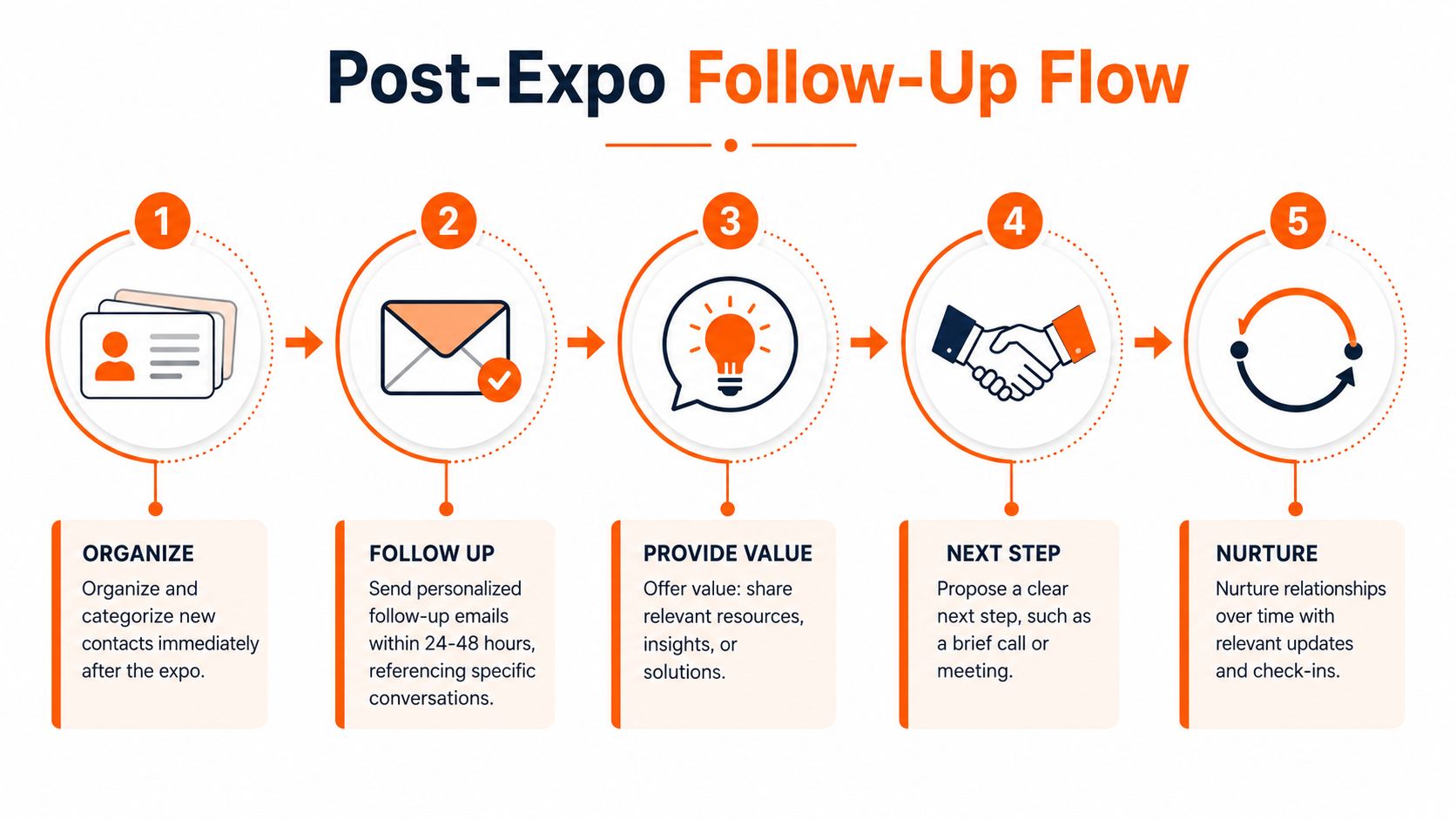
The follow-up should prove three things. You remember the conversation. You took it seriously. You're easy to help.
Use the 24-hour rule
Follow up within a day while your face is still attached to the conversation in their memory.
Write a short email or message with this structure:
- where you met
- one detail you remember
- one next step
Example:
Great meeting you at the expo yesterday. I appreciated your advice about cleaning up my licensing questions before I expand. You mentioned I should gather my current documents first. I'm doing that this week. If you're open to it, I'd love to send one follow-up question once I have everything in order.
That works because it's specific. It doesn't fake closeness. It gives them context and an easy yes.
Offer something small
You don't need to impress people with a giant gesture. Just be useful.
You can send:
- A relevant article or tool
- A quick intro to someone they should know
- A photo or note from the event if you promised it
- A clear update after taking their advice
That last one matters most. People like helping founders who take action.
For a deeper look at how to keep business relationships warm without acting like a spam bot, this guide on business networking strategies is worth reading.
The best follow-up message says, “I listened, I moved, and I respect your time.”
Build a relationship, not a drip campaign
You do not need to force a monthly check-in cadence with every person you meet. Most contacts should wait until there's a real reason to reconnect.
A few should get real attention:
- the advisor who gave you strong tactical help
- the founder who's one or two stages ahead of you
- the vendor or partner who fits your business now
- the city contact who can help you avoid paperwork mistakes
Keep notes on what matters to them. When something relevant comes up, reach back out. That's relationship building. Generic “just bumping this” messages are not.
Your Chicago-Style Expo Playbook
Here's the whole thing in plain English.
Don't treat the City of Chicago Small Business Expo like a social event. Treat it like a work session with a lot of upside. Show up with a short hit list, fix one business problem, meet one useful person, and leave before your brain turns to mush.
Before the event, decide what a win is. During the event, solve friction first and chase broad networking second. After the event, follow up like a serious operator who pays attention.
That's the Chicago style I respect. Bold, direct, useful, kind.
A lot of founders make the same mistake after a good expo. They keep the momentum trapped inside the event. Don't do that. Turn what you learned into better content, sharper positioning, and clearer outreach. If you need help connecting your offline conversations to your online presence, this guide on how to build an effective social media strategy is a smart next step.
One more thing. Don't confuse being busy with being effective. A packed expo day means nothing if you leave with no decisions, no action items, and no follow-up. I'd rather see you have three strong conversations and one solved problem than spend hours shaking hands with half the room.
That's the playbook. Be prepared. Be direct. Be warm. Keep moving.
If you want a founder community that feels more like honest operator dinners than transactional networking, take a look at Chicago Brandstarters. It's a free, vetted community for kind, bold, hard-working Chicagoans building brands, and it fits well if you want real conversations before and after events like the expo.
Leave a Reply