What do you need when you search for “members clubs near me”? A private social room, a founder network, a coworking base, or a polished place to host clients? Those are different products, even when they use the same membership language.
Compare total cost, application rules, event rhythm, work amenities, guest access, and the people you want to meet. A club can look impressive and still fail your week if you need candid founder advice, lab access, or a reliable client-dinner setting.
I've grouped seven Chicago options by the kind of access they provide, from vetted founder dinners and startup programming to product labs, creative rooms, business lounges, civic clubs, and neighborhood social spaces. If you want practical peer support without a membership fee, start with Chicago Brandstarters. If you're comparing workspace models beyond clubs, this guide to Tulsa coworking and meeting space gives you another useful frame.
1. Chicago Brandstarters
Chicago Brandstarters is my first choice for a founder who wants useful relationships instead of performative networking. It's a free, tightly vetted community for kind, hard-working Chicagoans and Midwestern founders building brands from the idea stage toward seven figures.
Members meet in private 6 to 8 person dinners every two weeks, then keep the conversation moving inside an active group chat. That rhythm matters. You don't attend one oversized mixer, collect contacts, and start over. You return to a small group where people remember your problem, your product, and the decision you said you'd make.
The group is founder-led by Kevin Tao, an operator and serial brand builder. Chicago Brandstarters uses identity verification, LinkedIn vetting, and confidentiality protections, including disabled screenshots, to keep self-promoters and service sellers out of the room. Members share honest war stories, tactics, factory access, business problems, and personal support. Testimonials describe practical breakthroughs, stronger networks, and durable friendships.
Who should join
Choose this community if you're an aspiring founder, an early-stage ecommerce or product builder, a solo operator, or a kind hustler who's tired of shallow networking. It's especially useful when you need someone to challenge a decision, introduce a capable operator, or help you get unstuck.
- Cost: Membership is free.
- Best access: Small dinners, private peer support, and a founder group chat.
- Trust model: Identity verification, LinkedIn vetting, and confidentiality.
- Growth path: As companies grow, members can get pointed toward programs such as Goldman Sachs 10KSB, EcomFuel, and Million Dollar Sellers.
- Trade-off: The Chicago and Midwest focus limits local relevance for remote founders elsewhere, and the intimate format can limit capacity. This is a peer community, not a paid accelerator or formal funding source.
Practical rule: If you want honest feedback on the business you're building, choose the room where people can challenge you without trying to sell you something.
Visit the Chicago Brandstarters website to apply.
2. 1871
Need scheduled startup programming, mentor access, and a wide technology network? 1871 fits that requirement. The Chicago nonprofit startup hub offers founder education, workshops, pitch opportunities, office hours, and a member portal for community connections.
Its value comes from repeated participation. Corporate and university partnerships can broaden the people and opportunities you meet, while the event calendar gives founders regular reasons to return. The setting feels like an organized innovation center, not a private social club built around dinners.
Choose 1871 if you learn well through sessions, workshops, and planned introductions. It suits technology and digital startup founders more than consumer brands, local service companies, or physical product businesses seeking advice on inventory, manufacturing, retail, or operations.
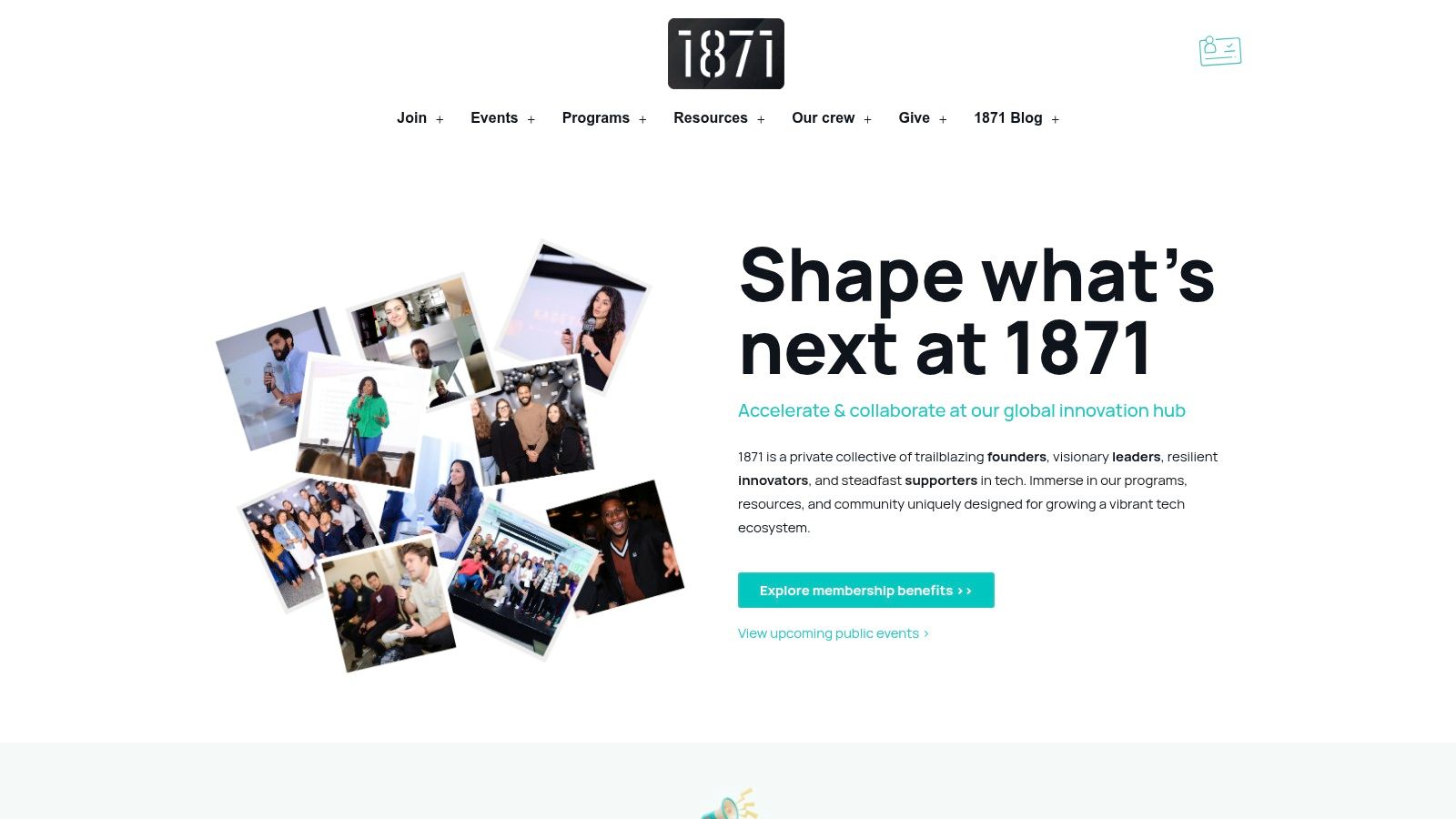
Before applying, confirm what your membership includes. 1871 requires an application, and its website does not clearly publish membership pricing. Ask whether the fee covers workspace, programming, community access, or a combination, then match those benefits to how you plan to spend time there.
- Best for: Tech and digital startup founders.
- Strongest benefit: Frequent events, mentorship, office hours, and pitch opportunities.
- Community style: Broad and program-led, with less emphasis on intimate dinners.
- Trade-off: The tech focus may feel distant from non-tech businesses, and you must apply without a clearly posted price.
For a closer comparison of startup hubs, use this guide to an incubator near me. Then ask 1871 which events attract founders at your current stage, rather than only established startups or institutional partners.
3. mHUB
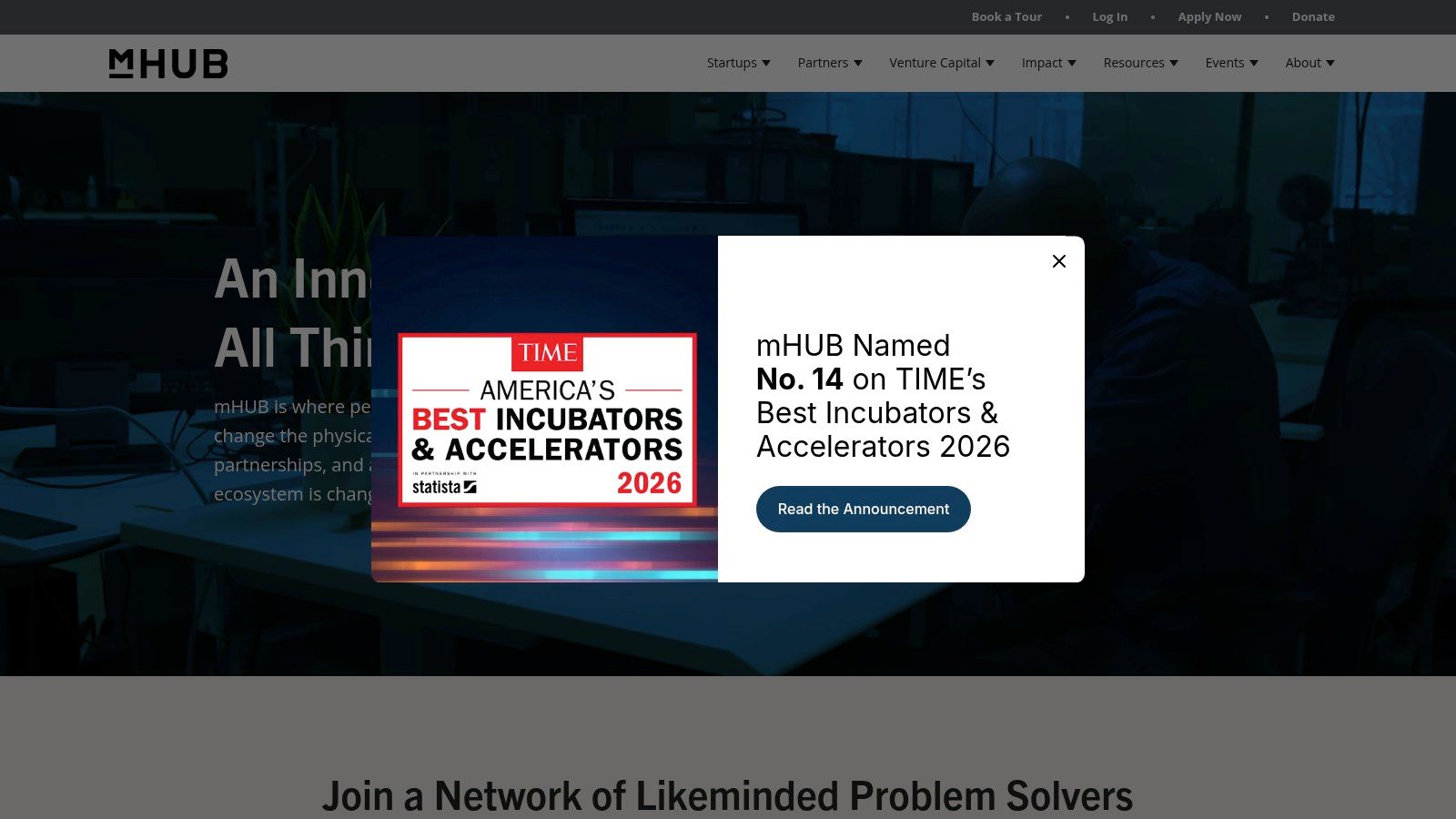
Need a place to build, not just meet? mHUB is the clearest fit for founders who need tools, training, and hands-on product development. Its hardtech and product innovation center includes prototyping labs, equipment, training, and mentor support.
The facility suits hardware, consumer products, medtech, climate and energy, and smart-manufacturing companies. Membership options include coworking, reserved desks, and offices, with month-to-month choices available. Events and competitions also connect product builders with investors and industry participants.
Use mHUB when physical work drives your next milestone. A shop requires training and safety onboarding, so account for that before setting a prototype deadline.
Run a practical fit test
mHUB publishes current rates and membership packages, making an initial comparison easier than with clubs that require a sales conversation. Check the details that affect your build: equipment availability, training requirements, storage, mentor access, and usable hours.
- Best for: Founders building physical products.
- Strongest benefit: Prototyping labs and equipment unavailable at ordinary coworking spaces.
- Good fit: Hardware, medtech, climate, energy, and manufacturing projects.
- Trade-off: Training adds onboarding time, while software and service founders may not use enough of the facility to justify membership.
If you are comparing a product lab with a general startup community, review this guide to hubs in Chicago. Before joining mHUB, book a conversation and bring a specific list of what you need to build.
4. Soho House Chicago
Choose Soho House Chicago for creative-industry access, social programming, and a flexible setting for work and downtime. The private members' club and hotel combines bars, lounges, a rooftop, gym, dining, meeting spaces, and cultural events.
Its membership tiers include Local House and Every House options, along with age-based choices. Every House carries the clearest value for founders who travel, since it provides access across the Soho House network. That reach can support meetings with creative partners, clients, and collaborators in other cities.
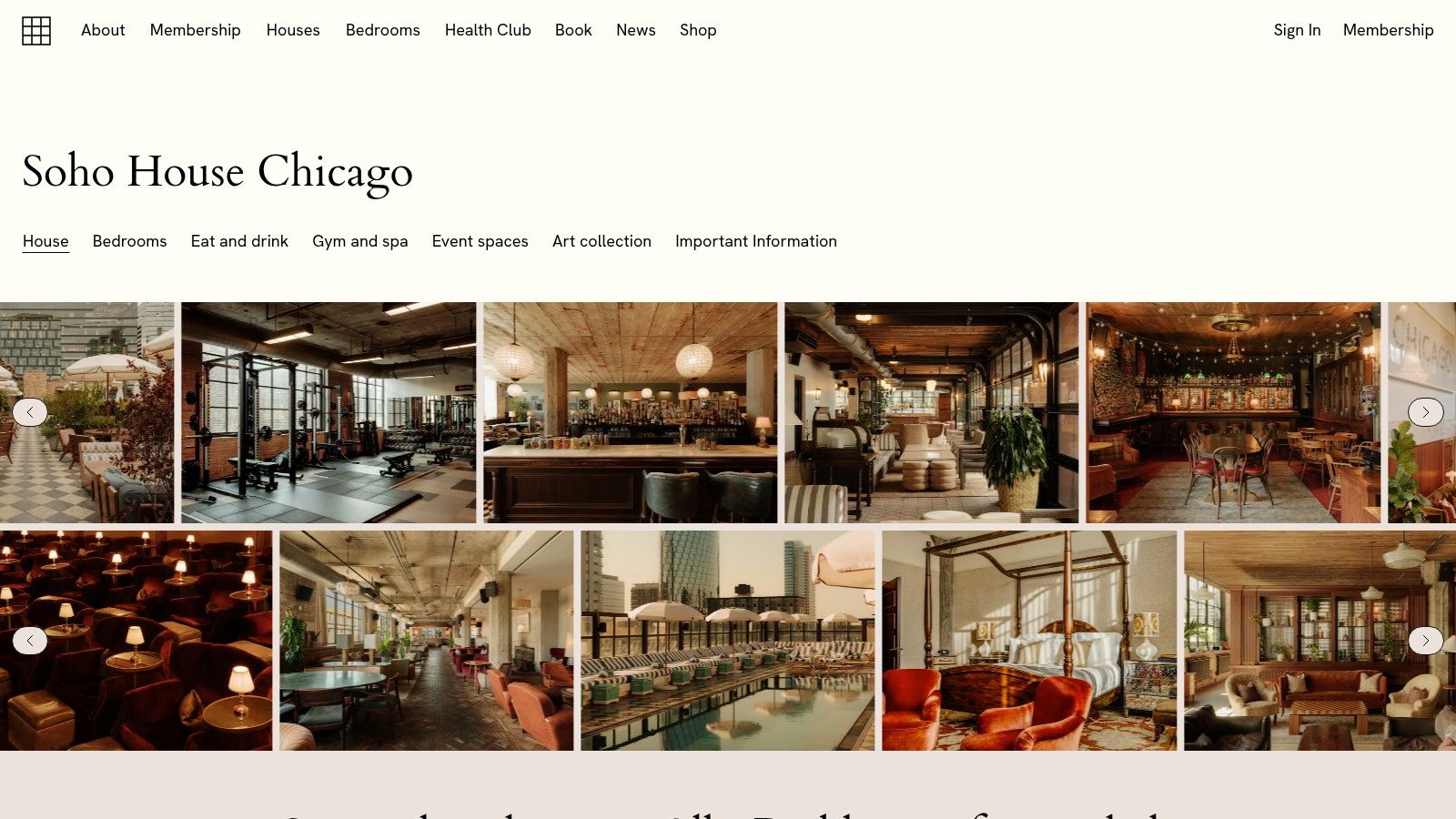
Treat the club as a social and cultural room first. Lounges, dining areas, meeting spaces, and events can cover informal work and client conversations. For direct operator feedback or vetted founder dinners, choose a founder-focused community instead.
Check your usage before applying
The official application portal lists the process and tier pricing. Review both before committing. Dining, fitness, meeting rooms, and events only justify the membership if they match your weekly routine, not an occasional visit.
- Best for: Creative founders, designers, media professionals, and frequent travelers.
- Strongest benefit: Access across the Soho House system.
- Work use: Lounges, meeting spaces, dining, and informal client meetings.
- Trade-off: Value depends on regular use, while the application process and tier structure may delay access.
Ask yourself one direct question: would you visit during a quiet month with no major event scheduled? If not, choose a club built around the access you need, such as founder programming, a business lounge, or a neighborhood social room.
5. The Metropolitan
Need a credible room for client dinners, private meetings, and formal business events? The Metropolitan fits that brief better than a founder-focused community. Invited operates this private business and social club on the 67th floor of Willis Tower, with dining, business lounges, private rooms, and event spaces.
Its central Loop location matters if clients, advisors, and business contacts arrive from different parts of Chicago. The skyline creates atmosphere, but the practical advantage is concentration. You can hold a work conversation, continue over a meal, and attend an event without switching venues.
The Metropolitan also connects members with Invited's broader City Club Collection nationwide. Choose it if you travel and want a familiar business-club setting in other cities. If your priority is vetted founder dinners, startup programming, or hands-on operator feedback, look elsewhere.
Before applying, get the full membership terms in writing. Dues and initiation fees are not posted publicly, so request a membership consultation and ask about:
- Joining cost and recurring dues
- Guest rules and event access
- Dining expectations
- Reciprocal-club terms
The fit test is simple. Do you regularly host clients or attend formal business events? If yes, the club's polished setting and private rooms can justify a closer look. If you want casual peer support or a neighborhood social room, its formal style will feel limiting.
- Best for: Professionals who host clients and attend formal business events.
- Strongest benefit: A central, polished setting with private rooms and business lounges.
- Network reach: Access to Invited's City Club Collection nationwide.
- Trade-off: The formal style will not suit everyone, and pricing requires direct inquiry.
- Use case: Client dinners, private meetings, business lunches, and events.
I recommend The Metropolitan when your membership needs to function as a dependable client-facing address, not as your primary founder community.
6. Union League Club of Chicago
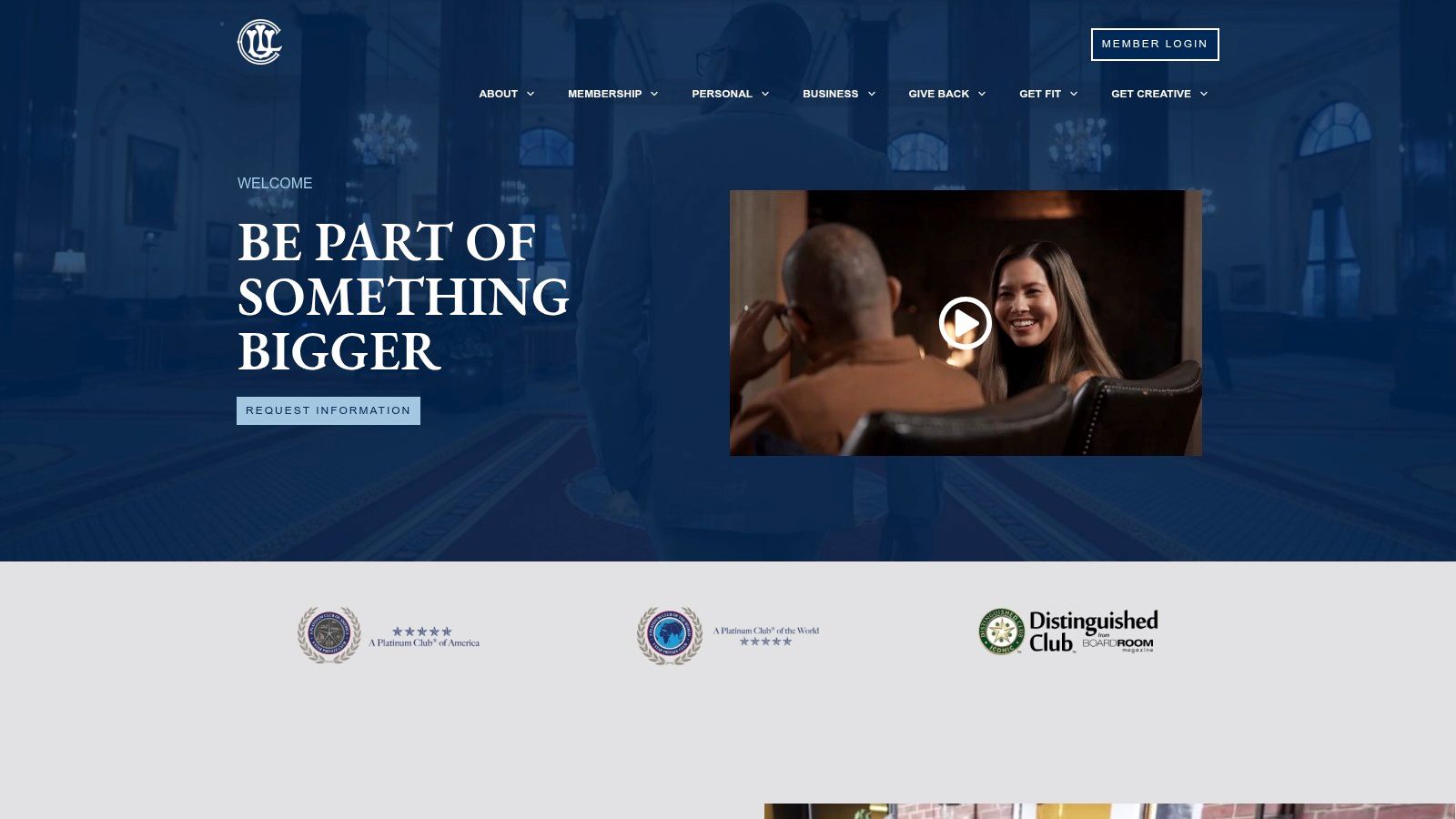
Union League Club of Chicago, or ULCC, suits professionals who want tradition, civic programming, full-service amenities, and a long-established professional network. The club dates to 1879, according to the Union League Club of Chicago's official site, and its identity centers on civic and cultural life as much as business.
The clubhouse includes an extensive art collection, multiple dining outlets, fitness facilities, and on-site guest rooms for members and guests. Its central Loop location also works well if you want access to parking and public transit guidance alongside a formal club setting.
This is a club for people who enjoy continuity. You'll likely appreciate it if you want service, structured rooms, civic conversations, and a multigenerational membership base. You may dislike it if you want casual founder dinners, creative experimentation, or a relaxed neighborhood clubhouse.
Test the culture before you commit
ULCC uses an invitation and application process, while membership details and pricing aren't public. Ask to visit or speak with someone who can explain the actual member experience. You need to know whether the club's civic and cultural calendar fits your interests, not only whether the building looks impressive.
Read this guide to a private members club near me if you're comparing traditional clubs with founder-led communities.
- Best for: Established professionals, civic-minded members, and people who host guests.
- Strongest benefit: Full-service clubhouse amenities with dining, fitness, art, and lodging.
- Trade-off: The traditional style may feel formal, and pricing requires a direct conversation.
- Founder fit: Strong for civic relationships and client hosting, weaker for hands-on startup problem-solving.
7. Birch Road Clubhouse
Birch Road Clubhouse works when you want a relaxed neighborhood social room built around your own wine and spirits. It uses a private clubhouse model with Chicago locations, personal lockers, intimate rooms, tastings, and member gatherings.
The BYOB policy changes the economics and the mood. You bring what you like, store it in your personal cellar space, and use the clubhouse for conversation, small events, and repeat visits. You won't get a full restaurant or hotel, but you also won't need a formal downtown business-club atmosphere for every social meeting.
This option fits founders who want a lower-pressure place to bring friends, collaborators, or a small group of clients. It's a social clubhouse first, so don't join expecting office infrastructure or formal business programming.
Choose it for regular social use
Birch Road publishes membership details, but current monthly rates require an inquiry. Ask what the all-in monthly model covers, including storage, access, events, guests, and any limits around private gatherings.
- Best for: Neighborhood socializing, tastings, and small gatherings.
- Strongest benefit: BYOB access with personal storage and an intimate clubhouse feel.
- Guest experience: More flexible and social than a formal city club.
- Trade-off: No full restaurant, hotel-style amenities, or extensive business services.
- Decision test: Join only if you'll visit often enough to make the clubhouse part of your routine.
If your ideal members club near me search ends with a bottle, a few trusted people, and a comfortable room, Birch Road is the clearest match on this list.
Top 7 Nearby Members Clubs, Comparison
| Offering | Implementation Complexity 🔄 | Resource Requirements ⚡ | Expected Outcomes ⭐📊 | Ideal Use Cases 💡 | Key Advantages |
|---|---|---|---|---|---|
| Chicago Brandstarters | Low, peer‑led, selective vetting | Minimal monetary cost; recurring time for biweekly dinners | Practical problem‑solving, faster network growth, early traction | Early‑stage Chicago/Midwest founders, solo ecommerce/product builders | Free, intimate peer support; confidential, founder‑led network |
| 1871 | Medium, structured programs and events | Membership (varies), frequent time commitment for workshops | Education, mentorship, visibility, pitch opportunities | Tech/digital startups seeking mentors and frequent programming | Large event calendar; strong corporate/university partnerships |
| mHUB | Medium–High, required shop training and safety | Paid membership, lab training, equipment use time | Rapid prototyping, hardware validation, investor/industry exposure | Hardware, product, medtech, climate/energy and manufacturing founders | Extensive prototyping labs and hands‑on mentor network |
| Soho House Chicago | Low–Medium, application and tiering | Paid tiers; usage drives value (amenities, travel reciprocity) | Social/cultural access and cross‑city reciprocity | Creative professionals seeking lifestyle amenities and network | National/international reciprocity; robust amenities |
| The Metropolitan (Invited) | Medium, membership consult and application | Dues/initiation (consult required); formal event costs | Professional meeting spaces, polished client hospitality, reciprocity | Professionals hosting client dinners, formal business events | Central Loop location; polished, business‑forward environment |
| Union League Club of Chicago (ULCC) | Medium–High, traditional private club process | Membership dues (private); full clubhouse operating costs | Civic engagement, deep professional networks, full‑service amenities | Professionals valuing tradition, civic/cultural programming | Historic prestige, extensive amenities, on‑site lodging |
| Birch Road Clubhouse | Low, neighborhood BYOB clubhouse model | Monthly fee (published on inquiry); BYOB storage lockers | Relaxed social gatherings, tastings, local community connections | Members seeking low‑key, neighborhood social club | BYOB lockers, intimate rooms, transparent membership model |
Turn Your Shortlist Into a Visit
Start with your main use case. Choose one primary answer: founder peer support, startup programming, product building, creative social access, client hosting, civic networking, or neighborhood gatherings. You can have secondary needs, but one main use case will keep you from paying for amenities you rarely touch.
Set a monthly budget before you contact a club. Include dues, initiation fees, dining, events, transportation, guest costs, and the time you'll spend getting there. Some clubs publish their rates, while others require a consultation. Ask for the full cost in writing.
Then inspect the joining path. Traditional private clubs may ask for sponsorship from current members, an application, references, an interview, and a committee or membership vote. One membership guide says clubs may request one primary sponsor plus two to five secondary sponsors. That process feels very different from joining a coworking space or submitting an application to a founder community.
Guest access deserves its own question. Clubs may require member check-in, guest fees, identity checks, or signed forms. One published club rule set requires members to swipe a card during each visit, and it restricts guests over age 16 unless the guest fee and health commitment statement are complete. Policies vary, so ask before you invite a client.
Visit at the time you'll actually use it. A club can feel perfect during a packed evening event and useless on an ordinary Tuesday morning.
Ask about event frequency, member attendance, work amenities, quiet areas, meeting rooms, and programming for people at your stage. Then take a tour or introductory conversation. Don't judge only the decor. Notice whether members talk to one another, whether staff explain the rules clearly, and whether the room helps you work, meet peers, host people, or build honest relationships.
For Chicago founders who want a free starting point, visit Chicago Brandstarters. The application centers on identity verification and LinkedIn vetting, which helps protect the small-dinner and private-chat format. Chicago Brandstarters is especially practical if you want recurring peer contact without a membership fee, and if you'd rather trade candid advice than collect polished introductions.
Chicago Brandstarters gives Chicago and Midwest founders free access to vetted peer support, private 6 to 8 person dinners every two weeks, and an active group chat for honest business conversations. If you're searching for a members club near me that helps you solve real problems and meet trustworthy builders, visit Chicago Brandstarters and apply.
Leave a Reply