
You probably know this feeling. In school, friendship happened by accident. You sat near the same people, saw them every week, and had built-in reasons to talk. After college, that system disappears. Work takes over, your friends scatter, and making new ones starts to feel like applying for a job you never wanted.
Then you search for social clubs near me for adults, and half the results are vague directories, stiff private clubs, or networking events where everyone is pitching something. That's why so many adults get stuck. They aren't lazy or bad at meeting people. They're choosing from bad options.
I think of social clubs as your social gym. You don't build a real circle from one huge event. You build it by showing up often enough that people remember your name, your jokes, and what you're trying to do with your life. That repeat exposure matters. In Richmond, for example, there are more than 60 neighborhood social clubs, and that kind of local, interest-first setup is why these groups keep working for adults.
If you want a smart place to start thinking about community, I like Zanfia's guide to building engaged communities. Now let's get to the list.
1. Chicago Brandstarters
You move to Chicago, build your career, and realize your calendar is full but your circle is thin. If that sounds familiar, start with Chicago Brandstarters. I'd pick it first for founders, operators, and side-hustlers who want a club that improves both their social life and their work.
That distinction matters. Some clubs give you status. Some give you a nice room and a drink. Chicago Brandstarters gives you repeated access to a specific kind of person: people actively building companies, testing ideas, hiring, struggling, growing, and telling the truth about it.
Why I'd put it at the top
Chicago Brandstarters is built around small, vetted interactions. The private dinners are limited to 6 to 8 people, which is exactly why they work. You get enough variety to meet new people, but not so many bodies that the night turns into shallow intros and forgotten names.
I like this model because it treats community as a strategic choice. If your goal is better friends, better collaborators, and smarter professional momentum, tight rooms beat crowded events. Repetition beats spectacle. A dinner table you return to every two weeks will usually do more for your life than a flashy mixer you barely remember.
The vetting helps too. Members go through identity verification and LinkedIn review, which cuts down on recruiters, random self-promoters, and people who treat every conversation like a sales call. That changes the quality of the room fast.
My rule: Join the club where people are honest about what they're building, and where you'll see the same high-quality members again soon.
What you actually get
- Biweekly private dinners: Small groups make it easier to have real conversations and leave with people you'll want to see again.
- Confidential group chat: The relationship-building doesn't stop after the event, and the discussion stays more useful than what you get in broad public communities.
- Founder-led support: Kevin Tao and other experienced operators help members pressure-test ideas and work through actual business problems.
- A next-step network: As members grow, they can get pointed toward more specialized communities, partnerships, and opportunities.
If you want a clearer sense of how this founder-first approach differs from a broader members club, read their take on Soho House in Chicago for entrepreneurs and creatives. It helps frame what you're really choosing between.
Best for and tradeoffs
This club fits ambitious, decent people in Chicago and the Midwest who are building something and want stronger relationships around that work. It makes sense if you are at the idea stage, early revenue, or tired of trying to figure everything out alone.
It is not the right pick if you want old-school prestige, luxury amenities, or a giant event machine.
If you want anti-networking in practice, not just in marketing copy, look at Chicago Brandstarters for entrepreneur networking groups.
2. Soho House Chicago
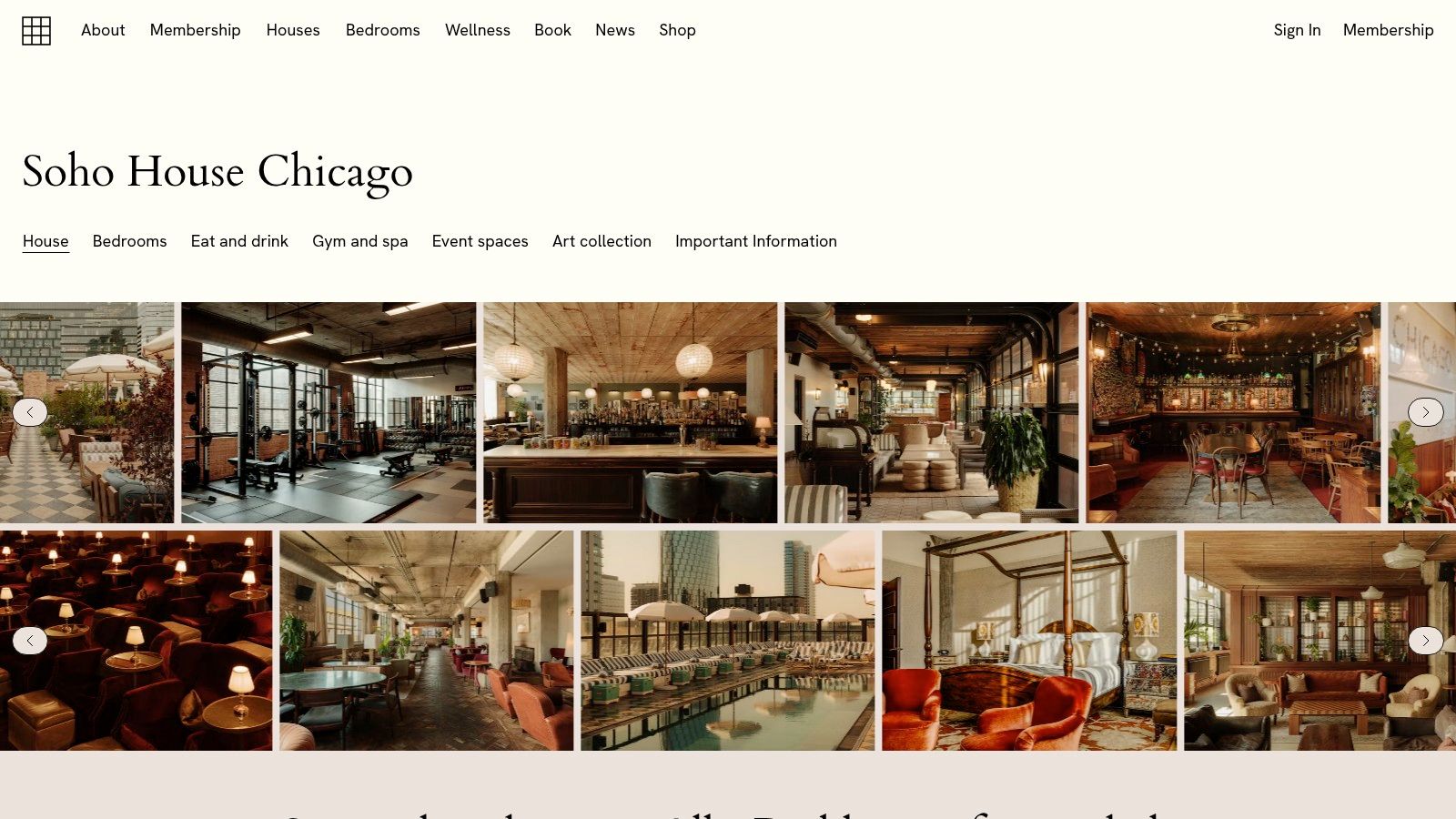
You finish work in Fulton Market, want dinner, a decent room to sit in, and a real chance of running into interesting adults without planning your whole night around one event. That is the job Soho House Chicago does well.
This is a lifestyle club first. If Chicago Brandstarters is a focused move for founders, Soho House is the broader play for people who want their social life, work sessions, and casual meetings to happen in one polished place. That difference matters. You are not just picking a hangout. You are picking the kind of people and rhythm you want shaping your week.
Why people join
Soho House works best for adults who use clubs through habit, not aspiration. You go because it is easy to work there for a few hours, grab a drink, stay for dinner, and catch a screening, talk, or member event if the timing lines up. That convenience is the primary product.
The appeal is obvious. One membership can give you workspace, restaurants and bars, wellness options, guest rooms, and a built-in stream of social opportunities. If you are comparing categories, this is the clearest example of a modern private members club in Chicago built around frequency and atmosphere rather than one narrow purpose.
The right club is the one you will actually use on an ordinary Wednesday.
Soho House also has an edge for creatives, media people, and professionals who like stylish spaces and looser social mixing. You are less likely to get the formal, institutional feel of an old-line club. You are more likely to get spontaneous conversations, visible culture programming, and a room that feels current.
The catch
You pay for that convenience and identity. Membership is selective, peak times can feel crowded, and the spend does not stop at dues once you add meals, drinks, guests, and bookings.
I would choose Soho House if you want a flexible social base and you know you will show up often. I would skip it if your main goal is tight-knit professional accountability, civic tradition, or a quieter members culture.
Check the club directly at Soho House Chicago.
3. Union League Club of Chicago

Union League Club of Chicago is for adults who want a full-service clubhouse with civic energy. If your ideal club mixes dining, fitness, art, philanthropy, overnight rooms, and professional conversation, this is a serious contender.
The vibe is more traditional than trendy. That's either a plus or a deal breaker, depending on what kind of room helps you relax.
What it does well
I like Union League Club for people who want substance over scene. You can work there, host there, eat there, attend talks there, and meet members from different generations and professions. It feels more like joining an institution than joining a social app in building form.
Its Loop location also makes practical sense for commuters. That matters more than people admit. A club you can reach without friction is a club you'll use.
For a broader look at this club category, this guide to finding a private members club near me is useful.
If you want a club to become part of your week, convenience matters almost as much as chemistry.
Where it fits
Choose Union League Club if you like formal settings, structured community, and civic-minded conversation. Skip it if dress codes and old-school club culture make you feel like you're visiting someone else's world.
You'll need to inquire directly about membership details. Visit Union League Club of Chicago.
4. The Metropolitan at Willis Tower
The Metropolitan is the practical pick. It sits high in Willis Tower and works well for adults who want a hybrid of workspace, business club, dining room, and social venue.
I'd put this on the shortlist if your weekdays already pull you downtown. The easiest club to join is often the one you can use between meetings without rearranging your life.
Why it works
This club has a straightforward day-to-night setup. You can work from a lounge, hold meetings, grab a meal, and attend member events without changing locations. That makes it efficient, which is often what busy adults need more than novelty.
It also helps that the pricing is more transparent than what you get from some older private clubs. I always like that. Hidden cost and mystery process are two fast ways to kill momentum.
The national Invited network is another plus if you travel and want some consistency from city to city.
Where it falls short
The vibe leans professional. If you want arts programming, family tradition, or a softer friendship-first culture, it may feel a little corporate.
Still, for adults searching social clubs near me for adults with an eye on business utility, this is one of the cleanest options in Chicago.
Go straight to The Metropolitan.
5. The Cliff Dwellers
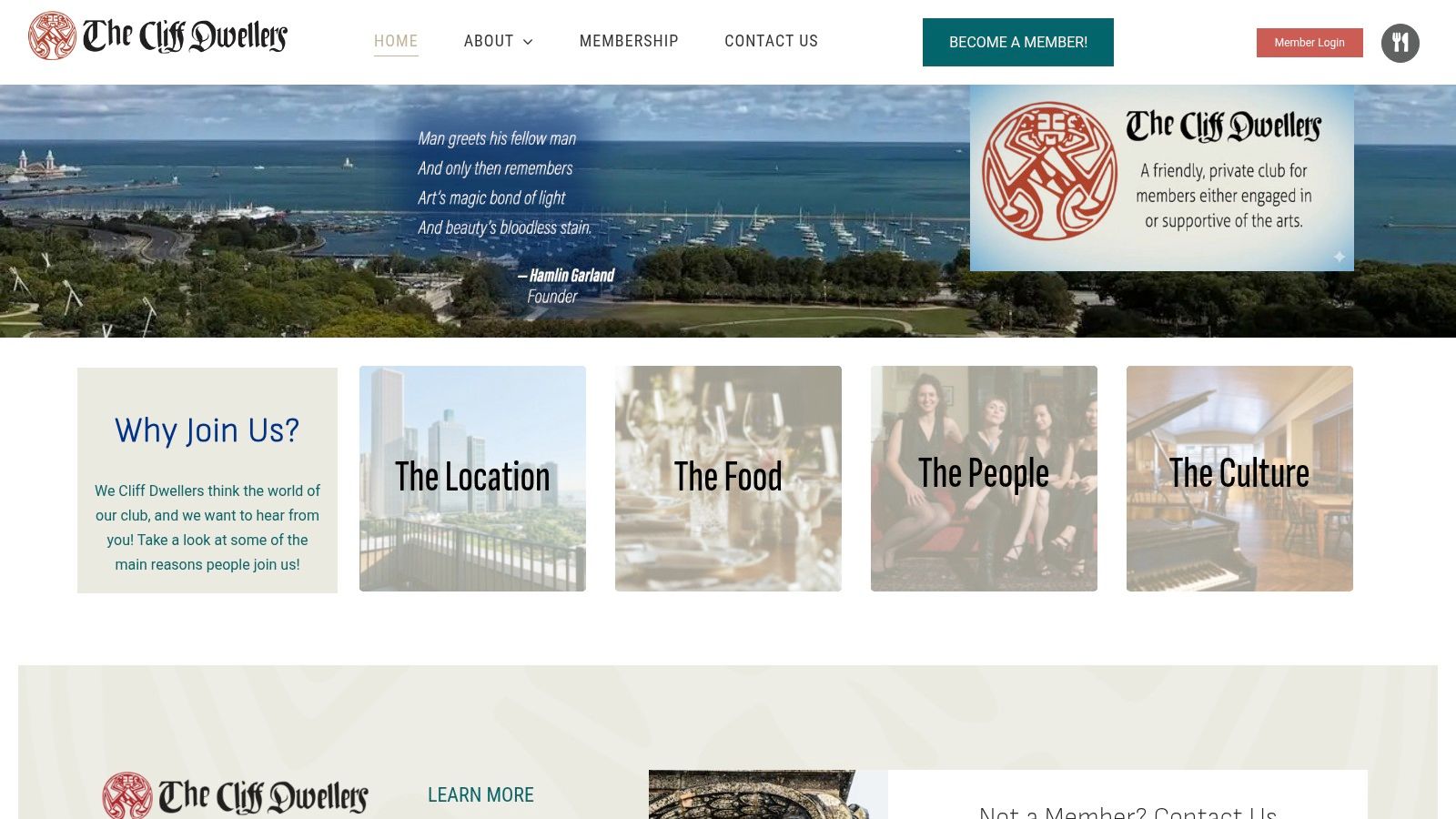
The Cliff Dwellers is the best niche pick on this list. If you care more about conversation, culture, and intimate arts-minded community than you do about gyms and business lounges, I'd look here.
It feels personal. That's the appeal. Some clubs are built like hotels. This one feels more like a salon with a dining room.
Why it's different
A lot of adults don't want networking. They want a room where they can talk with thoughtful people without feeling sold to. The Cliff Dwellers gives you that kind of setting through talks, recitals, readings, exhibitions, meals, and smaller-scale gatherings.
The trial membership is smart too. Adult social life has enough friction already. Being able to test the waters before committing makes this one easier to try than clubs with a heavier entry process.
Who should join
Join if you're arts-minded, culturally curious, or tired of clubs that feel like all business all the time. Pass if you want broad athletic amenities or a stronger work-first setup.
This club is a good reminder that the best adult social club isn't always the one with the longest amenities list. Sometimes it's the one where your kind of people talk to each other.
Learn more at The Cliff Dwellers.
6. University Club of Chicago
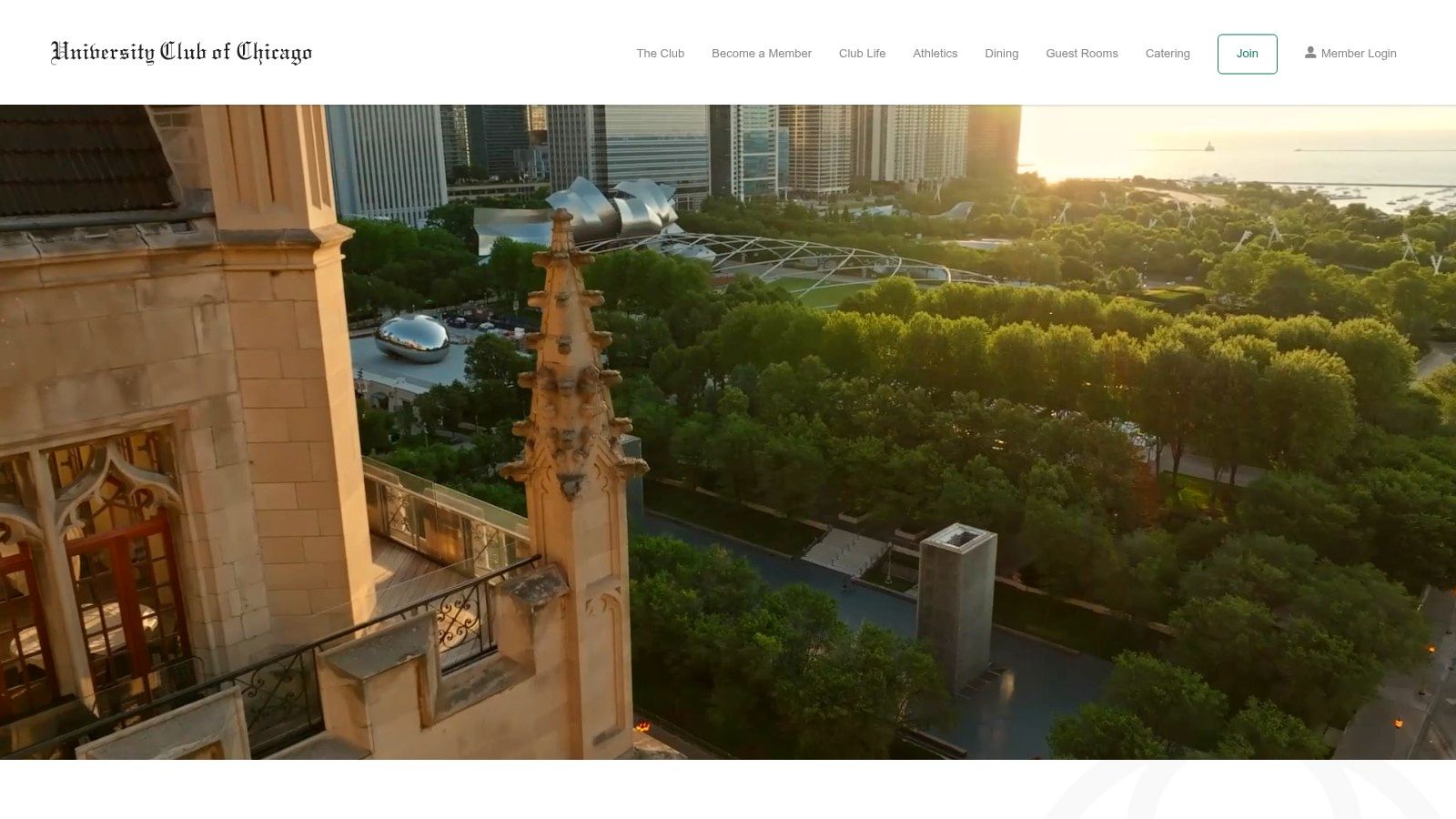
University Club of Chicago is for adults who like tradition but still want range. You get a landmark setting on Michigan Avenue, dining, bars, library spaces, event rooms, lodging, and athletic facilities in one place.
This is a strong fit for professionals who want a polished environment for both social and practical use. You can bring family, host clients, work out, and attend lectures or tastings without joining three separate places.
The real appeal
I think the University Club works best for people who want their club to cover a lot of life. Some clubs are one-note. This one is more like a Swiss Army knife. Maybe not the tool you carry for every situation, but useful in a surprising number of them.
Its admissions process is structured, and the tone is formal. That will appeal to some people and annoy others. Be honest with yourself before you apply.
My read
If you want an established professional network with broad in-house amenities, it's a strong option. If you want casual spontaneity and low ceremony, I'd look elsewhere.
You can review membership information at University Club of Chicago.
7. Columbia Yacht Club
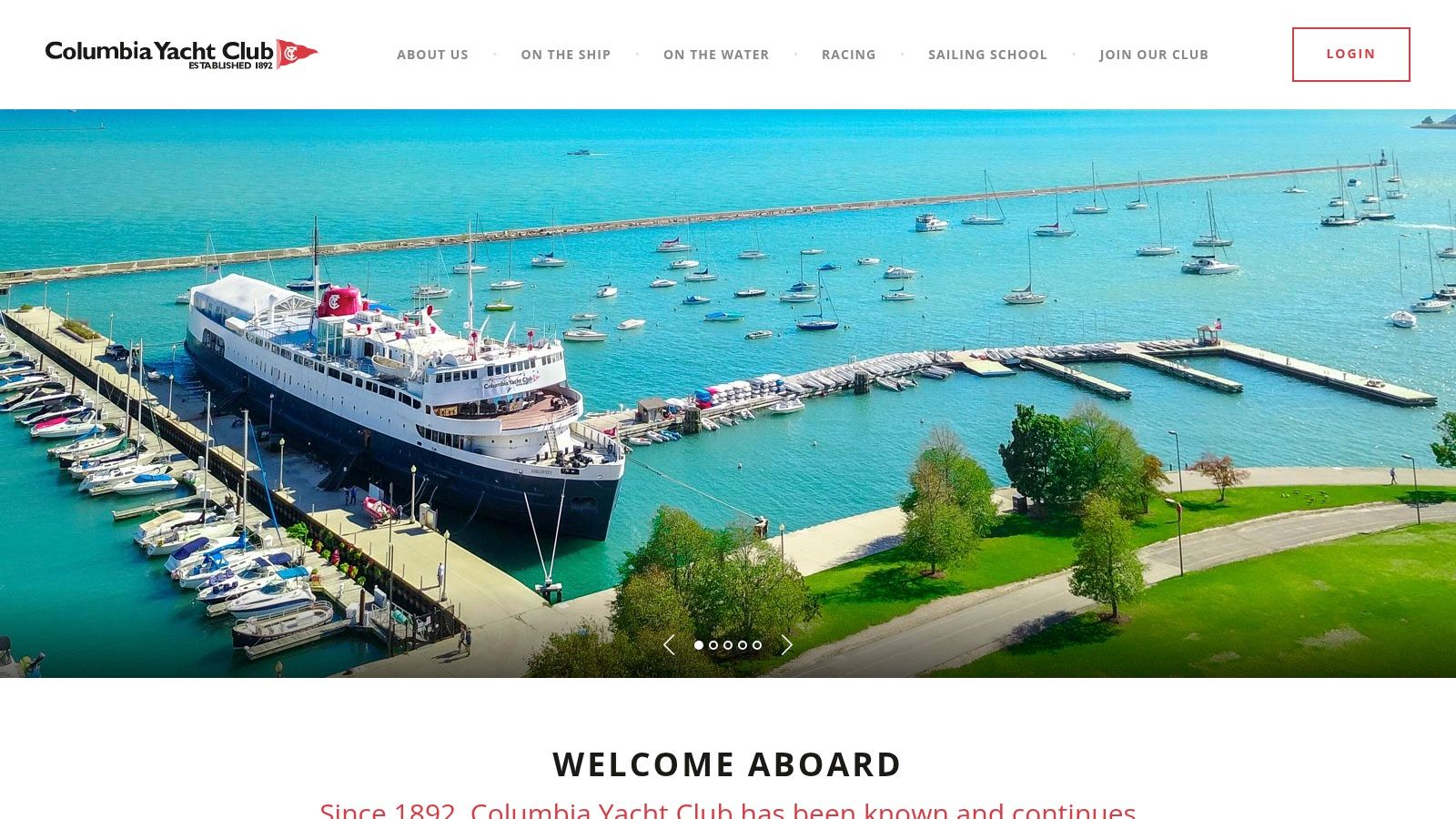
You join Columbia Yacht Club for access to a social life with structure. That matters more than another pretty room, another bar, or another networking mixer you forget by next week.
The club's edge is simple. Sailing gives adults a repeatable reason to show up, see the same people, and do something together that requires coordination. In Chicago, that makes Columbia a smart choice for people who want community built around participation, not just proximity.
You also do not need to own a boat for this to work. Sailing lessons, racing, crew opportunities, dining, and lakefront events give newcomers a clear entry point. That lowers the friction that keeps a lot of adults stuck on the sidelines.
Why this type of club stands out
I like Columbia for readers who are tired of trying to manufacture connection from small talk alone. Activity-based clubs usually outperform pure social clubs because the conversation starts itself. You have a role, a routine, and a reason to come back.
That makes this a strategic pick, not just a lifestyle pick.
If your goal is to meet polished professionals in a formal downtown setting, other Chicago clubs on this list fit better. If your goal is to build friendships through shared effort, Columbia has a stronger case than people expect.
Shared activity creates better social glue than another cocktail hour.
Who should choose it
Choose Columbia Yacht Club if you want your club to give you both identity and community. It suits adults who like learning by doing, want a lakefront rhythm to their calendar, and prefer relationships that build over repeated experiences.
Skip it if you want a club centered on indoor business networking or year-round sameness. Boating culture has a seasonal pulse, and you should want that before you join.
See membership details at Columbia Yacht Club.
Top 7 Chicago Adult Social Clubs Comparison
| Club / Community | Onboarding & complexity 🔄 | Resource requirements ⚡ | Expected outcomes 📊 | Ideal use cases 💡 | Key advantages ⭐ |
|---|---|---|---|---|---|
| Chicago Brandstarters | Moderate, identity vetting and small-group selection | Low monetary cost ($0); time for biweekly dinners + chat participation | Tactical problem-solving, high-quality peer intros, pathway to next-stage programs | Early-stage brand builders in Chicago/Midwest seeking candid, practical peer support | Free, highly vetted, confidential, operator-led network |
| Soho House Chicago | Moderate, selective application and member approval | Paid membership with quarterly billing; time to attend frequent programming | Expanded creative network, lifestyle amenities, national House access | Creative founders/brand builders who want program-rich, design-forward social spaces | High-quality programming, amenities (pool/spa), global reciprocity |
| Union League Club of Chicago | High, sponsor/nominated admissions and formal process | Higher fees (inquiry-based); expectations around dress and use | Civic engagement, policy forums, durable professional and philanthropic ties | Professionals valuing civic/cultural programming and full-service club facilities | Robust amenities, deep cultural orientation, central Loop location |
| The Metropolitan (Invited) – Willis Tower | Low to moderate, published pricing and frequent join offers | Paid membership; practical day-to-night workspace and event usage | Reliable workspace, local networking, national reciprocity via Invited network | Founders who travel and need flexible work + meeting spaces | Transparent pricing, practical amenities, useful national access |
| The Cliff Dwellers | Moderate, traditional club culture with trial option available | Membership fees; fewer fitness/business amenities | Intimate arts-focused connections, salon-style programming | Artists, arts supporters, and those seeking cultural, small-group programming | Mission-driven arts focus, distinctive dining/view, trial membership option |
| University Club of Chicago | High, nomination/sponsorship and structured admissions | Higher initiation/membership costs (inquire); formal expectations | High-touch entertaining facilities, broad professional reciprocity, cultural events | Professionals needing prestigious venue for client entertaining and lodging | Historic prestige, extensive event spaces, fitness & lodging on-site |
| Columbia Yacht Club | Low to moderate, approachable online join process | Dues/assessments vary by category; seasonal activity and boating costs | Sailing skills, racing/cruising participation, strong social dockside calendar | Individuals/families interested in sailing, lakefront social life, or learning to crew | Accessible entry to boating, lively seasonal social scene, family programs |
How to Pick the Right Club and Make Your Move
You find a club that looks impressive, apply, show up twice, and then stop going. That usually happens for one reason. You picked for image instead of outcome.
Start with the change you want from this decision. Treat club membership like a life move with a job to do.
If you want a built-in activity that makes meeting people easier, join Columbia Yacht Club. Sailing gives you something to do together, which removes a lot of the awkwardness adults run into at social events. If you want a club that helps your work life as much as your social life, focus on The Metropolitan, University Club, or Union League Club. If you want smaller, more personal cultural connection, pick The Cliff Dwellers. If you want one polished home base for dinners, events, and a broad social mix, Soho House Chicago fits that role.
If you are a founder, builder, or operator, I would skip generic networking nights. Chicago Brandstarters makes more sense, as noted earlier, because repeated contact with people in the same stage of building usually leads to better friendships and better opportunities than random room-temperature mingling.
Fit decides whether you use the membership. Broad directories often tell you almost nothing that helps with an adult decision. Even a Connecticut 211 page for social clubs and events shows the problem. Lots of listings, not much clarity about who the group serves, how often people meet, or what joining looks like in practice.
Use this quick filter:
- Who is it for? Founders, professionals, artists, families, hobbyists, or general social members.
- How often will you go? Weekly or every other week usually beats occasional marquee events.
- How do you join? Open RSVP, guest invite, application, nomination, or vetting.
- What will you do there? Work, host clients, sail, make art, exercise, or have long dinners.
My advice is simple. Pick two clubs that match the season you are in right now, not the identity you want to perform. Visit their sites. Find the trial, guest event, inquiry form, or first conversation and do that today.
Your next community probably starts with one small yes.
If you want a social life that feels more human and less performative, start moving. And if you want a way to capture the moments once you find your people, take a look at Saucial's photo sharing platform.
If you're building a brand in Chicago or the Midwest, start with Chicago Brandstarters. It's free, selective, and built for kind people who want founder friendships, candid advice, and a room where nobody is pretending.
Leave a Reply